
Reviewed · GUIDED
7-Hour Jerusalem Political Guided Tour from Jerusalem
Jerusalem is one of those places where the history never stays in the past. This tour is interesting because it links what you see on the ground to the political choices that shaped daily life for decades. You start inside the Old City, then move out to the real-world borders and walls that define the map.
I like that the focus stays political without turning into a shouting match. You’ll get a careful rundown of one hundred years of change, from the late Ottoman period to today, and you’ll also see how religious sites and modern control overlap. I also like the small-group feel, up to 16 people, which helps you ask questions as you go.
One consideration: this is a heavy topic. You will talk about Israeli occupation, settlement efforts, and the West Bank barrier, so it may feel emotionally intense, even if you leave with a clearer, more grounded view.
Key things to know before you go
- Old City briefing first, so you understand the “why” before you walk the “what.”
- Damascus Gate to Western Wall Plaza, with context about Mugrabe and the 1967 aftermath.
- East vs West Jerusalem lookouts, including stark contrasts you can see from the vehicle route.
- Separation Barrier deep stop, including arguments for security and the impact on Palestinian residents.
- Anata and Ma’ale Adumim viewpoints, plus discussion of the Jahalin Bedouin and the E1 planning zone.
- Air-conditioned vehicle for the longer drives, with walking concentrated around the Old City.
A 7-hour Jerusalem tour that treats the city like a living border
This isn’t a “click photos, move on” day. You’re in Jerusalem for seven hours, and the day is built to help you connect sights to power. You’ll spend time where people pray, where people argue, and where the state draws lines that affect movement, access, and identity.
The guiding idea is that you need more than casual slogans to understand what’s happening. You go beyond the simple us-versus-them framing and you learn from an approach that highlights the conflict through an alternative lens, focused on the political reality on the Palestinian side.
And yes, you still get the core Jerusalem landmarks. But the way you approach them is different. You’re not only learning names of sites. You’re learning why those sites sit at the center of conflict, and how the city got partitioned in practice, not just on maps.
A few more Jerusalem days worth comparing
- From Jerusalem: Masada & Dead Sea Full Day Tour with Pick Up
★ 4.5 · 815 reviews - Masada and the Dead Sea Day Trip from Jerusalem
★ 4.5 · 757 reviews - From Jerusalem: Nazareth and Sea of Galilee Tour
★ 4.5 · 588 reviews
Where you meet and how the day flows after a 9:00 am start
The tour starts at 9:00 am at Jerusalem Hotel Antar Ben Shaddad, 15. You end back at the same place, which matters because Jerusalem can be a puzzle after a long day.
You’ll be using an air-conditioned vehicle for the parts that connect the dots between neighborhoods and viewpoints. That helps in the heat and keeps the schedule realistic, especially because you’ll also walk inside the Old City area.
The day also has built-in rhythm: short briefings, walking time, then vehicle rides to get to the next “frame” of the story. You’ll likely appreciate that structure if you want the politics explained in digestible blocks rather than as one long lecture.
Finally, this tour caps at 16 travelers, so it’s not a giant bus herding experience. Smaller groups tend to work better in a place like Jerusalem, where people ask questions and the discussion can move quickly.
Stop 1 in the Old City: a political timeline you can actually picture
You start in the Old City of Jerusalem, and the day begins with a detailed briefing. The goal is simple: before you walk through corridors and markets, you learn the big timeline. You’ll hear a history that stretches from the late Ottoman period to the present, roughly the last one hundred years of political change.
From there, the tour adds another layer. You get a quick introduction to Israeli occupation and settlement efforts in the Old City and the nearby Holy Basin. That doesn’t mean you only talk politics, but it does mean you learn to recognize what you’re looking at with more context than a guidebook.
Morning focus also connects the Old City’s role to the three monotheistic religions. You’ll explore visible icons of the Israeli occupation, including discussion of Jewish settlements in the Christian Quarter and Muslim Quarter. Even if you know the Old City is complicated, hearing it through this specific political lens changes how you interpret the physical layout.
Practical note: Old City streets are walkable, but they can be uneven and crowded. The tour is listed for people with moderate physical fitness. If you know your limits on walking and standing, lace up sturdy shoes and plan for lots of short stops.
Damascus Gate to the Western Wall Plaza: markets, Mugrabe, and the Temple Mount
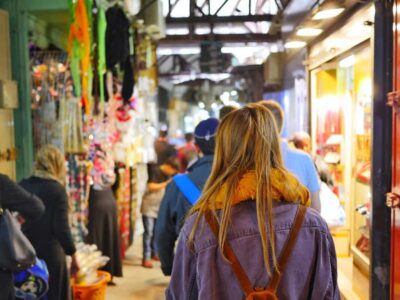
After the first briefing, you move into the Old City on foot. The route goes through Damascus Gate and into the markets, where you’ll learn about how the city is divided and how that division shows up in everyday movement.
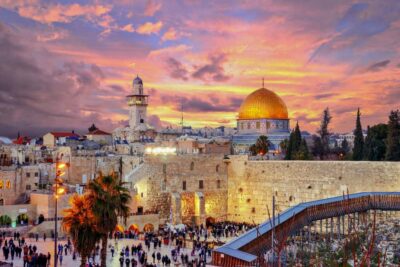
Then you reach the Western Wall Plaza, and this is where the tour uses history as a lens. You’ll learn that the plaza was created over the site of the destroyed Mugrabe neighborhood after the 1967 war. It’s the kind of detail that makes you look twice at a place that many visitors treat as purely religious.
This stop also brings the Temple Mount and Al Aqsa into the center of the conversation. You’ll hear about their holiness in Judaism and Islam and why that shared sacred geography matters to the conflict. You don’t just get a religious description. You get an explanation of why competing claims keep colliding.
Two hours here gives you time to absorb the religious significance while also understanding the political stakes. If you tend to skip context when you travel, you’ll probably feel grateful that this stop is structured for learning, not just sightseeing.
A different kind of day from Jerusalem:
- Nazareth and the Sea of Galilee Day Trip from Jerusalem
★ 4.5 · 446 reviews - From Jerusalem: Masada&Dead Sea Tour INCLUDING ENTRANCE FEES
★ 4.3 · 392 reviews - Jerusalem: Guided Walking Tour of the Old City
★ 4.7 · 386 reviews - Full Day City Tour of Jerusalem
★ 4.1 · 367 reviews
After lunch: East Jerusalem and West Jerusalem from the vehicle lookouts
Lunch is not included, so plan for it on your own before the afternoon segment begins. Having your own lunch plan also gives you some control over timing, which is useful in Jerusalem.
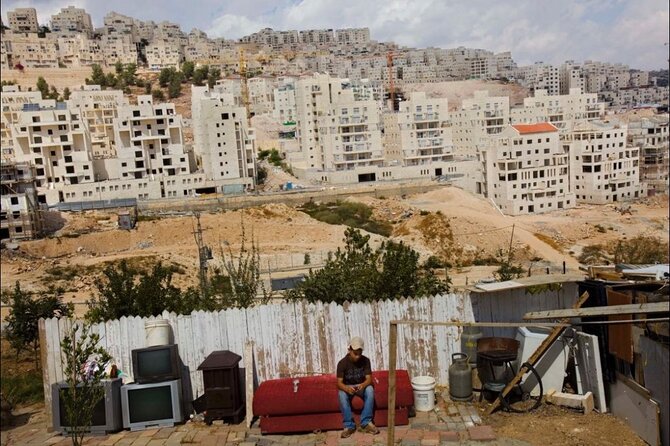
In the afternoon, you get another short briefing, then you ride through East Jerusalem settlements and Palestinian neighborhoods. This part is designed to make separation feel real. You’ll stop at lookout points that highlight differences between East and West Jerusalem, including modern office towers and highways in the West, versus unsealed roads and daily realities like donkeys being ridden in the East.
From those overlooks, you also get panoramic views back toward the Old City. That matters because the city is visually connected even when it’s politically fragmented. Seeing it from a distance helps you understand how the partition makes sense on the ground, not only in arguments.
Then you head down the seam line road that divides East and West Jerusalem, passing areas conquered in later decades. The key takeaway is that the division is not a theory. It is an infrastructure reality, a lived boundary that shapes mobility and access.
This section is one of the best “gestalt moments” of the day. You’ll walk away thinking: okay, I see how the map became streets, checkpoints of sorts, and day-to-day friction.
The West Bank Wall stop: reasons given, impacts shown
Next comes an up-close look at the West Bank Wall, also called the Separation Barrier. This is the stop that many visitors expect to be emotional, and it is. But it’s also more than a photo opportunity.
You learn how the barrier divides not only Arabs and Jews in general terms, but also Palestinian communities in specific places. You’ll hear about the reasons the wall was built and how well it prevented terrorism, according to the framing presented on the tour. At the same time, you also learn about surveillance of Palestinian residents and how daily life changes when a physical barrier is part of the landscape.
That combination matters. A lot of political tours pick one side and stick to it. Here, you get the stated security logic, then the human and community impact is part of the conversation too. That’s useful because it helps you understand why supporters defend the barrier and why critics see it as collective harm.
You spend about an hour and a half here, which is enough time to ask questions and let the topic settle in. If you tend to get overwhelmed by big political ideas, this is still manageable because it is grounded in a specific structure you can see and discuss.
Ma’ale Adumim, Anata, and the E1 planning zone
The final part focuses on the area around Jerusalem’s wider West Bank reality. You’ll see the Palestinian village of Anata, which is surrounded by the wall, and you’ll learn how that changes what people can access and where growth can happen.
Then you shift to Ma’ale Adumim, described as one of the biggest settlements in the West Bank. You may also visit outlying outposts of the town. The discussion includes the displacement of the local Jahalin Bedouin, which is the kind of detail that makes settlement expansion feel less abstract.
From lookout points, you get views toward the Judean Desert and the E1 planning zone. The tour explains that E1 is set to be filled with new settlement neighborhoods and tourist hotels. Even if you don’t know the term, you’ll understand what it means: a planning blueprint that can redraw geography and connectivity, not just add buildings.
This stop works well as a wrap-up because it ties together the day’s themes. Old City history, the West Bank barrier, and East-West separation all point to the same underlying question: who controls space, and who pays the price?
Price and value: what $199 buys you in Jerusalem time
At $199 per person for roughly seven hours, you’re paying for two things: structured transportation and expert framing in a high-stakes topic.
Transportation is a real value add here. The air-conditioned vehicle is included, and you’re covering multiple areas. Jerusalem distances and movement can be time-consuming on your own, especially if you want the schedule to run smoothly.
The other value is the political storytelling. This is not a generic sightseeing circuit. You get planned briefings at the Old City, transitions to the seam line area, a dedicated barrier stop, and a final settlement-focused look at Ma’ale Adumim and Anata. For many visitors, that structure is worth the price because it prevents the day from turning into random drives and scattered facts.
You also don’t pay extra for the listed admission ticket stops. The stops are marked Admission Ticket Free, so you’re not chasing entrances mid-day.
One caution on value: lunch is not included. That’s not a dealbreaker, but it means you should budget for it and avoid getting hungry and impatient in the afternoon.
How to prep: comfort, questions, and staying grounded
A political tour in Jerusalem can make you feel like your brain is running double shift. Your best move is to prep for comfort and curiosity.
Wear shoes you trust. You’ll walk in the Old City and then stand and look from viewpoints. Bring water. You’ll have a long day, and the walking time can add up even though it’s spread across stops.
If you tend to want every viewpoint from every side at all times, go in with realistic expectations. This tour presents an alternative perspective with focus on Palestinian nationalism and the political framing around occupation and settlement. At the same time, the barrier stop includes the reasons given for the wall and how well it prevented terrorism, so you’re not limited to only impact talk.
Keep questions simple and specific. If something felt unclear, ask about how it affects daily life or movement. The tour is structured with briefings, so good questions tend to land well right after a stop.
Also, bring your passport. A current valid passport is required on the day of travel, and this matters for entering Israel-related areas and for general tour operations.
Who this tour is for, and who should think twice
This tour is a strong fit if you’re the type of traveler who wants to understand the conflict using real examples and real geography. If you want to go beyond tourist postcard Jerusalem and learn why these places matter politically, you’ll probably enjoy the day.
It’s also a fit if you like guided structure. The mix of Old City walk time, vehicle rides, and dedicated stops for the Western Wall Plaza, the wall, and settlement areas makes the story easier to hold.
If you want purely religious history with no modern political talk, this may feel too focused on occupation, settlements, and barriers. Even if you can handle the facts, the emotional tone can be heavy.
And remember the physical part. The tour requires moderate physical fitness. You should be comfortable walking on uneven surfaces and standing for viewpoints.
Should you book this Jerusalem political tour?
Book it if you want your Jerusalem day to mean something. This tour gives you context in the places where the conflict is most visible, from Old City streets to the Western Wall Plaza and out to the Separation Barrier and settlement area viewpoints. The small group size, the layered briefings, and the way the stops connect are what make it worth the time.
Skip it if you’re looking for a light day of landmarks only. This is political by design, and you’ll spend real time on the structures and settlement realities that shape lives. If that’s what you’re after, this is a solid way to get your bearings fast in a complicated city.
FAQ
How long is the Jerusalem Political Guided Tour?
The tour runs for approximately 7 hours.
What does the tour cost?
The price is $199.00 per person.
What time does the tour start, and where is the meeting point?
It starts at 9:00 am at Jerusalem Hotel Antar Ben Shaddad 15, Jerusalem.
Is lunch included?
No, lunch is not included.
How many people are in the group?
The tour has a maximum of 16 travelers.
What should I know about walking and physical demands?
The tour is listed for travelers with moderate physical fitness.
Do I need a passport?
Yes, a current valid passport is required on the day of travel.
Is there a ticket included?
You receive a mobile ticket.
What is included in the price?
The price includes an air-conditioned vehicle. The itinerary lists stops as Admission Ticket Free.
Can I cancel for a full refund?
Yes. Free cancellation is available if you cancel up to 24 hours in advance for a full refund.
Recently reviewed around Jerusalem
- Walking tour of the Old City of Jerusalem★ 4.3 · 4 reviews
- Private Tour: Old City of Jerusalem Christianity Tour★ 5.0 · 5 reviews
- Magical Walking Tour in Old City of Jerusalem★ 5.0 · 27 reviews
- Tour of Jerusalem & Dead sea private tour★ 5.0 · 4 reviews
- West Bank Tour from Jerusalem★ 4.5 · 184 reviews
- jerusalem classic tour★ 5.0 · 3 reviews
- Day Trip from Jerusalem to Sea of Galilee and Nazareth★ 5.0 · 11 reviews
- Tour of Masada-Dead Sea and Qumran from Jerusalem★ 3.5 · 11 reviews
Guided, compared.
From Tel Aviv: Jerusalem and Bethlehem Guided Day Trip
Read our review →
Travel to Bethlehem Half Day Guided Tour from Jerusalem & TelAviv
Read our review →
Travel To Bethlehem, Jericho & Jordan River – Group Guided Tour from Jerusalem
Read our review →
Browse the lists this tour appears in