

Reviewed · JERUSALEM OLD CITY
Classic Jerusalem Old City Tour – Dguide Self Guiding App
This is interesting because it turns Jerusalem’s Old City into a self-paced route you control. I like that the experience is built by Uri Goldflam, and I like that it lets you choose how much you want to read and see using a self-paced route on your phone.
One thing to consider: while most stops are free, some key museums have admission fees not included, and the walking route includes stairs and a moderate pace.
Key highlights you should care about

- Uri Goldflam’s route design: the text and flow come from a long-time Jerusalem educator and guide.
- Phone-first freedom: follow the suggested path, or step off and rejoin later.
- 360-degree viewpoint at Tower of David: great for getting your bearings over the Old City and beyond.
- Multiple “time layers” in one walk: Roman streets, places tied to King Hezekiah, and Temple-area legacy.
- Two major Christian anchors: Dormition Abbey, the Upper Room, and then the Church of the Holy Sepulchre.
- Very low price for curated content: the app and route are an unusually good value for Jerusalem.
Phone-guided or truly guided, and why that matters in Jerusalem
The big idea here is simple: you are not waiting on a person to lead you minute by minute. Instead, you walk the Old City with a route and prompts on your phone, using the Dguide app. It’s a format that works well in Jerusalem, because you can linger when something grabs you, then speed up when you want to keep moving.
I also like the tone of what this type of tour aims for. You get a clear start point, logical stops, and short, readable chunks tied to what you’re actually looking at. That means you can build understanding fast without getting stuck in long speeches. It’s also good if your group has mixed interests, because you can lean more Christian, more Jewish, more historical, or more architectural, depending on what you want that day.
The one trade-off is obvious: it’s still a walk. The route needs moderate physical fitness, and it includes stairs. If you know you want a guide physically beside you the whole time, a self-guided format may feel like too much independence.
More City Tours in Jerusalem
- Jerusalem: Guided Walking Tour of the Old City
★ 4.7 · 386 reviews - Full Day City Tour of Jerusalem
★ 4.1 · 367 reviews - From Jerusalem Small group tour Old&New City ENTRY FEES INCL
★ 4.0 · 135 reviews
Dguide app tour setup, in plain terms
After you purchase, you receive a coupon code by email to access the Classic Jerusalem Old City Tour in the free Dguide app. Your ticket is mobile, so you’re working directly from your phone during the tour.
The tour starts at Jaffa Gate hostel (Jaffa gate, ירושלים) and ends back at the same meeting point. That round-trip layout is helpful in the Old City, because you’re not trying to figure out where to exit once you’re done.
You’re also not on your own as a solo traveler. It’s listed as private, meaning only your group participates. In practice, that usually makes the experience feel less chaotic than hopping into a big group where everyone drifts away from everyone else.
Expect a total duration of about 2 to 4 hours. The listed time at individual stops is short at several places, so this is not a “sit and take in everything” day. It’s a hit-your-highlights route with just enough time to understand what you’re seeing.
Price and value: is $7 actually a good deal here?
At $7 per person, this is one of those Jerusalem deals that feels almost too small on paper. The value comes from two places.
First, you get structured content from a real guide, Uri Goldflam, whose work focuses on teaching and explaining Jerusalem’s layers. Second, most of the itinerary stops are admission free, including major sights like Western Wall and Church of the Holy Sepulchre.
The one value “gotcha” is that two stops do require separate tickets: Tower of David Museum of the History of Jerusalem and Herodian Quarter, Wohl Archaeological Museum. The tour includes time for those, but the admission cost is not included in the $7.
If you budget for those two entries, the overall cost can still be very reasonable. If you want to do only free stops, you can still follow the route and appreciate the sights, but you should know the museums are part of the plan.
Stop-by-stop walk: what you’ll see and how to get the most from it
More Old City walks in Jerusalem:
- Best seller! Jerusalem old city four quarters tour
★ 5.0 · 123 reviews - Private Tour Jerusalem Old City
★ 5.0 · 118 reviews - Jerusalem Half Day Tour: Holy Sepulchre and Western Wall
★ 4.5 · 80 reviews - City of David and Underground Jerusalem Day Tour
★ 4.5 · 53 reviews
Jaffa Gate start, and why you should begin by orienting yourself
You start at Jaffa Gate, the main entry point into the Old City. The tour gives you a quick explanation of where you are, then you move on immediately to the next stop. This is smart, because Jerusalem can feel like a maze if you start without a mental map.
This is also where you can decide your pace. If you want more context, you can spend extra time reading on your phone. If you want movement and views, you can just keep walking. The route is designed so you don’t feel lost right away.
Tower of David Museum: the 360-degree view and the Citadel setting
Next is Tower of David Museum of the History of Jerusalem, located inside the ancient Citadel itself. You get about 1 hour here, which is enough time to do two key things.
You can look out for 360-degree views that show you how the Old City sits, and how the “old” and “new” parts of Jerusalem connect. That orientation payoff is real, because later stops make more sense when you understand what direction you’re facing.
You also get a museum visit tied to what may be associated with a possible location related to the trial of Jesus. The itinerary words it as possibly connected, so treat it as part of the story told at this museum rather than a guaranteed historical fact.
Admission for Tower of David is not included, so if you’re cost-sensitive, plan for this upfront.
Mount Zion stops: Dormition Abbey, the Upper Room, and King David’s tomb tradition
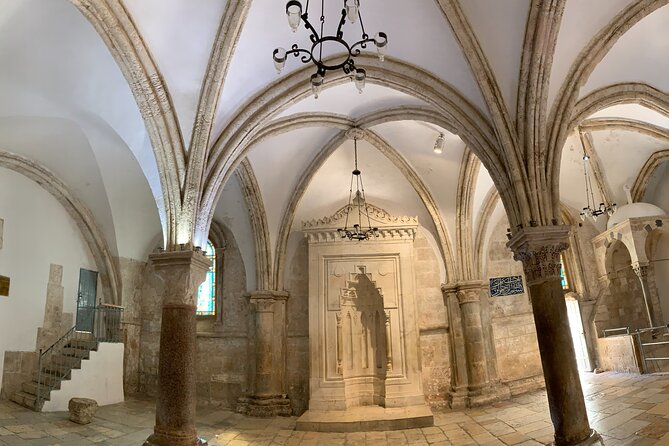
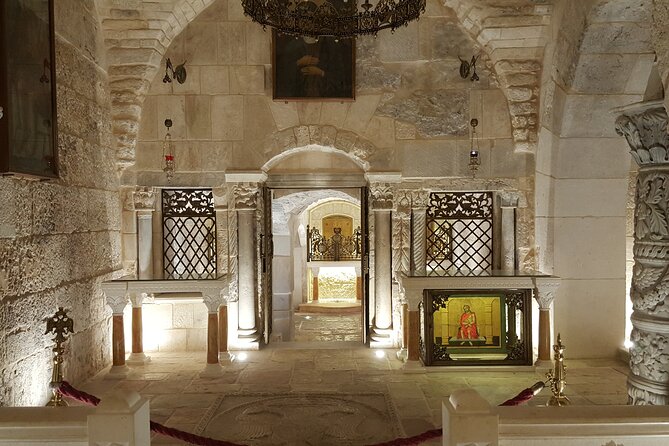
Then you shift to Mount Zion, which is home to several major Christian sites. The tour lists about 30 minutes for this section, and it starts at Dormition Abbey, moves to the Upper Room (also called the Room of the Last Supper), and then includes the traditional location for the tomb of King David.
Why this sequence works: Dormition Abbey and the Upper Room are linked by geography and by how Christian tradition understands the area. The tomb tradition adds a different angle, because it pulls the focus toward Davidic heritage and the way sacred memory gets anchored in specific spots.
If you like places where worship, architecture, and storytelling overlap, this is one of your strongest stretches.
Admission here is listed as free for this segment, so you’re not paying twice just to see the religious sites included in the route.
Roman Cardo walk and the Madaba map replica
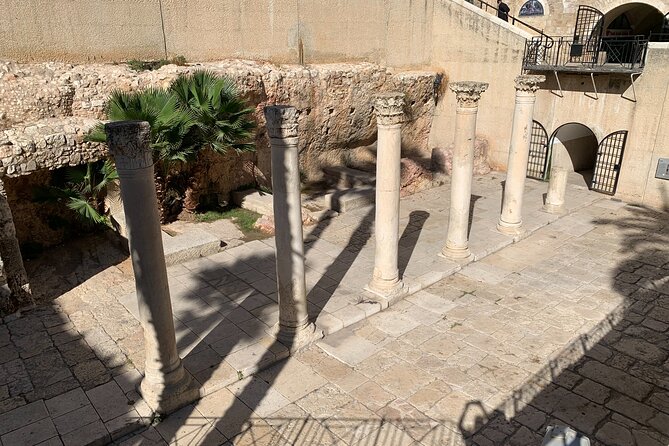
After Mount Zion, you head to the Roman Cardo of Jerusalem, the Roman-era street rebuilt under Emperor Hadrian. You’ll walk on the Roman pavement, which is one of those rare opportunities to feel the city’s physical continuity.
Here you also see a replica of the oldest known map of Jerusalem, the Madaba map. This is a great “brain tool” stop. Standing in Jerusalem, you can see modern streets, but the map replica helps you picture earlier ways the city was imagined. It makes the route feel more like a guided conversation than random sightseeing.
A Bible-mentioned relic tied to King Hezekiah
The tour includes a stop for a relic connected to King Hezekiah, described as about 2700 years old and mentioned in the Bible. The description does not name the exact object in the info you provided, so the best approach is to follow what the app shows you at that spot and read the context right there.
This kind of stop is valuable because it connects “scripture as text” with “scripture as place.” Even if you’ve read the story before, seeing it pointed to in the physical environment changes how it lands in your day.
Herodian Quarter and the Wohl Archaeological Museum: when you want the details
Next is the Herodian Quarter / Wohl Archaeological Museum, tied to excavations from the first century. You’ll spend about 30 minutes in this section, and the plan highlights massive homes and expensive decorations, plus evidence of the city’s destruction in 70 AD.
This is a good place if you like architectural clues and evidence-based explanations. The museum framing also helps you connect what you’re standing near to what was found in the ground, not just what stories claim.
Admission is not included, so this is the second likely paid stop on your day.
Western Wall: closest place for Jewish prayer near the Temple Mount
Then comes the Western Wall, described as a remnant of the Temple in Jerusalem. The tour notes that it is the closest place to the Temple Mount where Jews can pray.
This stop is about 20 minutes, which is long enough to look, read, and take in the atmosphere without turning it into a long pause that breaks the rhythm of the rest of the route.
A practical tip: keep your phone ready for the app prompts, but also keep a respectful pace. This is an active religious space, so move thoughtfully and follow what’s around you.
Church of the Holy Sepulchre: the 4th-century church and later reconstructions
Finally, you reach the Church of the Holy Sepulchre. The tour describes the church as originally built in the 4th century, with many later reconstructions, on the traditional location of the crucifixion and resurrections of Jesus Christ.
You’re given about 30 minutes here. That’s a good window for first-time visitors because you can get the key anchors of the tradition without feeling like you have to memorize every corner.
This is also a place where Jerusalem’s layers show up in architecture. The church is not just one building style. It’s a long sequence of rebuilds tied to faith, politics, and time.
What makes the content feel “worth it” on a self-guided day

A phone guide can be hit or miss. Here, the difference is that the tour was designed by Uri Goldflam, a professional guide and educator with 30 years of guiding experience. His style, from what people highlight about him, is direct and detailed, with a balance of Christian and Jewish heritage.
People also describe him as personable, funny, and able to explain modern and ancient history in a way that helps you see the Middle East with a different lens. Even though you are not physically walking with him, the route is built to give you that same education through the app.
That’s why this tour works for a lot of travelers: you still get context, but you don’t lose time to logistics. You can move at your pace, and the stops are planned so you don’t wander without direction.
Logistics that can make or break your experience

- Hours: the tour is listed as running Monday to Thursday, 8:00 AM to 5:00 PM within the date range shown. If you’re visiting on a Friday, weekend, or outside those hours, plan accordingly.
- Time boxing: the itinerary is built from short segments. Bring a mindset of “enough time to understand each stop,” not “finish every detail.”
- Walking and stairs: this route requires moderate fitness. If your legs or knees get unhappy on stairs, consider taking slower breaks at each station.
- Free vs paid entries: most stops are admission free, but Tower of David and Herodian Quarter / Wohl Museum are not included.
And one more thing that matters in Jerusalem: keep your expectations realistic. Even with a well-designed route, the city itself sets the pace. You will move through crowded streets and narrow lanes. The app format helps because you control when you pause.
Should you book this Classic Jerusalem Old City Tour?
Book it if you want a low-cost, structure-led Old City walk that you can do on your schedule. It’s especially good if you like seeing the city through multiple lenses, religious and historical, without committing to a long guided monologue.
Skip it or pair it with something else if you need a live person to answer questions on the spot, or if you strongly prefer museum time over quick stopovers. This route is designed for a 2 to 4 hour highlights plan, plus two paid museum stops.
If you’re the type who likes to read a bit, look around, then read a bit more, this one fits well. And if you want a simple way to get your bearings fast, starting at Jaffa Gate and finishing at the Holy Sepulchre is a clean, sensible loop.
FAQ

How much does the Classic Jerusalem Old City Tour cost?
It costs $7.00 per person.
How long does the tour take?
The duration is approximately 2 to 4 hours.
Is the Dguide app included?
Yes. The Dguide app is free, and you use a coupon code from your confirmation email to access the Classic Jerusalem Old City Tour.
Is it really self-guided?
Yes. It is a self-guided tour using the Dguide platform. You can follow the suggested route or go off path and return later.
What are the main stops on the route?
The tour includes Jaffa Gate, Tower of David Museum, Mount Zion sites (Dormition Abbey, the Upper Room, and the traditional tomb of King David), the Roman Cardo of Jerusalem, a relic tied to King Hezekiah, the Herodian Quarter/Wohl Archaeological Museum, the Western Wall, and the Church of the Holy Sepulchre.
Which stops require admission tickets?
Admission tickets are not included for Tower of David Museum and for the Herodian Quarter/Wohl Archaeological Museum. The other listed stops are free based on the tour information provided.
Where does the tour start and end?
It starts at Jaffa Gate hostel in Jerusalem and ends back at the meeting point.
Is parking included?
No. Parking fees are not included.
What are the tour’s operating hours?
The listed opening hours are Monday to Thursday from 8:00 AM to 5:00 PM, within the overall date range shown.
More Self-Guided Tours in Jerusalem
- In The Footsteps of Jesus Day Tour – Dguide Self Guiding App
★ 4.5 · 3 reviews - From Tel Aviv: Dead Sea Self-Guided Chill-Out Day Trip
★ 4.2 · 64 reviews
Recently reviewed around Jerusalem
- Walking tour of the Old City of Jerusalem★ 4.3 · 4 reviews
- jerusalem classic tour★ 5.0 · 3 reviews
- Private Tour: Old City of Jerusalem Christianity Tour★ 5.0 · 5 reviews
- Magical Walking Tour in Old City of Jerusalem★ 5.0 · 27 reviews
- Tour of Jerusalem & Dead sea private tour★ 5.0 · 4 reviews
- West Bank Tour from Jerusalem★ 4.5 · 184 reviews
- Private Day Tour of Jerusalem★ 5.0 · 6 reviews
- Private Tour : Jerusalem Old city day trip from Jerusalem★ 5.0 · 20 reviews
Jerusalem Old City, compared.

Best seller! Jerusalem old city four quarters tour
Read our review →

Jerusalem Half Day Tour: Holy Sepulchre and Western Wall
Read our review →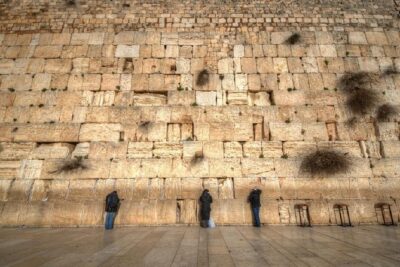
Jerusalem Half-Day Tour from Tel Aviv: Holy Sepulchre and Western Wall
Read our review →
City of David and Underground Jerusalem Day Tour
Read our review →
Browse the lists this tour appears in