
Reviewed · MOUNT CARMEL
Druzeland – Cultural Private Tour on Mt. Carmel
What makes Druzeland such a compelling stop on a Haifa trip is how it treats Druze life on Mt. Carmel as more than religion, it is village culture, local memory, and a lens on the region’s past and present. You ride between towns, talk with people who live there, and build the story piece by piece.
I especially like the human scale of the experience, the guide Daniel Sigalov lives in the area and brings local perspective, or you go with his handpicked partners who also live in the villages. I also love the food payoff, with Knaffeh El Amin making it hard to leave without trying their multiple flavors and enjoying the view.
One possible drawback: this is a half-day to full-day outing (about 5 to 8 hours) and it depends on good weather, so if you hate getting in and out of the car and walking around village stops, plan accordingly.
Key highlights that make Druzeland worth your time
- Private, group-of-up-to-10 format that feels like a real conversation, not a bus tour
- Daniel Sigalov or local, English-speaking guides who live in the villages and know the people behind the stories
- Isfiya village focus with an olive press, a Druze cemetery visit, and explanations of how they view life, death, and reincarnation
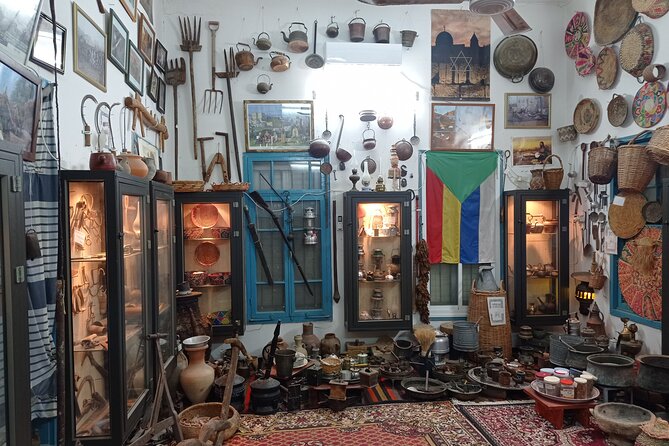
- Druze Heritage Center run through personal stories, including what women’s status has meant in Druze culture, shared by two sisters
- Daliyat al-Karmel hits history plus everyday culture, with herbs and folk medicine, Nabi Ibrahim site context, and House of Oliphant
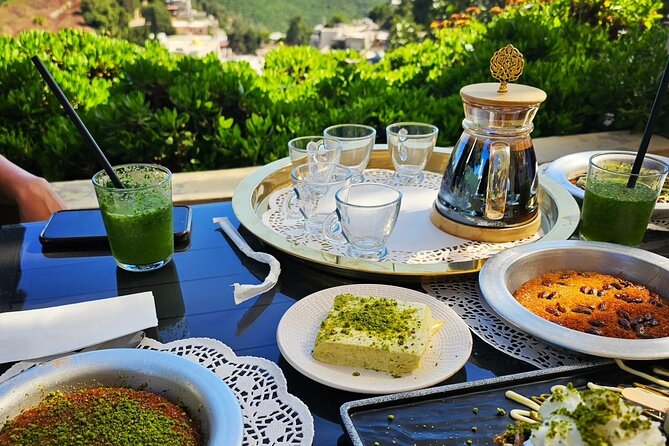
- Knaffeh El Amin for a very Carmel-style finish, including several knaffeh flavors plus a scenic break
Why this Druze tour feels personal on Mt. Carmel
The Mt. Carmel area is close enough to Haifa that it is easy to treat it as a quick add-on. This tour does the opposite. It turns the trip into a guided day in Druze communities, where you learn by meeting people, walking through village centers, and listening to how faith connects to history, politics, and even the way people understand the land.
You are not rushed between stops like you are collecting stamps. The structure is relaxed, with time built in for guided explanations and for small moments that do not feel staged. You also get a private setup for your own group of up to 10, which changes the tone immediately. Questions feel welcome. You can ask for more context, or shift focus toward cuisine, village life, or the historical threads linking Druze and Jewish people over time.
If you like culture that is lived, not just performed for visitors, this kind of tour is a strong match. If you want only religious sites with short explanations, you might find yourself wishing for less human conversation and more stone-and-sun sightseeing. The good news is that you can shape the experience because the tour is described as tailor-made for your wishes.
More Mount Carmel trips:
- Carmel Market Tasting Tour – LocaLocal
★ 5.0 · 140 reviews - Tel Aviv: Jaffa & Carmel Market Walking Tour
★ 4.7 · 60 reviews - Tel Aviv: Carmel Market & Tel Aviv Tour with Tastings
★ 3.8 · 36 reviews
Daniel Sigalov and the local-guide advantage
A big part of the value here is who is guiding you. Daniel Sigalov is the named guide tied to the villages, and the tour also runs with his handpicked partners. The key point is that these guides live by the communities they explain. They are fluent in English, and the tours use licensed touristic vehicles with air-conditioning.
That matters because Druze culture is best understood through context and careful storytelling, not vague generalities. A local guide can translate the meaning behind daily traditions, family stories, and community rules into something you can actually carry with you after the tour.
In practice, I would expect you to hear explanations that connect religion to real life. The tour information explicitly notes that the coverage goes beyond religious aspects, including history, geopolitics, cuisine, and geology. Even if geology is not your usual travel interest, a guide who lives locally can explain it in a grounded way, tied to how people settled and how villages developed.
Stop 1 in Isfiya: olive press, ancient finds, and cemetery reflection
Isfiya is treated like a cultural mosaic, and that sets the tone for the day. You start with the old village center, then move to an olive press site. This is not just a photo stop. You get a chance to learn about Druze culture in a way that ties daily life to deeper beliefs and historical memory.
One of the most interesting moments is the visit connected to the discovery of two ancient treasures. The tour frames these finds as evidence of an old connection between the Druze and Israel, stretching back beyond modern borders and labels. You also hear about the unique nature of that connection through the way the guide explains the story around the site.
Another stop that stands out is the Druze cemetery, where you hear about the community’s approach to life, death, and reincarnation. This can be emotionally meaningful, because it is not presented as theory. It is presented as a way people live with, think about, and talk about mortality.
Practical note: this is scheduled for about 2 hours, so you should be comfortable with walking and standing for explanations. If you have mobility limits, you may want to ask your guide how the route is handled in your specific day.
Druze Heritage Center: women’s stories, not just exhibits
After Isfiya, you head to the Druze Heritage Center, with a time allotment of about 45 minutes. This is a stop I would not skip if you want real understanding. The center is introduced through two sisters who helped break barriers, then connected to what Druze culture has meant for women’s status, using personal stories rather than abstract summaries.
The value here is the human element. You are not only learning what a culture is. You are learning how it has changed, how it has challenged limits, and how individuals within the community interpret that change. For many people, this is where the tour stops feeling like a history lecture and starts feeling like a conversation with lived experience.
Admission is included for this stop, which also helps the day feel smooth. You are not managing extra ticket decisions mid-visit. You simply show up, listen, and ask questions.
A few more Haifa days worth comparing
- From Haifa: Guided Day Trip to Nazareth and Sea of Galilee
★ 3.9 · 51 reviews - Haifa Culinary Private Tour
★ 5.0 · 38 reviews - Haifa Port Shore Excursion: Nazareth and Sea of Galilee Day Tour from Haifa Port
★ 4.0 · 36 reviews - Jerusalem & Bethlehem Tour from Haifa Port 2024 – Small Group
★ 4.5 · 30 reviews
Daliyat al-Karmel: folk medicine, Nabi Ibrahim context, and House of Oliphant
The biggest Druze village in Israel is also the one the tour describes as especially beautiful. You spend about 1 hour 30 minutes here, and the schedule is designed to show you how culture mixes with local creativity and tradition.
You start with the old village center again, but the tone is different because Daliyat al-Karmel has its own personality. From there you visit several culture-focused places, including an herbs and folk medicine center. This is a great stop for practical curiosity. Even if you never become a herbal remedies person, you will get a window into how people pass knowledge through generations.
Then comes House of Oliphant. The name alone will make you ask questions, and that is exactly the point. This type of site helps you understand that village heritage is not only about ancient texts. It is also about art, personal expression, and how people preserve meaning in physical spaces.
The tour also includes a holy site connected to Nabi Ibrahim. Rather than treating it like a checklist, the guide explains it inside the broader context of the community and the area. This is one of those times where your guide’s storytelling style really matters. If you pay attention, you walk away with a sense of how sacred geography overlaps with social identity.
You should expect additional small surprises along the way, because the tour is described as full of moments beyond the headline stops. That flexibility is one of the reasons private format tours often feel more satisfying than rigid museum circuits.
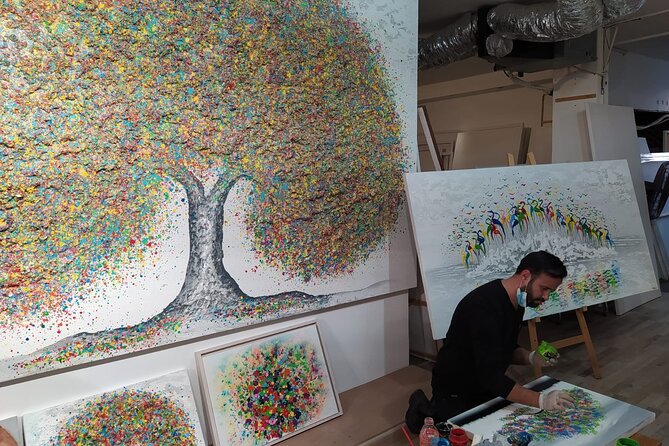
Optional Sam Halaby house of colors for art lovers
There is an optional add-on to consider: Sam Halaby house of colors. The schedule gives it about 45 minutes. This is described as the home of an internationally known painter, turned into a museum of colors.
If you enjoy outsider art, color-driven creativity, or personal museums that started as real homes, you will likely love this stop. If you are short on time, you can skip it without breaking the main storyline of the day, because the core cultural and food moments still happen.
My practical take: if you are traveling with someone who loves art and takes their time, do the house of colors. If your group is tired by late morning, choose it only if energy is still high.
Knaffeh El Amin: where the day turns into flavor and a view
Every Carmel-style tour needs a food moment that matches the storytelling. Here, that moment is Knaffeh El Amin, included in the experience with about 40 minutes.
Knaffeh is one of those foods where locals actually argue about the best version. The tour builds that into the excitement: you get more than a basic taste. The knaffeh is offered in the regular style plus five additional flavors. That variety is a smart way to let you experience range in one sitting, instead of only judging the dish based on one preparation.
The view is also part of the experience. You get a scenic break while you eat, which helps the tour feel like a full sensory day rather than a series of stops with no emotional landing.
If you want a simple souvenir memory, make it this. A good tasting moment does more for your overall understanding of place than a dozen facts you quickly forget.
What you get for $895 and why it can still feel fair
The price is listed as $895 per group, up to 10 people. That sounds steep if you compare it to per-person rates. But private tours in Israel often price around the vehicle and the guide time, not just seat count.
Here is how I would evaluate value:
- You are not paying for a generic walking guide in a crowded area. You are paying for a private day that includes village access, local storytelling, and multiple cultural sites.
- Several entries are either included or free at stops. That reduces add-on friction and keeps the day predictable.
- The tour includes air-conditioned transportation, bottled water, WiFi on board, and traditional Druze tea (marli) plus coffee and/or tea.
The tour also promises a back-to-ship on-time guarantee, which matters if you are connecting from a cruise schedule. That kind of operational planning is part of what you pay for.
The one thing to think about is lunch. Lunch is listed as not included, and the note suggests Druze hospitality as a lunch experience. So the full day cost may rise slightly depending on what meal plan your guide recommends and what your group chooses to do.
If you are a couple, the price may feel high. If you have a small family or a group of friends traveling together, the per-person value can look much better. This is the kind of tour that improves when you can share it and trade questions in real time.
Tailor-made by request: how to shape the day
The tour is described as designed for you, and it can be tailored to fit wishes. That flexibility is practical, not just marketing.
If you care most about cultural background, ask for extra time in places where guides explain Druze life, burial customs, and how community identity works. If you care about food, you might focus on the tasting angle and ask the guide to frame the cuisine through daily habits and hospitality norms. If your curiosity leans toward the region, ask for the geopolitics and geology parts to be connected to what you see outside the car window.
Because it is private, you can also control your pacing. One of the best features of a private format is that you can slow down when something catches your attention, or move faster if you are done with a section and prefer to reallocate time.
Practical travel tips so the day runs smoothly
This is a day trip format that mixes driving with village walking. I recommend you:
- Wear comfortable shoes, since village centers and indoor sites still involve standing and short walks.
- Bring a light layer. Even with air-conditioned transport, indoor spaces and evening chill can surprise you.
- Plan hydration. Bottled water is included, but having a reusable bottle can help you keep pace without thinking about it.
Also, because the tour requires good weather, keep your schedule flexible if you are building a Haifa itinerary. If you get a rough forecast, do not lock your day into a must-do for later, because weather can change how plans run.
Is this the right tour for you?
Book Druzeland if you want an authentic, village-based explanation of Druze life on Mt. Carmel, with local guides and real conversation. It is ideal for people who like to ask questions, enjoy cultural context, and appreciate food as part of learning.
Skip or reconsider if your trip style is mainly big-ticket sites with minimal walking, or if you are sensitive to weather-dependent tours. Also reconsider if you expect a purely religious itinerary with only formal sacred-site visits. This is religion plus culture plus daily life plus food, by design.
If you can handle a half-day to full-day pace, and you are curious about how a small community’s story connects to the broader story of Israel, this is a strong use of your time in the Haifa area.
FAQ
How long is the Druzeland cultural private tour?
It runs about 5 to 8 hours total, with travel time included in the duration.
How many people can join the private tour?
It is a private group experience for up to 10 people.
Is pickup available from Haifa?
Pickup is offered.
Is WiFi on board included?
Yes, WiFi on board is included.
What food or drinks are included?
You get traditional Druze tea (marli) plus coffee and/or tea, and bottled water. Lunch is not included, though Druze hospitality is mentioned as a lunch experience.
Are admission tickets included?
Admission tickets are free or included depending on the stop. The Druze Heritage Center has admission included, and the knaffeh stop also has admission included.
Who guides this tour?
Guiding is done by Daniel Sigalov or by his handpicked partners. The guides are fluent in English and live in the villages.
Does the tour require good weather?
Yes. The tour requires good weather.
What happens if the tour is canceled due to poor weather?
If it is canceled due to poor weather, you will be offered a different date or a full refund.
What is the cancellation policy?
Free cancellation is offered. You can cancel up to 24 hours in advance for a full refund, and cancellations within 24 hours are not refunded.
Recently reviewed around Haifa
- Jerusalem & Bethlehem Tour from Haifa Port 2024 – Small Group★ 4.5 · 30 reviews
- Full Day Tour to Nazareth and the Sea of Galilee★ 5.0 · 4 reviews
- Haifa and Acre Private Tour★ 5.0 · 7 reviews
- Full-Day Private Tour from Haifa to Old City of Acre★ 5.0 · 5 reviews
- Haifa’s specials spots★ 5.0 · 6 reviews
- Holy Jerusalem Private Tour★ 5.0 · 24 reviews
- Full-Day Holy City of Jerusalem and Bethlehem Private Guided Tour★ 5.0 · 9 reviews
- In the Footsteps of Jesus – Private Tour of Nazareth & the Sea of Galilee★ 5.0 · 16 reviews
Mount Carmel, compared.

Browse the lists this tour appears in