
Reviewed · WINE TOURS
kosher Israel wine tour
This is a fun, story-driven day that connects ancient Jewish landmarks with kosher wine tastings. You start in an archaeology-rich place tied to the Tabernacle, then move into the Judean hills to taste wines with real origin stories behind them.
I love how the day is paced like a conversation, not a rush: you get a big setting at ancient Shiloh, then you slow down at wineries for tasting. I also like that it’s a private group up to 7, so the guide can answer questions and keep things moving without feeling crowded. One thing to consider is that it’s a full 7 to 10 hour outing, and some stops have tickets that are not included.
Key highlights you will feel on this tour
- Ancient Shiloh (Tel Shiloh) tied to the Tabernacle era, Joshua’s division of the land, and Hannah’s prayer
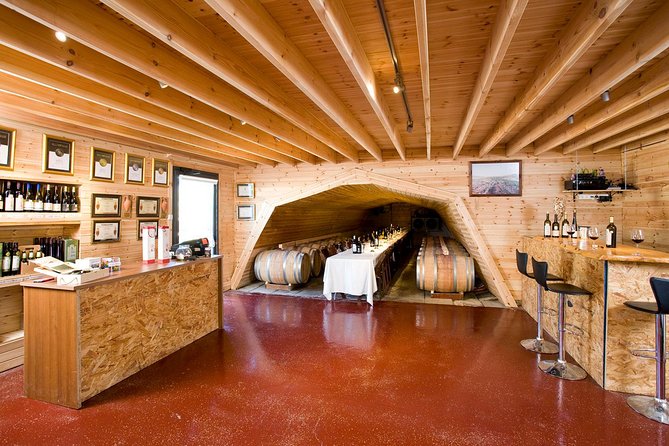
- Psagot Winery’s cave discovery story, including a coin linked to the Great Revolt against Rome
- A real wine-tasting focus, with a guide who can explain techniques and viticulture in multiple languages
- Private group format for up to 7 people, plus pickup from ICC / Shazar
- A full-day structure that blends history stops with winery time for a balanced pace
Why this kosher Israel wine tour feels different
Most wine days start and end at the winery gates. This one starts with time travel. Ancient Shiloh is where the Tabernacle stood for 369 years, and the site also connects to Joshua dividing inheritance and to Hannah’s prayer, which is still remembered in Jewish life. That historical grounding matters because it frames why wine is more than a drink here. Wine is woven into texts, rituals, and the everyday saying about life under your vine.
Then the tour shifts gears to something hands-on. At Psagot, the story is not just marketing. It’s about finding an ancient cave that was used as a winery about 2000 years ago, and how that discovery shaped a modern boutique winery. At Gvaot, you get a tasting built for enjoyment, with enough time to actually taste and ask questions, not just walk by rows of vines for photos.
The payoff is a day that gives you two kinds of satisfaction: meaning and flavor. If you like your travel with context, you will probably enjoy this more than a standard tasting-only outing.
More wine tours in Jerusalem:
- Israel private tours,wine tours,off-road, tailor made,culinary,the best
★ 5.0 · 6 reviews - GoKEDEM Golan Heights ATV Action & Wine-Tasting Tour From Tel Aviv
★ 5.0 · 8 reviews - Private wine tour of Northern Israel
★ 5.0 · 4 reviews
Timing and pacing: a 7 to 10 hour day that moves steadily
The tour lasts about 7 to 10 hours and includes pickup and return to the meeting point at the end. Your start point is ICC / Shazar in Jerusalem, and the experience is structured around three main stops, plus driving time between them.
Here is what that pacing means for you in practical terms:
- You will likely spend the morning or early part of the day with the Shiloh site, which is the longer stop.
- Midday to afternoon is for winery time, with one stop that includes a tasting window and another tied to a cave-based winery story.
- The itinerary is not designed to be leisurely in the way a slow lunch crawl is. It is more like a guided day out where you keep moving, with built-in pauses where you can taste and listen.
If you hate long car time, you might find the full day tiring. But if you want a single, organized outing that packs both history and wine into one shot, this structure is a strength.
Meeting point and pickup: starting clean and ending where you began
Your tour starts at ICC / Shazar in Jerusalem and ends back at the same meeting point. Pickup is offered, which can save you the hassle of figuring out local transport for a full-day plan.
Two more practical notes that help:
- The tour is private for your group only, up to 7 people, so it is easier to manage your pace and conversation.
- The experience is near public transportation, which can be helpful as a backup if you are not using pickup.
For many people, that simplicity is part of the value. You show up once, then you focus on the day.
Stop 1: Ancient Shiloh (Tel Shiloh) and what 369 years changes
Ancient Shiloh is the kind of place that makes you slow down, even when you are on a schedule. This is the site where the Tabernacle stood for 369 years, which means this was not a brief moment in Jewish memory. It was a long chapter.
You also get biblical connections that go beyond a single headline:
- Shiloh was a capital for the Jewish people during those centuries.
- Joshua divided the inheritance to the tribes of Israel from this place.
- Hannah prayed here, and the tradition of learning how to pray from her continues to this day.
There is also a visitors center and antiquities on site, which helps you understand what you are looking at. I like adding this kind of stop to a wine itinerary because it reframes the whole day. Instead of treating wine as a standalone activity, you see it inside a cultural and spiritual world where words, places, and customs carry forward.
Possible drawback: this is an outdoors and walking kind of stop. You will want comfortable shoes and a little patience, especially if you come straight in from travel days.
A few more Jerusalem days worth comparing
- From Jerusalem: Masada & Dead Sea Full Day Tour with Pick Up
★ 4.5 · 815 reviews - Masada and the Dead Sea Day Trip from Jerusalem
★ 4.5 · 757 reviews - From Jerusalem: Nazareth and Sea of Galilee Tour
★ 4.5 · 588 reviews - Nazareth and the Sea of Galilee Day Trip from Jerusalem
★ 4.5 · 446 reviews
Stop 2: Psagot Winery near Michmash, with a cave-aged origin story
Psagot Winery is a boutique stop that blends place, people, and a discovery you cannot fake.
First, the setting matters. The winery is located near the Michmash crossing, a site connected to a battle between Yonatan ben Shaul and the Philistines. That connection sets a tone for the stop, because you are not just going to taste wine. You are visiting land with layered eras.
Now for the story people remember: how Psagot got made.
- The winery began with a dreamer who created a winery in the parking lot of his home.
- He needed a cheap cooling option, so he looked for ancient caves.
- He found a small cave opening filled with dirt, then excavated for months.
- The result was an ancient cave used as a winery about 2000 years ago.
- Inside, there was a coin from the time of the Great Revolt against the Romans, with an amphora image, a classic ancient wine vessel.
- Jacob Berg interpreted the find as a sign, and the modern winery became one of Israel’s leading boutique names.
That is the kind of backstory that makes wine tastings feel grounded. When your guide explains why caves matter, you can connect the dots: caves help with stable conditions, and stable conditions help preserve quality in traditional production.
Timing and ticket note you should plan for: this stop is about 30 minutes, and the admission ticket is listed as free.
Stop 3: Gvaot Winery wine tasting, 45 minutes of focus
After Psagot, you move into the tasting portion at Gvaot Winery. This stop is 45 minutes, and the admission ticket is not included.
Even with only 45 minutes, this kind of winery time can be very worthwhile if you go in with a tasting mindset:
- Taste slowly, not just quickly.
- Ask what stands out in their wines and what they want you to pay attention to.
- If you want to compare styles, do it on purpose, not by accident.
The day’s best moments, from what I’ve learned about how this tour is run, come from the guide’s ability to talk through winemaking techniques and viticulture, and to translate questions when needed across languages. That is not a small thing. It can turn tasting from a passive activity into an actual learning and conversation moment.
Possible drawback: since admission at Gvaot is not included, check your budget for the extra cost. Also, 45 minutes goes by fast, so if you dislike tasting schedules, you might wish for more time. Still, for a full-day itinerary, it’s a practical window.
What the guide experience adds to the value
One of the most praised parts of this kind of day is the guide. Here, the guide is described as friendly and entertaining, and fluent in three languages. That matters because wine and farming terms can get technical fast. Translation is not just comfort, it helps you understand what you are tasting and why.
When a guide can explain how vineyards are handled, what techniques are used, and how cave or climate factors influence production, you get more than a list of wines. You get a framework.
You also get the kind of day where you can laugh a little, ask questions, and keep momentum without feeling like you are being lectured at.
Beautiful vines, but with context, not just photos
The tour includes winery environments with vines you can actually see. The point is not only aesthetics. Seeing vines and learning why they were planted where they are helps you taste with better instincts.
Here is a simple way to use this time well:
- Look at how the vineyard is set up before you taste.
- Then, when you taste, connect the flavor to what you learned about cultivation or winemaking during the explanation.
Even if you only consider yourself a casual wine drinker, this approach helps you remember more. It also makes the tasting feel less like a chore and more like a cultural walkthrough.
Price and value: $762.83 per group, up to 7 people
The price is $762.83 per group for up to 7 people. On a per-person basis, that can be reasonable if you split it among a small group, especially because the tour includes a private format and pickup from Jerusalem at the ICC / Shazar area.
Here is the value equation I would use:
- If you travel as a couple or small friends group, the private setup can make this cost feel fair.
- If you are a solo traveler, you might find the group pricing less appealing because the cost does not scale down like a seat on a bus tour.
- Some admissions are not included (notably Shiloh and Gvaot), while Psagot lists a free admission ticket. That means your total day cost will depend on those add-ons.
So, I see this as best when you want a single organized day and you can share the group price. If you are optimizing for cheapest possible wine, you might do a different tour. If you are optimizing for a day with meaning plus tasting, this fits.
Who should book this tour
This kosher Israel wine tour is a strong match if you:
- Want both history and wine in one day
- Like wine with a story, not just a lineup of pours
- Prefer a private group experience where questions are welcome
- Travel with friends or family and can split the group cost
It may be less ideal if you:
- Want a very short outing
- Dislike guided time in archaeology sites
- Are only interested in wine tasting and nothing else
Practical tips to get the most from the day
A few practical things make a difference on a full-day itinerary like this:
- Bring a light layer. Winery caves and indoor visitor centers can feel cooler than you expect.
- Wear comfortable shoes for the longer stop at Ancient Shiloh.
- Plan for extra ticket spending where admissions are not included.
- If you have dietary or religious questions about the wine, ask your guide during the tasting window so you are not left guessing.
Also, use the guide’s language skills to your advantage. If you want to understand terms, ask them to explain in simpler terms during the tasting.
Should you book this kosher Israel wine tour?
Yes, I would book it if you want a day that connects Jewish cultural context to real wine production stories. Ancient Shiloh gives you the spiritual and historical frame, Psagot gives you a discovery-driven wine story linked to an ancient cave and a coin from a major revolt, and Gvaot finishes with a straightforward tasting you can enjoy.
Before you book, make sure your expectations match the format: it is a full 7 to 10 hour day, it includes some parts where admissions are not included, and the tasting windows are short by design. If you are good with that, this tour is a smart way to get an authentic mix of place, story, and kosher wine in one organized outing.
FAQ
How long is the kosher Israel wine tour?
The tour lasts about 7 to 10 hours.
Where does the tour start and end?
It starts at ICC / Shazar in Jerusalem and ends back at the same meeting point.
Is pickup included?
Pickup is offered.
Is this tour private?
Yes. It is a private tour/activity, and only your group will participate. The group size is up to 7.
What is included in the winery stops versus what requires tickets?
Admission ticket details vary by stop. Psagot Winery lists admission as free, while Ancient Shiloh and Gvaot Winery list admission tickets as not included.
Do I need to worry about receiving tickets or confirmation?
Confirmation is received within 48 hours of booking, subject to availability, and the tour uses a mobile ticket.
What is the cancellation policy?
Free cancellation is available. You can cancel up to 24 hours in advance for a full refund, based on the local experience start time.
Recently reviewed around Jerusalem
- Walking tour of the Old City of Jerusalem★ 4.3 · 4 reviews
- Private Tour: Old City of Jerusalem Christianity Tour★ 5.0 · 5 reviews
- Magical Walking Tour in Old City of Jerusalem★ 5.0 · 27 reviews
- Tour of Jerusalem & Dead sea private tour★ 5.0 · 4 reviews
- West Bank Tour from Jerusalem★ 4.5 · 184 reviews
- jerusalem classic tour★ 5.0 · 3 reviews
- Private Tour : Jerusalem Old city day trip from Jerusalem★ 5.0 · 20 reviews
- Private Silk Painting Workshop in Jerusalem – Create a scarf –★ 5.0 · 4 reviews
Wine Tours, compared.

GoKEDEM Golan Heights ATV Action & Wine-Tasting Tour From Tel Aviv
Read our review →
Israel private tours,wine tours,off-road, tailor made,culinary,the best
Read our review →
Private Israeli Wines Tour of the Central Israel
Read our review →Browse the lists this tour appears in