
Reviewed · FOOD & DRINK
Urban Walking & Food Tour in Tel Aviv
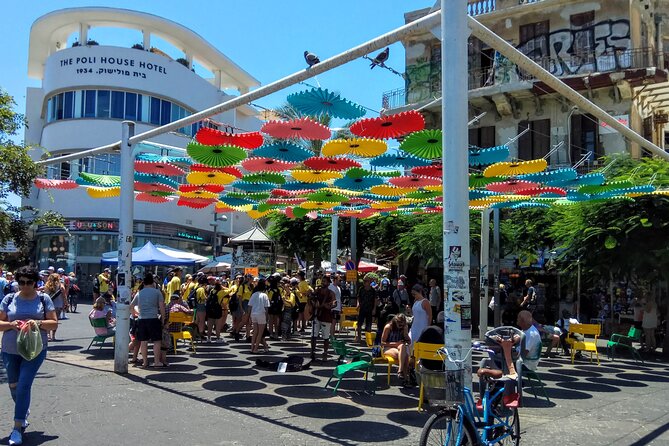
This half-day walking and food tour is interesting because it connects Tel Aviv’s modern roots with the everyday life of the city’s neighborhoods. I like the Bauhaus and White City focus, since you’re not just looking at buildings, you’re learning why that style matters here.
I also like how the route is built around real food stops, with Carmel Market as the big payoff. You get complimentary tea or coffee along the way, and the tour is capped small for a more personal pace.
One thing to think about: it’s still a 5-hour walking experience, and you’ll likely want to budget for lunch and drinks (about $40 per person).
Key things you’ll enjoy on this Tel Aviv walking and food tour
- Bauhaus Street Intelligence on Rothschild Boulevard, with a clear story behind the White City look
- Small group feel, with a cap of only 10 participants for better questions and slower details
- Carmel Market food time where the walking tour turns into actual eating and sampling
- Tel Aviv origins plus immigration stories, including Yemenite Jewish history in Kerem HaTeimanim
- Street-by-street architecture variety, from national landmarks to overlooked corners locals actually use
Price and group size: what you’re really paying for
The cost is listed as $500 per group, up to 6 people, and the experience runs about 5 hours. That pricing setup can feel steep if you’re solo, but it often becomes fair when you split it with friends or family.
Also, the tour caps at only 10 participants. That matters more here than on a long bus-style tour, because the main value is in walking explanations, quick detours, and time to pause and look up close.
You’ll get a mobile ticket, so you’re not messing around with printed vouchers. And you’ll start at Habima Theatre at 10:00 am, which is a good time to beat some of the midday heat if you’re watching your stamina.
More Walking Tours in Tel Aviv
- Walking Tour of Akko (Half-day)
★ 5.0 · 84 reviews - Tel Aviv: Jaffa Half-Day Walking Tour
★ 4.5 · 70 reviews - Tel Aviv: Florentin Saturday Walking Tour
★ 3.5 · 65 reviews
Starting at Habimah Square, where Tel Aviv learned to speak Hebrew
You begin at Habima Theatre in the Tarsat Ave 2 area, a solid first stop because it anchors the tour in language and national identity. Habimah Square sits where multiple major streets meet, so it’s a practical place to orient yourself fast.
The national theatre of Israel is here, and it’s tied to one of the first Hebrew language theatres. That theme of language, culture, and public life runs through a lot of what you’ll see next.
Even if architecture isn’t your thing, this start helps you understand why modern Tel Aviv felt like it was reinventing itself in plain sight.
Rothschild Boulevard and the White City Bauhaus clues
Rothschild Boulevard is Tel Aviv’s first boulevard, and your guide uses it as a spine for the whole morning. The street is named for someone in one of the wealthiest families in world history, and the buildings along it reflect that early power and ambition.
This is where you get the Bauhaus and International style story that gives Tel Aviv its famous White City nickname. You’ll take a few short detours, but you keep returning to Rothschild until you reach Ahuzat Bayit, described as the first neighborhood of Tel Aviv.
What I like about this approach is how it trains your eye. Instead of treating Bauhaus as a vague style word, you learn how it shows up in the buildings and what that new look represented at the time.
Tip for you: when you’re out walking, pause for 30 seconds and look up. This part is best enjoyed when you can actually see the details, not just the street level.
King Albert Square area: boutique hotels and oddball architecture details
From the Rothschild axis, the tour shifts into smaller, more surprising corners. Near King Albert Square, you pass by major landmarks like the Norman Hotel and the Pagoda House style presence that stands out because of its eclectic look.
Then you’ll stop near Nachmani St 23. This is one of those quick segments that pays off later, because it shows you Tel Aviv isn’t only about big formal monuments. It also includes quirky buildings that grew out of commercial life and personal taste.
These short pauses are useful if you want a tour that moves, without leaving you completely in the dark between stops.
More food and drink tours in Tel Aviv:
- Carmel Market Tasting Tour – LocaLocal
★ 5.0 · 140 reviews - Tel Aviv Food Tour of the Carmel Market
★ 4.0 · 29 reviews - Carmel Market Tasting Tour
★ 5.0 · 25 reviews - GoKEDEM Golan Heights ATV Action & Wine-Tasting Tour From Tel Aviv
★ 5.0 · 8 reviews
Beit Levin, the Castle, and the KGB House vibe
A quick walk brings you to Beit Levin, also nicknamed the Castle and the KGB House. That means you get a story-focused stop, not a long museum moment.
The value here is context: why certain buildings earn nicknames, and how those names connect to real political and social layers in Tel Aviv’s past. Even if you only catch glimpses of the exterior, you’re being taught what to notice.
Short stops like this are great for people who get restless when a tour turns into a slow lecture. You get a payoff without losing momentum.
Tel Aviv light rail station area: modern planning in real time
You pass by Yehuda ha-Levi Street and the location of a station of the new Tel Aviv light rail. This is a smart inclusion because it shifts the conversation from past to present, and it shows how the city keeps reshaping itself.
If you like cities that are always under construction, this part will feel especially relevant. If you hate uncertainty and construction noise, just know that it’s a quick stop.
The overall tour rhythm keeps these modern planning moments brief, so you don’t get pulled away from the neighborhoods’ main character.
The Tel Aviv Great Synagogue: easy to miss, worth slowing down for
The Tel Aviv Great Synagogue stop is one of the “blink and you’ll pass it” moments. The tour notes that if nobody points it out, you have a good chance of walking by without noticing it.
Planned by the founders of Tel Aviv, it was built many years after the neighborhood itself. That gap between planning and reality is a theme you’ll recognize elsewhere too, where big intentions take time to show up as buildings.
If you’re walking with kids, this is a good moment to make it a game: spot the synagogue, then figure out what makes it stand out from adjacent streets.
Founders Monument and Fountain, and what it means to pay to build a city
Next you’ll visit the Founders Monument and Fountain. This point on Rothschild Boulevard commemorates Jewish families who chipped in money to build a new modern neighborhood that became known as Tel Aviv.
That detail changes how you look at the area. It’s not just “pretty architecture.” It’s people putting money behind an idea, shaping the city through collaboration.
It also helps the later story about founders and major figures make more sense, since you see the financial and social effort behind the headlines.
Meir Dizengoff on horseback, and the Ben-Gurion connection
You’ll stop for the Meir Dizengoff statue, with him shown on horseback in front of his house. Dizengoff is Tel Aviv’s first mayor, and the statue is more than decoration because it points to a specific place in the city’s early leadership.
The notes add a strong historical link: after an absence of 2000 years, it was at this house that David Ben-Gurion declared a new Jewish state in 1948.
This is a short stop, but it’s historically weighty. For you, it’s a chance to connect street names and plazas to real political milestones, without reading a book.
Migdal Shalom Tower: Tel Aviv’s first skyscraper story
Migdal Shalom Tower is described as the first skyscraper in the Middle East. You’ll also learn it was built on the location of the first Hebrew high school, HaGymnasia.
That combination is interesting because it mixes education and skyline ambition. It’s a reminder that modern Tel Aviv built upward while also building institutions for learning.
The time allocated here is about 15 minutes, which is enough to look at the structure and absorb the idea without feeling rushed.
Herzl St 2: Alfred Dreyfus and Theodore Herzl’s intellectual spark
On Herzl St 2, you’ll see the house of Akiva Weiss, described as the initiator to build Tel Aviv, plus a statue of Alfred Dreyfus. Dreyfus, a Jewish captain in the French Army, ties into the famous Dreyfus affair, which became a symbol of modern injustice and antisemitism.
The tour also highlights a cause-and-effect connection: the Dreyfus affair had a big impact on Theodore Herzl, who is described as more or less responsible for the political momentum behind the Jewish state that shaped Tel Aviv’s story.
This stop gives you something rare on walking tours: a single street corner that explains how international events helped shape local architecture and identity.
Neve Tzedek: low-rise streets, synagogues, and design shopping
The tour then shifts into Neve Tzedek, described as the first tiny Jewish neighborhood outside the walls of Jaffa in the 19th century. It was followed by other tiny neighborhood communities for different Jewish social and ethnic groups, and today they’re collectively called Neve Tzedek.
You’ll pass some of the 100+ year old houses and synagogues. Then the tour brings it to the present, pointing out how avant-garde design stores, fashion boutiques, handicraft shops, and a handful of good restaurants keep the area lively in a more human scale.
This is one of those neighborhoods where you’ll want to slow down even beyond the tour’s timing. The streets are built for wandering, and the architecture isn’t only for photos, it’s part of how people live nearby.
If you’re shopping, keep it light. This is a walking tour first, so you’ll want your hands free and your schedule intact.
Park HaMesila: an Ottoman railway echo turned into a park
Park HaMesila connects the beach with downtown Tel Aviv along the route of the old Ottoman railway. You’ll also learn that the red line of the Tel Aviv light rail rides under this park.
This stop is short, but it’s a useful lesson in urban layers. Tel Aviv often repurposes what came before, turning old infrastructure into space for people now.
If you like seeing the city as a living timeline, you’ll appreciate how the past and present touch here.
Aharon Chelouche House: Mizrahi Aliya roots and a private synagogue
Next up is the Aharon Chelouche House. The story centers on Aharon’s arrival in the Holy Land during a Mizrahi Aliya about 50 years before other Jews were giving numbers to Ashkenazi Aliyot.
He paid for the plot of land called Neve Tzedek and built the first house with a private synagogue. This gives Neve Tzedek a personal origin story, not just a neighborhood name.
What this adds for you: it makes the immigration narrative feel local and specific, tied to property, institutions, and everyday life.
Suzanne Dellal Centre: modern dance built on school ruins
You’ll visit the Suzanne Dellal Centre, home to Batsheva Dance Company and Inbal Dance Theater. The key detail is that it was built on the ruins of the Alliance School for Boys and the Yechiely Girls School from 1908, now beautifully restored with a picturesque piazza.
This stop is short, but it’s powerful because it ties art to place. It reminds you that cities don’t only preserve buildings, they also preserve what communities used those buildings for.
If you’re a fan of dance, this can make you plan an evening in Tel Aviv around performances. Even if you’re not, the stop gives you a better sense of how Tel Aviv uses cultural space.
Carmel Market: where the tour’s food time actually makes sense
Carmel Market, Shuk HaCarmel, is the long stop, around 1 hour 45 minutes. This is where you’ll feel the shift from history talk to street-level life.
The market sells everything from clothing and spices to vegetables and even electronics. Then it changes again in the modern era, with trendy bars, restaurants, coffee shops, and chef-owned food stalls.
This is also where the guide’s pacing shows. The most praised aspect in the experience is that the guide manages comfort, including shade, bathrooms, and places to sit when needed. That’s not “extra,” it’s what lets you enjoy the market instead of just surviving it.
For practical planning, come ready to snack, not to eat a full sit-down meal right away. You’ll probably taste more than you think, and you’ll walk out satisfied enough to keep your evening rolling.
Kerem HaTeimanim: Yemenite immigrant streets that shaped the Carmel Market
After Neve Tzedek and Park HaMesila, the tour ends at Kerem HaTeimanim. This area is described as an early 19th-century poor neighborhood for Jewish immigrants from Yemen.
You’ll learn that these immigrants started a market that later became the largest one in Tel Aviv, Carmel Market. The tin shacks and wooden houses are gone, but narrow streets remain, lined with small restaurants and ground level houses.
That’s a strong way to end, because it reframes the market. It’s not just a place to buy souvenirs or quick bites. It’s a living story of migration and survival turning into a daily civic center.
If you like street scenes with a sense of purpose behind them, this stop will land.
Getting the most out of 5 hours of walking
Plan for real walking. Even though it’s a half-day tour, it’s structured around multiple neighborhoods and frequent short stops, not long vehicle rides.
Wear comfortable shoes you trust. Bring water, and use shade whenever your guide points it out. Tel Aviv weather can surprise you, and the tour is described as requiring good weather.
For your meal planning, set aside time at the market and don’t over-schedule right after the tour ends. You finish at Coffee at the market, HaCarmel St 33, so it’s a good moment to keep things easy and stay close.
If you’re traveling with kids, most people can participate, and the stop sizes feel manageable. Still, keep an eye on energy, especially during the Carmel Market segment.
Who this Tel Aviv urban walking and food tour suits best
This is a great fit if you want Tel Aviv’s big story told through streets and food. You’ll like it if you care about how the city grew, how architecture reflects identity, and how immigration history shows up in everyday places.
It’s also a good match if you’re visiting for the first time and want your bearings fast. Starting at Habima and moving through Rothschild, then into Neve Tzedek and the shuk, gives you a full sense of the city’s layers without needing multiple separate tours.
If you dislike walking or hot weather, you might find the pacing demanding. You can still enjoy the history, but it won’t be as comfortable as a fully seated tour.
Should you book this Tel Aviv walking and food tour?
I’d book it if you want a smart mix of architecture, city planning, and real market time in one afternoon. The small group size and the guide style that’s praised for clear storytelling and comfort planning are exactly what make this kind of tour work.
Skip it or think twice if you’re only interested in museums or you hate walking. Budget also matters: even though the tour price is set per group, lunch and drinks are listed as about $40 per person, so expect extra spend for the food portion.
Overall, this is a strong way to learn Tel Aviv with your feet and your taste buds, not just your camera.
FAQ
Where does the tour start?
The tour starts at Habima Theatre, Tarsat Ave 2, Tel Aviv-Yafo, Israel.
What time does the tour start?
The start time is 10:00 am.
How long is the tour?
The duration is approximately 5 hours.
How much is the tour?
The price is $500.00 per group, up to 6 people.
How big is the group?
The tour is capped at only 10 participants.
Does the tour use a mobile ticket?
Yes, the tour uses a mobile ticket.
Where does the tour end?
The tour ends at Coffee at the market, HaCarmel St 33, Tel Aviv-Yafo, and you finish at Carmel Market.
What’s included in the price?
The included items are all fees and taxes.
Is lunch included?
Lunch, food, and drinks are not included, and they will be about $40 per person.
Is the tour affected by weather?
Yes. The experience requires good weather, and if it’s canceled due to poor weather you will be offered a different date or a full refund.
Are service animals allowed?
Yes, service animals are allowed.
More Food in Tel Aviv
- Tel Aviv: Carmel Market Food Tasting Tour “Shuk Hacarmel”
★ 4.0 · 8 reviews - Tel Aviv: Carmel Market Food Tasting Tour “Shuk Hacarmel”
★ 5.0 · 5 reviews - Tel Aviv:Food & History Tour of Jaffa Old City & Flea Market
★ 2.5 · 4 reviews - Food & Drink Private Guided Tour in Tel Aviv
★ 5.0 · 3 reviews
Recently reviewed around Tel Aviv
- private Full-day Tour to Jericho + the Dead Sea★ 5.0 · 3 reviews
- VIP Tel Aviv airport Terminal 3 Fast Track Skip Line From plane★ 4.5 · 9 reviews
- Package VIP Skip Line Services in BGN Airport with Transfer to Tel aviv Hotels★ 5.0 · 3 reviews
- Walking Tour of Akko (Half-day)★ 5.0 · 84 reviews
- Tel Aviv Street Art & Graffiti Tour★ 5.0 · 76 reviews
- West Bank Tour from Tel Aviv★ 4.5 · 51 reviews
- Private wine tour of Northern Israel★ 5.0 · 4 reviews
- Tel Aviv & Jaffa Urban Bike Expedition★ 5.0 · 33 reviews
Food & Drink, compared.


GoKEDEM Golan Heights ATV Action & Wine-Tasting Tour From Tel Aviv
Read our review →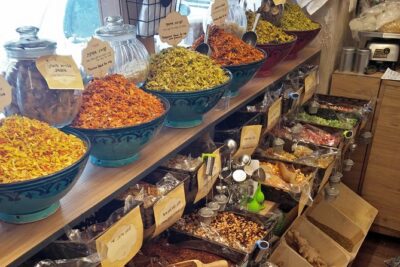
Browse the lists this tour appears in