
Reviewed · WALKING TOURS
All Inclusive Walking Tour Old City Jerusalem
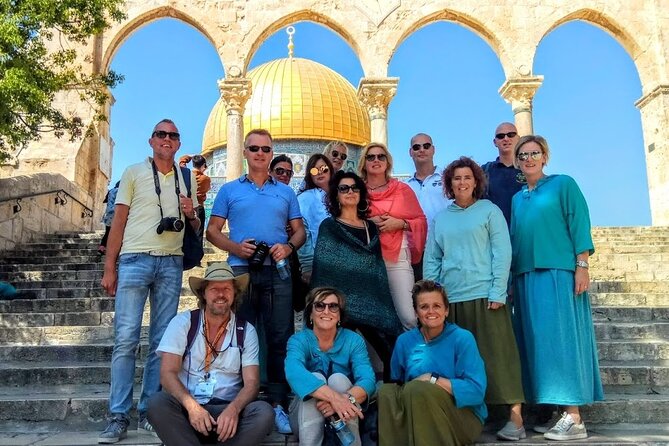
This walking tour is interesting because it compresses Jerusalem’s biggest spiritual landmarks into one organized route, without trying to make you memorize a map. You get a small-group feel, with a cap of 15 people, plus a guide who can explain what you’re actually looking at. I also like that guides such as Efrat and Leontine are known for pacing and sticking with your questions.
What I like next is the built-in “real day” breaks: a local restaurant lunch and a tea or coffee stop. One possible drawback to plan for is the dress code and site rules, since you can be refused entry if your shoulders or knees are uncovered, and time at certain stops (like the Western Wall) can feel tight if the group moves slowly.
Key things to know before you walk
- Small group size of up to 15 travelers means less waiting and more chances to ask questions.
- 6 hours on foot is a true Old City walk, so comfortable walking shoes matter.
- Lunch and tea or coffee included, so you are not hunting for food between major religious sites.
- Hurva Synagogue entry is included, so you get inside time that self-guided visits may not simplify.
- Dress code enforced at worship sites means you should plan your outfit before you leave home.
- Mobile ticket is used, which makes the start of the day simpler once you arrive at the meeting point.
Start at Jaffa Gate, then get your bearings fast
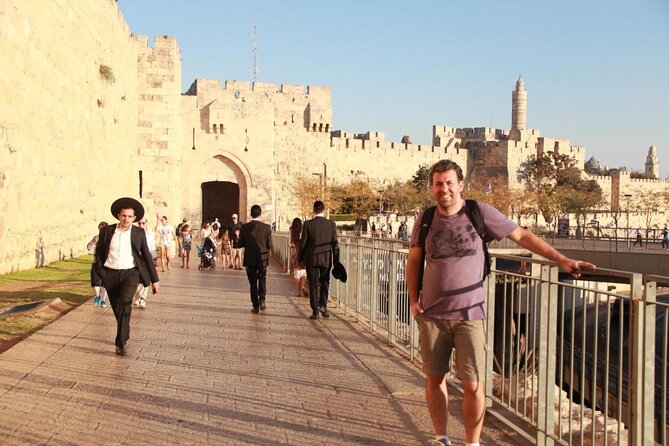
Your tour starts at 9:00 am at the Tourist Information Center on Omar Ibn Katab in Jerusalem, and it ends back at the same meeting spot. That matters because the Old City can feel like a maze. Starting at the main entrance for visitors lets you build a mental map right away, and you are not guessing which streets connect to the next landmark.
The first stop is Jaffa Gate, where you immediately understand how the city funnels people in and out. Even if you have seen photos, this is where the Old City stops being an idea and starts being a place with real foot traffic, real noise, and real sight lines. If you want your day to feel manageable, you need this early orientation.
Right after, you’ll walk into smaller neighborhood fabric with the Armenian Quarter. It’s the smallest of the four quarters, so it can be a nice change of pace from the busiest streets. You also get a short historical framing for why Armenian presence is so longstanding in Jerusalem, which helps when you later notice how different communities share the same walled city space.
More City Tours in Jerusalem
- Jerusalem: Guided Walking Tour of the Old City
★ 4.7 · 386 reviews - Full Day City Tour of Jerusalem
★ 4.1 · 367 reviews - From Jerusalem Small group tour Old&New City ENTRY FEES INCL
★ 4.0 · 135 reviews
Cardo and Broad Wall, how empires shaped the same streets
From the Armenian Quarter, the route heads toward the Cardo, the famous main street from Ancient Jerusalem under Byzantine rule. This is one of those locations where a guide earns their fee. Without context, you might see columns and stones. With context, you start to recognize that cities reuse paths for centuries, because people want to walk along the most practical routes.
You’ll also spend time at the Broad Wall in the Jewish Quarter, tied to the reign of King Hezekiah. The benefit here is not just the date, it’s the perspective: Jerusalem’s defensive structures and sacred structures share the same geography. As you move, you begin to see why certain areas feel layered, not just old.
Practical tip: expect a lot of short stops. The time allocations are modest at each point, so you should treat each segment like a guided orientation. When you see something you want to linger on, ask your guide a direct question, then decide quickly if you want an extra minute or if you want to keep the day’s momentum.
Hurva Synagogue, interior details and rooftop views
One of the most rewarding parts of the day is the stop at Hurva Synagogue. Entry here is included, so you do not have to figure out ticket logistics while you are already navigating crowds. The focus is on the synagogue’s significance and design, including what you can see inside, plus the story behind it.
What makes this stop stand out is twofold. First, you get to appreciate the interior beauty and the Holy Ark in a way that’s hard to replicate from street view. Second, the tour includes time to enjoy a 360-degree view from the rooftop. That kind of panorama is one of the best ways to “lock in” what you’ve walked through all morning.
A heads-up on expectations: the rooftop view is not the same as standing alone with no other people. You will likely be sharing space and moving with the group. Still, it’s a high-value inclusion because it turns the day from a lecture into something you can see all around you.
Western Wall and Temple Mount, sacred time plus smart dress choices
Then comes the big emotional magnet of the day: the Western Wall. It’s the retaining wall area tied to the First and Second Temples, and it’s a major place of prayer and pilgrimage for Jewish visitors. Your guide will give context for what the wall represents, but your real understanding clicks when you’re standing there and watching how people pray, read, and move.
Time consideration: this stop is about 20 minutes. If the group moves efficiently, you get a meaningful visit. If crowds are heavy or people ask a lot of questions, it can feel like it passes quickly. In one instance, some people felt they didn’t have enough time to approach the wall closely. So if you have a specific moment you want to experience at close range, aim to be ready to move when your guide says it’s time.
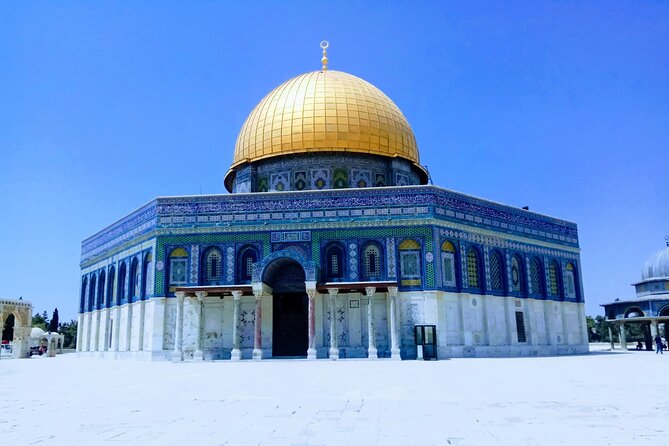
Next you head toward Temple Mount, the elevated site associated with the two Jewish Holy Temples and currently home to major Islamic shrines. The stop here is around 35 minutes, and it’s the kind of area where a guide’s framing helps you understand why the same ground carries layered meanings.
Key practical note: dress code is required. No shorts, no sleeveless tops, and your knees and shoulders must be covered for both men and women. You can risk refused entry if you do not comply. If you’re traveling in Jerusalem summer heat, plan lightweight long pants and breathable layers. If you’re traveling in cooler months, a simple scarf or layer can also solve the shoulder issue fast.
Also, one caution from real-world experience: there was at least one disappointing moment described where the tour operator encouraged men wearing shorts and casual shirts to approach the Western Wall to put paper notes in the cracks, and that made some people uncomfortable. Take the safe approach and follow the dress code yourself. If you are unsure what is allowed, ask your guide early, then watch for what the staff on site permits.
More Walking Tours in Jerusalem
- Jerusalem Walking Tour: In the Footsteps of Jesus
★ 4.5 · 67 reviews - Boutique Walking Tour of Jerusalem
★ 5.0 · 64 reviews - Old City of Jerusalem Guided Walking Tour
★ 5.0 · 47 reviews - Jerusalem: The Center of the Universe – Walk the “Holy City” with GaryTheGuide
★ 5.0 · 38 reviews
Golden Menorah, what the symbol means today
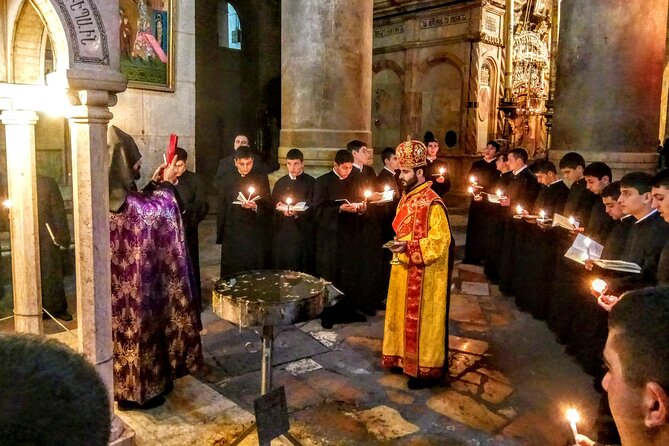
After Temple Mount, the route includes the Golden Menorah. You’ll hear the biblical description of the seven-lamp lampstand made of pure gold used in earlier tabernacle and temple settings, and you’ll also learn about the present-day replacement based on research carried out by academic and biblical researchers.
This stop is short, about 15 minutes, but it adds something important. The Old City is not only about holy buildings. It’s also about symbols and how communities interpret them over time. Even if you’re not religious, you can still appreciate how meaning is constructed and reconstructed.
Via Dolorosa, walking a famous route one segment at a time
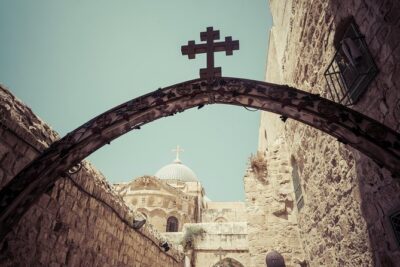
Next you’ll walk part of the Way of the Cross, often connected to the Via Dolorosa. This is a processional route representing the path Jesus would have taken on the way to crucifixion. Your guide will explain the tradition and why the route became a pilgrimage-style walkway.
The practical reality: this area can be busy, and the historical timeline is not something you can fully verify by just reading plaques. The value of going with a guide is that you leave with a clearer picture of what people believe, why they walk, and how the route has shaped the Old City experience.
If you are sensitive to crowds, keep a calm pace and avoid trying to stop dead in the middle of a lane. Move with the group, then step aside when you want a photo.
Church of the Holy Sepulchre, a sacred maze with a plan
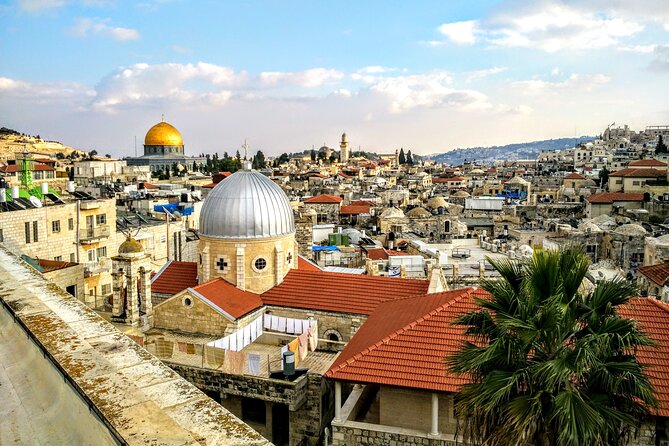
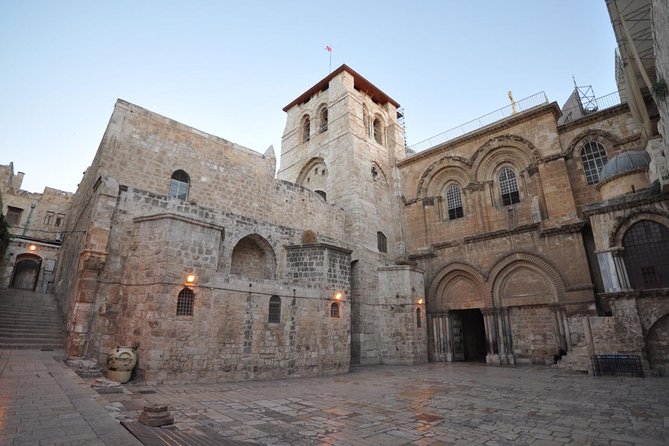
The day’s most physically crowded stop is usually Church of the Holy Sepulchre. This is presented as the most sacred site in the Christian world, connected to the crucifixion, burial, and resurrection of Jesus. Inside you’ll hear about Golgotha, the place of crucifixion, which is within the church.
Time is about 30 minutes. That’s not long, given how many chapels, corridors, and side rooms exist. This is why a guided visit is so useful: you do not just drift. You move through the key areas with context, so you understand what you’re seeing instead of just watching your watch.
One of the best things you can do here is slow down for one or two moments, even if you feel rushed. Take in the details on the walls or altars, then let your guide point out what matters most. You’ll get more from the visit when you pick a small focus rather than trying to absorb everything at once.
Deir Al Sultan, the rooftop monastery and the Status Quo
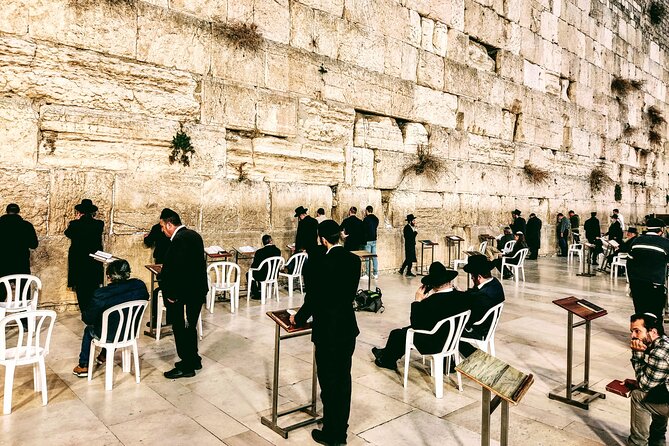
To finish off the Holy Sepulchre complex area, the tour includes Deir Al Sultan, a monastery located on the roof of the Church of the Holy Sepulchre. It’s about 15 minutes, and your guide will explain the Status Quo, an agreement between religious communities with roots in Ottoman-era arrangements.
This stop is short, but it’s a real lesson in how coexistence gets managed when multiple groups share the same sacred spaces. Even if you don’t love politics, it helps to know why certain rules exist and why access and appearances can look different from what you expect.
What the lunch and coffee actually buy you
You’re not just walking for six hours without fuel. The tour includes a tasty lunch in a local restaurant, plus tea or coffee in a nearby café. This is a big value point for me, because it reduces one of the biggest headaches of the Old City: decision fatigue.
When you’re moving between sacred sites, you don’t want to spend your energy comparing menus and negotiating prices. The included meal also acts as a pace reset. By the time you sit down to eat, you’ve already absorbed a lot of information, so the guide can keep the story coherent instead of scattering it.
One more thing: the coffee and lunch stops are typically placed in convenient spots. That helps you avoid losing time to long detours just to find a bathroom or a place to stand out of the sun for a moment.
Pace and group size, why 15 people feels better than it sounds
A maximum group size of 15 changes the whole experience. You’re close enough to hear explanations, but far enough that you’re not packed shoulder-to-shoulder the entire day.
In particular, guides like Efrat are praised for being patient and prepared, with history materials ready for questions. That matters in Jerusalem because a lot of visitors have the same basic curiosity, but their questions come at different moments. A patient guide can answer you without derailing the rest of the group.
The pacing is also described as well-timed, which is the difference between a tour that looks impressive on paper and one you actually enjoy while tired. Still, keep in mind that this is a walking tour with multiple religious sites, so some parts will be slower if crowds are heavy.
Price and value: what $120 covers and what you should compare
At $120 per person, the price is not the cheapest way to see the Old City. But when you compare what’s included, it starts to make sense.
You’re paying for:
- A guided route that hits major landmarks you likely would not string together easily
- Small-group size with a maximum of 15
- Lunch plus tea or coffee
- Included admission for Hurva Synagogue
- A guide who helps you interpret what you see, not just point it out
If you plan to do the Old City on your own, you can save money. But you’ll also spend time working out where to go, how to manage entrances, and how to understand what you’re looking at once you’re there. For a first-time visitor, this kind of structure often ends up feeling like the better value, even if you pay more upfront.
Who this tour suits best
This tour is ideal for first-time visitors who want a guided introduction across the Old City’s major faith landmarks. It also suits you if you enjoy learning in real time, with a guide who can respond when you ask questions.
It may not suit you if:
- You plan to dress casually and hope to improvise on site
- You want maximum free time at one specific place like the Western Wall
- You strongly dislike hearing any personal opinions from a guide. One negative experience mentioned political views not needed, so keep your expectations grounded in the guide’s role as storyteller.
If you like a structured day with short, efficient stops and meaningful context, you’ll probably enjoy it.
Practical checklist before you go
A few things can make or break the experience in Jerusalem’s Old City:
- Wear covered shoulders and knees. Bring a light layer that actually works in warm weather.
- Use comfortable shoes. You’re walking through tight streets and over varied stone surfaces.
- Keep expectations flexible on crowds. This area is popular, and timing can shift.
- If you want close time at the Western Wall, be ready to follow your guide’s cues quickly.
Should you book this Old City Jerusalem walking tour?
I think you should book this tour if you want a high-structure, first-time-friendly introduction to Jerusalem’s Old City that includes a guided route, a real lunch, and smart stops that you can’t easily reproduce on your own. The small group size, the inclusion of Hurva Synagogue entry, and the fact that guides like Efrat and Leontine are praised for pacing make it feel worth the price for most people.
Skip it or choose carefully if dress code would be a hassle, if you need lots of extra time at one single site, or if you do not want any guide commentary beyond straight facts. If you do book, pack smart for the rules, and treat each stop as a guided chapter rather than a slow museum visit.
FAQ
How long is the All Inclusive Walking Tour Old City Jerusalem?
The tour runs for about 6 hours.
What is the meeting point for the tour?
The tour meets at the Tourist Information Center on Omar Ibn Katab, ירושלים.
What time does the tour start?
The start time is 9:00 am.
How many people are in the group?
The tour has a maximum of 15 travelers.
What is included in the price?
The price is $120.00 per person, and the tour includes lunch plus a complimentary tea or coffee. Admission to Hurva Synagogue is included.
Do I need a dress code for the tour?
Yes. A dress code is required for places of worship and selected museums. No shorts or sleeveless tops are allowed, and knees and shoulders must be covered for both men and women.
Is this tour a mobile ticket experience?
Yes, it uses a mobile ticket.
Are there any free admissions during the tour?
Many stops list admission as free, while Hurva Synagogue lists admission as included.
Can I cancel for a refund?
Yes. There is free cancellation, and you can cancel up to 24 hours in advance for a full refund.
Are service animals allowed?
Service animals are allowed.
Recently reviewed around Jerusalem
- Walking tour of the Old City of Jerusalem★ 4.3 · 4 reviews
- Magical Walking Tour in Old City of Jerusalem★ 5.0 · 27 reviews
- Tour of Jerusalem & Dead sea private tour★ 5.0 · 4 reviews
- West Bank Tour from Jerusalem★ 4.5 · 184 reviews
- jerusalem classic tour★ 5.0 · 3 reviews
- Private Tour: Old City of Jerusalem Christianity Tour★ 5.0 · 5 reviews
- Full Day Private Christian Tour in Jerusalem with Tour Guide★ 5.0 · 28 reviews
- Private Walking Tour in Jerusalem’s Old City★ 5.0 · 3 reviews
Walking Tours, compared.


Jerusalem Walking Tour: In the Footsteps of Jesus
Read our review →



Browse the lists this tour appears in