
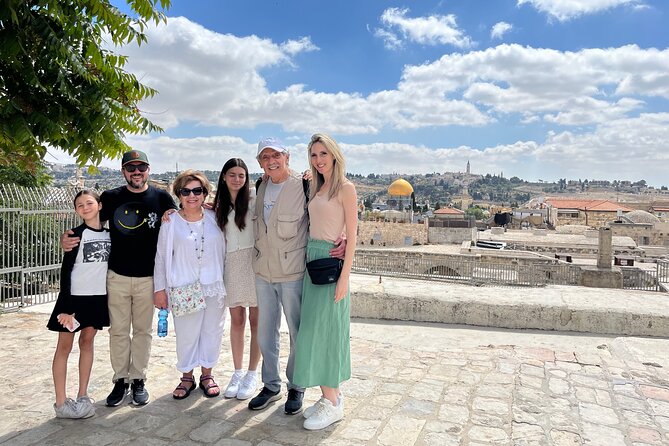
Reviewed · WALKING TOURS
Private Walking Tour in Jerusalem’s Old City
Jerusalem’s Old City can feel like a maze, but this private walk turns it into a clear, human story you can actually follow. I like how the route links the four quarters with the big Temple Mount question, so you stop seeing separate faiths and start seeing shared space, shared conflict, and shared daily life.
Two things I especially like: first, Orna is a licensed Ministry of Tourism guide with more than 10 years working with mixed ages and backgrounds, and her explanations are sharp, practical, and never dry. Second, entry fees are included, so you spend your energy walking, looking, and asking questions instead of figuring out ticket puzzles.
One consideration: Temple Mount security and access rules can change what you can see, especially around Fridays, Saturdays, and major holidays. If it’s closed during your visit, you’ll do a viewpoint instead, so go in expecting flexibility around that part of the day.
Key things that make this tour work
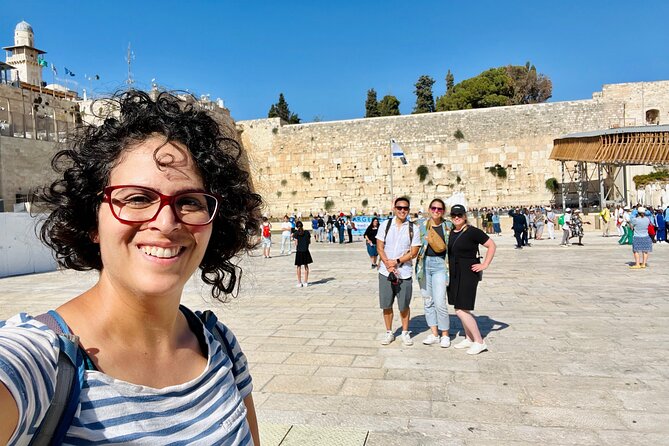
- A licensed guide who can handle tricky questions about history, faith, and how the same place means different things to different people
- Four quarters plus Temple Mount in one smooth walking plan, not a pick-and-choose scramble
- All entry fees included, which is a real value saver inside the Old City
- Small-group privacy for up-close moments, with only your party on the route
- Wise, realistic Temple Mount rules, including dress code and what happens if access is closed
- Local stops that feel lived-in, like markets and shops inside the Christian Quarter and beyond
Why start your Jerusalem day at Jaffa Gate
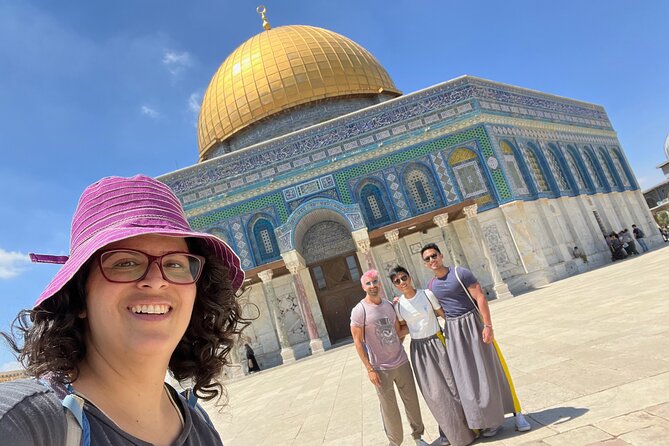
The tour kicks off at Jaffa Gate in the Old City walls. This is a smart start point because the walls give you orientation fast, and Orna builds the big picture before you even get deep into the streets.
You’ll get an explanation of who built the walls and when, plus why Jaffa Gate is named that way and what it meant historically. I also like that the guide points out specific bits of evidence you can still spot today, which makes the Old City feel more grounded than just legend.
And yes, you’ll hear the mysterious, slightly eerie details too, like the tombs near Jaffa Gate and the story connected to a breach in the wall. It’s the kind of fact-and-story mix that keeps you awake when the walk gets real.
More City Tours in Jerusalem
- Jerusalem: Guided Walking Tour of the Old City
★ 4.7 · 386 reviews - Full Day City Tour of Jerusalem
★ 4.1 · 367 reviews - From Jerusalem Small group tour Old&New City ENTRY FEES INCL
★ 4.0 · 135 reviews
Armenian Quarter, James Cathedral courtyard, and why quarters exist
Next comes the Armenian Quarter, where you visit the courtyard of James Cathedral. Orna doesn’t treat the Armenian community like a background footnote. She explains how and why the Armenians ended up with their own quarter, and what that meant for protection, identity, and daily life.
You’ll also connect the dots around James, who is linked to the cathedral, and learn who built a wall around the quarter. Then there’s a practical side to the story too, including how the Armenian Patriarch helped raise funds for cathedral renovation, so this isn’t just ancient stuff, it’s about community survival in real time.
Even if you’re not Armenian, this stop helps you understand Jerusalem as a patchwork of communities that had reasons to live where they lived.
Jewish Quarter synagogues, the Cardo, and the story the stones remember
In the Jewish Quarter, you’ll visit four Sephardic synagogues and learn how they were built and by whom. Orna ties the synagogues to a personal, dramatic narrative linked to a man who left besieged Jerusalem in a coffin to preserve Judaism. That story is intense, and she handles it in a way that keeps it understandable rather than sensational.
Then you move to the Cardo, the old main street of the city, and the guide explains its story so you can picture how Jerusalem moved. Instead of only looking at buildings, you start seeing routes, crowd flow, trade, and where people likely gathered.
You’ll also hear the connection between the Hurva Synagogue and Jewish communities who came all the way from Europe to wait for the return of the Jewish Messiah. This is one of those moments where history stops being abstract, because the guide shows you how belief can shape real migration.
Small note that helps you plan
On Fridays, the four Sephardic synagogues are replaced with another synagogue. So if your trip lands on Friday, don’t worry, the theme stays the same, just the specific stops shift.
More Walking Tours in Jerusalem
- All Inclusive Walking Tour Old City Jerusalem
★ 5.0 · 83 reviews - Jerusalem Walking Tour: In the Footsteps of Jesus
★ 4.5 · 67 reviews - Boutique Walking Tour of Jerusalem
★ 5.0 · 64 reviews - Old City of Jerusalem Guided Walking Tour
★ 5.0 · 47 reviews
Western Wall, what people know, and what they often misunderstand
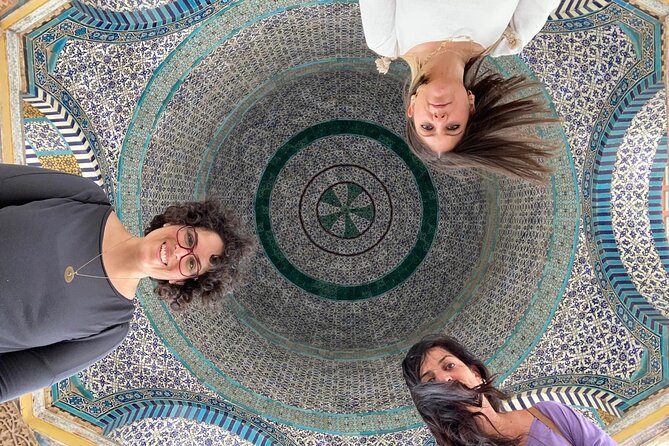
The Western Wall stop is fast but focused. Orna explains how it was built and by whom, and she also covers a key point that surprises a lot of visitors: why it is not the holiest place for Jews.
That sounds like a contradiction until you hear the logic behind it. The guide frames it clearly, so you leave with a better grasp of how Judaism defines holiness and how sites relate to temple-era geography.
You’ll also hear the Western Wall described as the largest synagogue in the world, which gives you a sense of scale, even before you try to picture the people filling the plaza.
Temple Mount: the monotheism crossroads and the limits you must respect
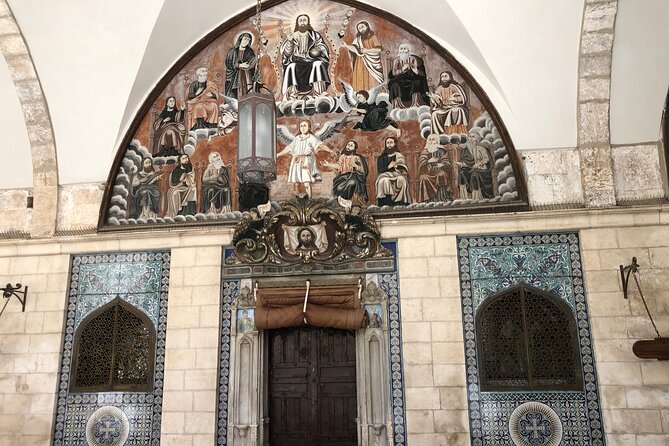
Now for the big one: Temple Mount. This is where the tour’s purpose feels most obvious, because it’s sacred for Judaism and Islam, and the meaning of the place is shaped by politics, excavation, and memory.
Orna explains how the mountain became sanctified across monotheistic religions, then steps back to the historical turning points. You’ll learn that after the Second Temple was destroyed in 70 AD, Jews had no control over the site until 1967, following the Six Day War.
You’ll also get a lesson on archaeological tension, including mention of illegal excavations and the sifting project designed to save archaeological finds by sorting temple-mount soil. This is the part that helps you understand why people argue about stones and dirt, not just buildings.
And you won’t get a single-faith lecture. The guide includes Messianic Jews who want to build a Third Temple, plus Muslim graves found in the holiest area for Jews. The goal is not to pick sides. It’s to show why the same ground becomes different kinds of sacred.
Temple Mount rules you should plan around
Temple Mount has specific dress code rules. For example, men should wear pants under the knees and a T-shirt. Women should wear a long skirt or pants that are not skinny, long sleeves, and no cleavage. If you don’t have a cover, the workers there provide a skirt.
Also, Temple Mount closes to visitors every Friday and Saturday and during various Muslim and Jewish holidays. If that happens on your day, the tour includes a viewpoint overlooking the Temple Mount instead of access inside.
This is one of the few places in Jerusalem where being mentally flexible makes the day better, not worse.
Muslim Quarter streets, spice smells, and the Arab market walk
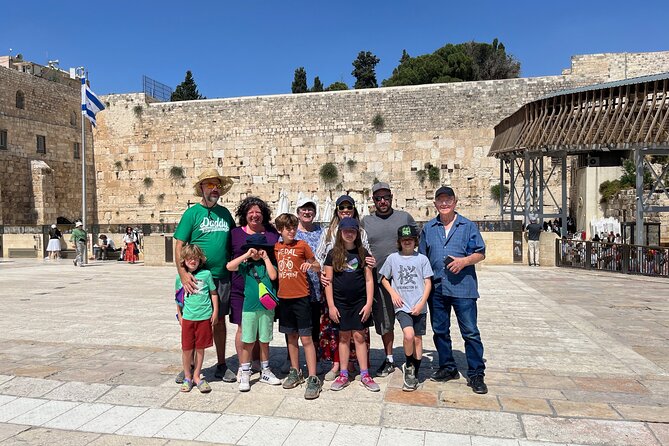
After the Temple Mount, you head into the Muslim Quarter. Orna explains who built the quarter and why, then guides you through the streets with the kind of street-level context that makes markets make sense instead of feeling random.
There’s also a stop at a spice store to try unique Arab sweet delights. I like this as a reset, because it breaks up the heavier religious history with something sensory and easy.
Then you walk the Arab market, where you can see everyday commerce and craftsmanship. Even if you don’t buy much, this is where you start feeling Jerusalem as a living city.
Via Dolorosa stations, short stops, and the route to the Holy Sepulchre
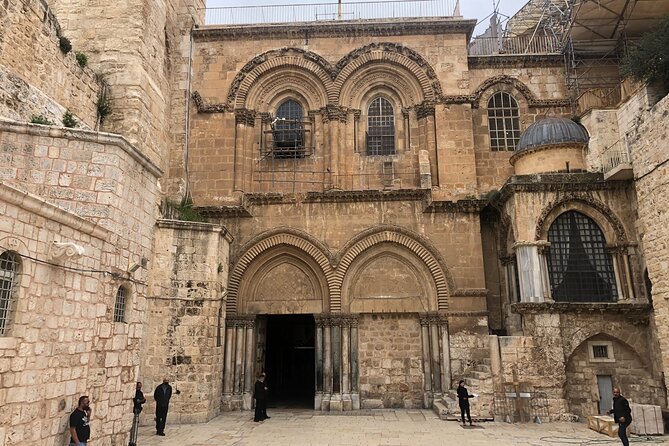
Next up is The Way of the Cross, walking through some stations of Via Dolorosa on your way to the Church of the Holy Sepulchre. Orna handles this as both geography and meaning, so the stations aren’t just photo backdrops.
This stretch is also where you’ll feel how busy and enclosed the Old City can get, so it helps that the tour is private. You’re not competing with a large crowd for the guide’s attention or losing time to confusing regroup points.
You’ll have a short, purposeful window before reaching the church, with enough pacing to stay comfortable.
Church of the Holy Sepulchre: crucifixion and burial, explained with restraint
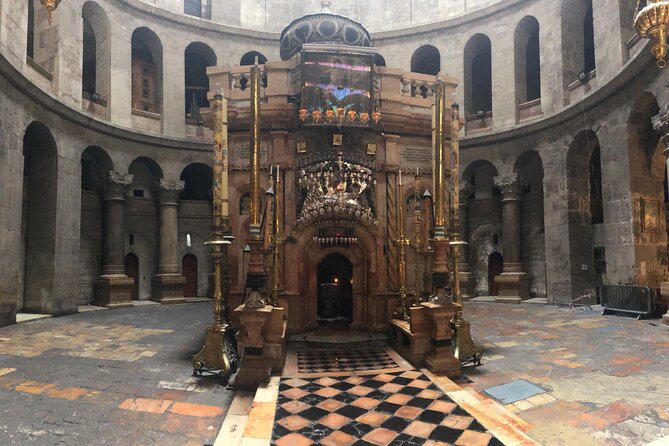
At the Church of the Holy Sepulchre, you visit the sites tied to Jesus’ crucifixion and burial. Orna explains what you’re looking at and gives you the Christian faith context behind the place.
This stop is about 45 minutes, which is a good balance. Long enough to understand the basics and get your bearings, not so long that you lose the thread.
I appreciate that the guide keeps it grounded. You’re there for spiritual meaning, but you still need orientation, timing, and a clear sense of what each area represents.
Christian Quarter: ceramics, a low statue, and a story from the window
In the Christian Quarter, Orna shares stories that make the neighborhood feel personal. You’ll hear about a patriarch who locked himself in his room and received food through the window, a detail that signals how Jerusalem history is full of survival decisions.
There’s also a stop at an Armenian ceramics shop, plus you can eat a cake and drink coffee at a local cafe. The hot drink and cake are not included, so treat this as your optional break, not a guaranteed meal.
You’ll also learn about the lowest statue in Jerusalem, and there’s a chance to meet local merchants depending on availability. This is the kind of flexible stop that can make the afternoon feel less scripted.
The newest gate in the wall, and why Jerusalem kept changing
After the main quarters, the tour includes a history moment about Jerusalem’s defenses: you’ll learn why the newest gate in the wall was needed and when it was built.
This is useful because it helps you understand the Old City as something that evolved. Walls were not a museum exhibit, they were living infrastructure, adjusted as the city changed.
Even if your brain is tired from constant holy-site context, this stop brings you back to engineering, planning, and the practical reasons behind city growth.
Our Lady of Peace roof views: the border story that explains why Jerusalem looks like it does
To end the day, you go to Our Lady of Peace and step into a different kind of Jerusalem history. Orna points out why this hotel location is linked to Europe, including how it relates to the Crimean War and who built the hotel.
Then you get something I really value on a walking tour: a panoramic view from the hotel roof. From up there, the Old City quarters, the Temple Mount, and the Mount of Olives become easier to recognize in your mind. It’s the payoff of all that street-level walking.
You’ll also hear who blew up the hotel and why, plus a key detail about its 19 years on the border between Jordanian Jerusalem and Israeli Jerusalem. That single fact helps a lot, because Jerusalem’s borders and divides are not only political, they also shape where people built, restored, and remembered.
The admission ticket for this part is included.
What makes Orna’s guiding style feel worth paying for
Orna is a licensed guide certified through the Ministry of Tourism, and she’s been working for over 10 years with people from many ages and cultural and religious backgrounds. In practice, that means she can switch gears without losing clarity.
I like that her tour pacing keeps the day from turning into a lecture. You get explanations that are detailed enough to help you understand what you’re seeing, plus humor and an easy-to-talk vibe that keeps questions welcome.
The tour also includes moments of exploration, including mention of new excavations you might not see on a typical quick route. That helps if you’ve been to Jerusalem before or if you’re worried you’ll repeat the same photos everywhere.
Price, group size, and where the value really shows
This is $650 per group for up to 8 people, for an approx 6-hour private walking tour. When you’re traveling as a group, the math can be surprisingly good.
Here’s the simple way to think about it:
- Two people: $325 per person
- Four people: $162.50 per person
- Eight people: $81.25 per person
The reason this can feel like value is that entry fees are included, and you don’t have to manage tickets or interruptions to arrange them yourself. You also get a private guide for only your group, which matters in the Old City where crowds and lines can eat time fast.
If you’re only two, it’s still reasonable if you want a guide for every step and a route that makes the Old City make sense. If you can combine with friends or family up to eight, this becomes one of the best ways to get deep coverage without wasting half your day on logistics.
Practical tips so you enjoy the walking, not fight it
Plan for steady walking in a place that can be crowded and uneven. Bring a hat and water, and wear comfortable walking shoes. This is not a sit-and-stare tour, even when the stops are mostly indoors.
Dress for holy sites matters. For the Western Wall and Church of the Holy Sepulchre, the guidance is no tank tops and clothing to the knees. For Temple Mount, the rules are stricter, and workers can provide a skirt if needed.
On the Temple Mount, also avoid bringing forbidden items like sacred objects, holy books, weapons (including a Lederman), laptops, tablets or iPads, alcohol, or musical instruments. If you’re packing light, it’s one more reason to recheck your bag before you head in.
Is this tour a good fit for your travel style?
You should strongly consider this if you want a guided Old City day that connects the different quarters instead of hopping from one isolated site to another. It’s ideal for people who like to ask questions, compare perspectives, and learn how religious meaning intersects with real city life.
It also suits mixed groups well because Orna has experience with different ages and different cultural and religious backgrounds. And because it’s private, you can keep your pace more comfortable than a crowded group tour.
If you hate walking, dislike religious context, or need a very strict schedule with zero flexibility, this might feel like too much. The Temple Mount access rules alone can change the shape of the day.
Should you book this Jerusalem Old City private tour?
Yes, if you want your Old City time to feel organized, human, and deeply explained. I’d book it if you care about understanding why the same places matter so much to different communities, and if you appreciate a guide who can handle tough context without making it heavy or confusing.
Book it especially if you’re traveling with family or friends and can fill most of the group size. The included entry fees plus the private nature can make it feel like smart spending rather than a premium splurge.
Only skip it if Temple Mount access is your top, must-see priority and you cannot tolerate a viewpoint alternative. If you can be flexible for that one area, this is a strong way to see Jerusalem with your brain fully awake.
FAQ
How long is the private walking tour in Jerusalem’s Old City?
The tour is about 6 hours.
How much does the tour cost?
It costs $650 per group, up to 8 people.
Where does the tour start and where does it end?
It starts at Jaffa Gate in the Old City of Jerusalem and ends at Notre Dame of Jerusalem Center on HaTsanhanim St 3, Jerusalem.
Are entry fees included?
Yes. Entry fees are included for the tour.
Is Temple Mount always included?
Temple Mount is closed to visitors every Friday, Saturday, and during various Muslim and Jewish holidays. If it is closed on your date, the tour includes a viewpoint overlooking Temple Mount instead.
What is the dress code for holy sites?
For the Western Wall and Church of the Holy Sepulchre, avoid tank tops and wear pants or skirts to the knees. For Temple Mount, men should wear pants under the knees and a T-shirt, and women should wear a long skirt or pants that are not skinny, with long sleeves and no cleavage. If you don’t have a cover, workers there provide a skirt.
What should I not bring to Temple Mount?
You should not bring holy books and sacred objects, any kind of weapon (including Lederman), laptops, tablets or iPads, alcohol, or musical instruments.
Is this tour private?
Yes. It’s a private tour/activity, so only your group participates.
Recently reviewed around Jerusalem
- Walking tour of the Old City of Jerusalem★ 4.3 · 4 reviews
- Private Tour: Old City of Jerusalem Christianity Tour★ 5.0 · 5 reviews
- Magical Walking Tour in Old City of Jerusalem★ 5.0 · 27 reviews
- Tour of Jerusalem & Dead sea private tour★ 5.0 · 4 reviews
- West Bank Tour from Jerusalem★ 4.5 · 184 reviews
- jerusalem classic tour★ 5.0 · 3 reviews
- Day Trip from Jerusalem to Sea of Galilee and Nazareth★ 5.0 · 11 reviews
- Tour of Masada-Dead Sea and Qumran from Jerusalem★ 3.5 · 11 reviews
Walking Tours, compared.


Jerusalem Walking Tour: In the Footsteps of Jesus
Read our review →


Browse the lists this tour appears in