
Reviewed · CAESAREA RUINS
Caesarea and Haifa Private Tour from Tel Aviv
Caesarea and Haifa in one day is interesting because you go from Roman ruins to hillside views and then into one of the most famous garden sites in the world. I like that this is a private tour, so you can ask questions as you go instead of waiting for a group. I also like the mix of UNESCO stops plus older religious and neighborhood history.
The main drawback to plan for is time and cost. You will cover a lot in about 6 to 7 hours, and Caesarea National Park entrance fees are not included, plus there is a strict clothing rule at the Baha’i Gardens.
Key highlights you will feel right away
- UNESCO World Heritage Site pairing with Caesarea National Park and the Baha’i Gardens in the same day
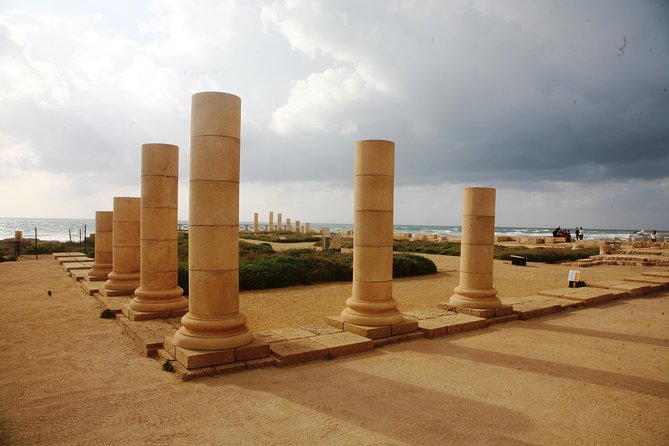
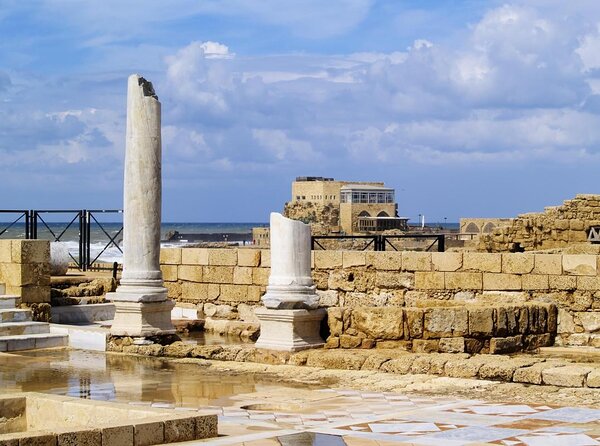
- Roman Caesarea power tour: theater, palace area, Sea Port, aqueduct, and medieval ruins
- Haifa viewpoints with a guide’s explanations about how languages and religions mix on Mount Carmel
- Dress code reality check for the Baha’i Gardens, including no shorts or sleeveless clothing
- Stella Maris and the German Colony stop, with architecture tied to early German Protestant settlers
- Private hotel pickup and drop-off from Tel Aviv, Herzlyia, or Netanya, with round-trip transport
Why this Caesarea and Haifa day tour makes sense
This is the kind of day trip that works because it saves you from doing three separate things on your own. You get a guided route that links the big themes of the region: ancient empires at Caesarea, the layered hillside city of Haifa, and the Baha’i Gardens as a living place of devotion and design.
A private format matters here. Caesarea is not just one photo stop. It’s a long archaeological park with walkways, ruins, and multiple eras. When you have a dedicated guide, you can ask why the Roman pieces look the way they do, what Herod’s projects were built to do, and how the shoreline changed over time. Same idea in Haifa, where the city’s mix of faiths and languages is part of what you’re seeing, not just background noise.
Your main planning concern is dress and pace. This tour includes the Baha’i Gardens, where you cannot wear shorts or sleeveless tops. Also, even though the day feels full, each stop is timed, so you are not drifting for hours on your own.
More Caesarea visits:
- From Tel Aviv: Caesarea, Haifa and Akko Day Trip
★ 4.4 · 744 reviews - Caesarea, Rosh Hanikra and Acre Day Trip from Tel Aviv
★ 4.5 · 406 reviews - Unforgettable Tour to Caesarea, Haifa, Acre and Rosh HaNikra from Tel Aviv
★ 4.0 · 56 reviews
From Tel Aviv pickup to the road that lines up the day
The day starts with hotel pickup in Tel Aviv, Herzlyia, or Netanya at 9:00 am. You travel in a private vehicle with your guide, and you are brought back to your original departure point after the last stop.
That transport piece is more than convenience. It helps you avoid the common time sink of figuring out schedules and connections between coastal Caesarea, Mount Carmel, and Haifa’s upper areas. You also get a smoother flow from stop to stop, which is key when you only have about 6 to 7 hours total.
You also get a mobile ticket, which is handy if you prefer everything on your phone. And because this is operated by Zelkind Bible Land Tours with a multi-lingual guide and a professional art historian guide, you are not just getting general commentary. You should expect more focused explanations as you walk.
Caesarea National Park: walking through a 2,000-year timeline
Caesarea National Park is UNESCO World Heritage, and it is built for exactly the kind of guided viewing you want on a private tour. You step into a site that includes excavations spanning roughly 2,000 years, and you feel the layers as you move from one area to the next.
You start at the archaeological core where King Herod’s vision shaped the city into a Roman-style capital on the coast. The guide’s job here is huge: Caesarea can look like a set of ruins from a distance, but up close it starts to click. You are not only seeing stones. You are seeing how theaters, baths, ports, and civic buildings connected a political city to sea trade and entertainment.
The biggest practical thing to note is that Caesarea National Park entrance fees are not included. That means you should budget extra, and plan for that payment as part of your day.
Roman Caesars at work: theater, hippodrome, palace, villas, port, aqueduct
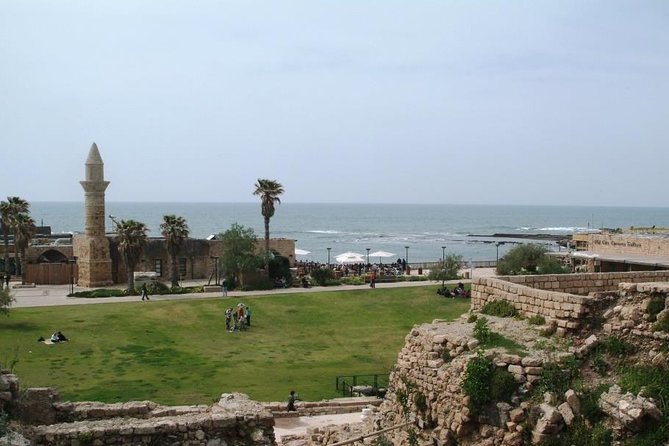
This is the portion of the day where Caesarea becomes more than a quick scenic stop. Your route is designed around the big Roman and Herodian anchors.
First, you see an ancient Roman Theater with more than 3,000 seats. It’s one of those structures that feels serious even when only parts remain. The scale helps you understand how public life worked in Roman cities, and why theater architecture mattered for identity, politics, and entertainment.
Next comes the Hippodrome route leading you toward the Roman villas and hot baths. That walkway detail is worth paying attention to because baths and villas were not just random buildings. They were a social and status system, tied to daily routines, comfort, and elite lifestyles.
Then you move to King Herod’s Palace, a key moment for understanding the power behind the ruins. The city is not simply Roman by default. It’s Roman in the sense that Herod helped build and reshape the city within Roman imperial culture, especially after years of political maneuvering.
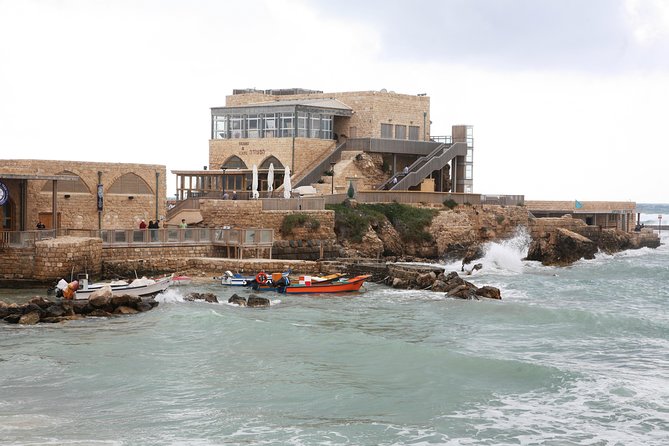
You also visit King Herod’s Sea Port, described as one of the biggest ports in the world. Even if you are not an engineer, the guide’s explanations should make you think about what ports needed: depth, protection, trade access, and infrastructure for ships and goods.
As you continue, you see medieval Caesarea city walls, including towers and other medieval architecture features. This is how Caesarea keeps changing after its Roman peak. You are seeing the city adapt instead of freezing in time.
One of the most satisfying moments is the Roman Aqueduct, which is described as perfectly preserved. Aqueducts are the silent heroes of ancient cities. When you can still see the structure clearly, it turns your understanding from guesswork into something visual.
You also see the Crusades Citadel, and you get a chance to view modern Caesarea, including the Ralli Art Museum complex. That blend of eras is part of what makes Caesarea so useful with a guide. You end the park walk feeling like you understand the city as a continuing place, not a dead set of stones.
A few more Tel Aviv days worth comparing
- From Tel Aviv: Masada & Dead Sea Full Day Tour with Pick Up
★ 4.5 · 1,496 reviews - From Tel Aviv: Jerusalem and Bethlehem Guided Day Trip
★ 4.3 · 1,316 reviews - Masada and the Dead Sea Day Trip from Tel Aviv
★ 4.5 · 1,014 reviews - Tel Aviv: Jerusalem, Bethlehem & Dead Sea
★ 4.0 · 881 reviews
Haifa on Mount Carmel: views plus real city context
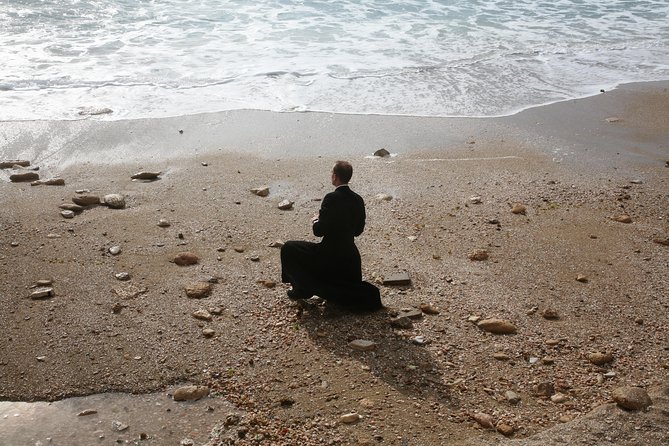
After Caesarea, you head to Haifa along the Northern Coast and then down the slopes of Mount Carmel toward the sea. This is where the day shifts from archaeology into living city energy.
Haifa is not just pretty from afar. A good guided stop helps you read the city. Your guide explains the mixture of languages and religions, and you stop at viewpoints where the geography makes sense of the story. Mount Carmel is a natural organizing structure, so you get a sense for why neighborhoods sit where they do.
You spend about 2 hours in Haifa, which is enough time to see major highlights without rushing every photo. The key here is how the guide times the pauses. On a hillside city, if you only move from place to place, you miss the reason the views matter.
You’ll likely notice that the route is designed to give you perspective, not just landmarks. If you enjoy understanding how people built their lives around topography, Haifa is a strong follow-up to Caesarea’s ancient coastal engineering.
Baha’i Gardens UNESCO stop: the gardens, the views, and the rules
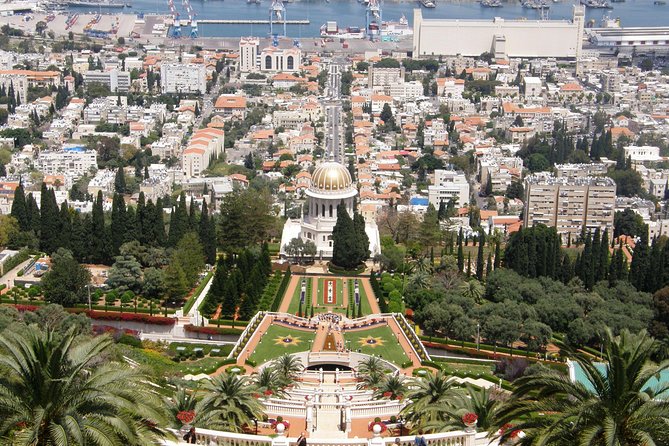
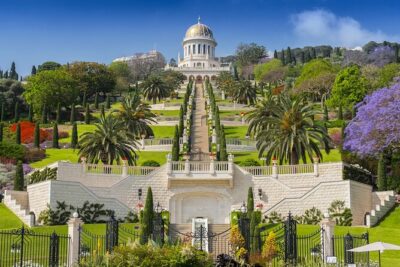
The Baha’i Gardens are another UNESCO World Heritage Site, and this stop is short but memorable. You typically get around 30 minutes here, and that is enough for the signature experience: stroll through the gardens and take in the top-of-gardens views.
This is the part of the tour where the setting does some of the talking. The gardens are described as lush, and the views from the top are supposed to be unforgettable. Even with a tight time window, you will likely feel the difference between a viewpoint and a structured garden space designed for walking and reflection.
Now for the practical reality check: there is a dress rule. No shorts or sleeveless clothing is admitted at the Baha’i Gardens. If you’re traveling in warm weather, this is the one packing decision that can make or break your day. A light, breathable shirt with sleeves saves you from scrambling to solve it on the spot.
The other practical note: admission to the Baha’i Gardens is listed as free in the provided tour timing, so this part of your day is financially simple compared to Caesarea.
Stella Maris Monastery and the German Colony walk
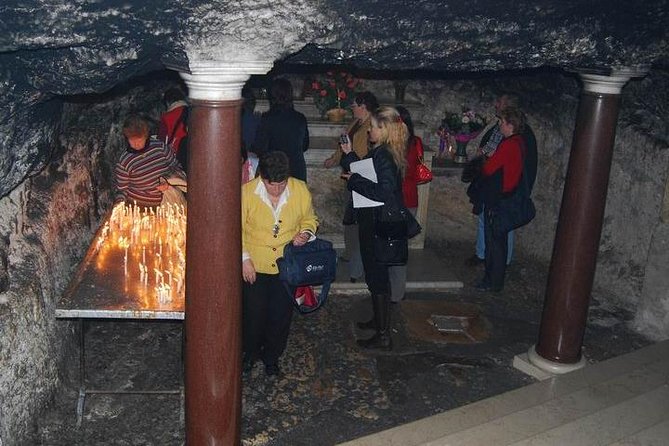
Your final sightseeing cluster shifts into neighborhood history. First comes Stella Maris Monastery, also known as the famous Stella Maris Carmelite Church in Haifa. You have about 30 minutes here, and the focus is both architectural and historical.
What I find useful about this stop is that the monastery story is tied to how different communities intersected locally. You’re told about the role of Jewish and Arab involvement in the foundations of the Christian faith, and you also get time to admire the building design.
The description emphasizes that the architecture looks like it came straight from Old World Europe, which helps you understand why it feels different from the rest of Haifa’s everyday buildings. It’s not just a church visit. It’s a sense of place shaped by settlement patterns.
After Stella Maris, you also visit the German Colony, a 19th century settlement connected to early German Protestant settlers. The area is described as perfectly preserved, and it is meant to show you the start of Palestine life revival around 150 years ago.
This is a great last stop for two reasons. One, it gives you a “human scale” history lesson after centuries of big structures in Caesarea. Two, it helps you end with texture, streets, and a sense of how a community lived, not just what empires built.
How long the day lasts, and how to get the most out of 6 to 7 hours
This tour is listed at 6 to 7 hours total, including transport and the main stops. That means you need to be ready for a structured day, not an open-ended wandering day.
Here’s the pacing logic: you spend about 2 hours at Caesarea National Park, 2 hours in Haifa, then shorter time windows at the Baha’i Gardens, Stella Maris Monastery, and the German Colony. You’ll see more, but you should also expect that your guide will keep things moving.
If you like to linger for a long coffee after a viewpoint, this might feel a bit tight. If you like walking, reading ruins and religious architecture with a guide, and grabbing photos between meaningful explanations, you’ll probably love the rhythm.
My advice is to plan your expectations around the stops with the shortest time. For those, your goal should be to get your bearings fast, take a few key photos, and then let the guide’s explanation do the heavy lifting. That approach makes the time feel worth it, even when it’s not long.
Price and value: what you get paying $1,149 per group up to 4
The price is $1,149 per group, up to 4 people, which puts this firmly in the private guide category. That sounds steep until you do the math in your head, especially if you’re traveling as a family or two couples.
What you are paying for is not just a car. You are paying for round-trip hotel pickup and drop-off, a private vehicle, and a guide team that includes a professional art historian guide. That matters because Caesarea and Haifa are explanation-heavy sites, and a great guide turns scattered ruins and streets into a coherent story.
It also helps that multiple major sites are included in the route, including UNESCO stops. Caesarea entrance fees are not included, so that’s the one “extra” to factor in. Food and drinks are not included either, so you should plan to eat independently or bring snacks if the schedule works for your stomach.
If you are the type of traveler who values context over speed, the guide time is the real value. If you only want basic photos and don’t care about historical or architectural interpretation, a cheaper group option might make more sense. But if you want meaning with your walking, this private format is a solid use of money.
Who this tour suits best
This tour fits best if you want a guided day that combines architecture, faith history, and city views, without the hassle of planning transit between places.
You’ll probably love it if:
- You enjoy Roman sites and want help connecting ruins to real-life functions like baths, theaters, and ports
- You want Haifa explained, not just photographed, especially the way languages and religions show up in the city
- You are interested in the Baha’i Gardens and the Stella Maris area as more than checkboxes
- You prefer a private setup where you can ask questions on the spot
It may be less ideal if:
- You hate dress rules and don’t want to plan for clothing at the Baha’i Gardens
- You need lots of downtime, because the day is tightly timed
- You’re hoping Caesarea entrance fees and meals are included (they are not)
Should you book this private Caesarea and Haifa tour?
I would book this if you want a full day with expert interpretation and you are traveling with up to three others who can share the group cost. The private transport from Tel Aviv, Herzlyia, or Netanya plus the art historian guided approach makes it feel like you’re buying time, clarity, and better use of your sightseeing day.
Skip or rethink it if you are traveling solo on a tight budget, hate structured itineraries, or you know you will struggle with the Baha’i Gardens dress rule. Otherwise, this route is a smart way to connect UNESCO sites, Roman archaeology, and Haifa’s layered city story in one go.
FAQ
What time does the tour start?
It starts at 9:00 am.
Where do you pick up from?
Pickup is available from Tel Aviv, Herzlyia, or Netanya, and you return to your original departure point.
How long is the tour?
The tour runs about 6 to 7 hours.
Is this a private tour?
Yes. It is a private tour, and only your group participates. The group size is up to 4.
What sites are included?
You visit Caesarea National Park, Haifa, the Baha’i Gardens, Stella Maris Monastery, and the German Colony.
Are entrance fees included?
Caesarea National park entrance fees are not included, while the listed admission for Haifa, the Baha’i Gardens, Stella Maris, and the German Colony is shown as free.
What is included in the price?
Included items are private tour, transport by private vehicle, a driver/guide, and a professional art historian guide.
What should I wear for the Baha’i Gardens?
You need to avoid shorts or sleeveless clothing, since shorts or sleeveless are not admitted at the Baha’i Gardens.
What is the cancellation policy?
You can cancel for a full refund up to 24 hours in advance of the experience start time. If you cancel less than 24 hours before, the amount paid is not refunded.
Recently reviewed around Tel Aviv
- private Full-day Tour to Jericho + the Dead Sea★ 5.0 · 3 reviews
- Tel Aviv; Jaffa Old City, Port & Shuk Hapishpishim Walking Tour★ 4.5 · 11 reviews
- Food & Drink Private Guided Tour in Tel Aviv★ 5.0 · 3 reviews
- The Golan heights★ 5.0 · 4 reviews
- Haifa Acre and Rosh Ha-Nikra Private Tour from Tel Aviv★ 5.0 · 5 reviews
- Jerusalem Full-Day Tour from Tel Aviv INCLUDING ENTRANCE FEES★ 4.0 · 68 reviews
- Israel Holy Land Christian Tour Package 7 days – Private Tour Package★ 5.0 · 31 reviews
- Jerusalem and Dead Sea Trip from Tel Aviv★ 4.0 · 6 reviews
Caesarea Ruins, compared.
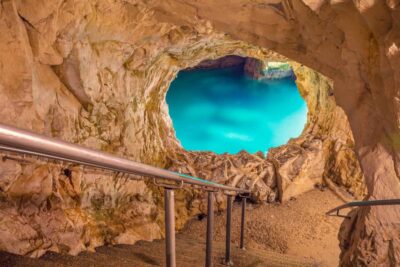
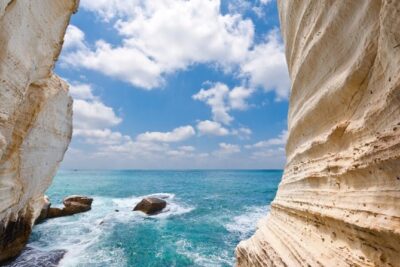
Caesarea, Rosh Hanikra and Acre Day Trip from Tel Aviv
Read our review →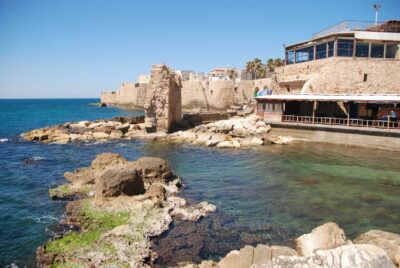
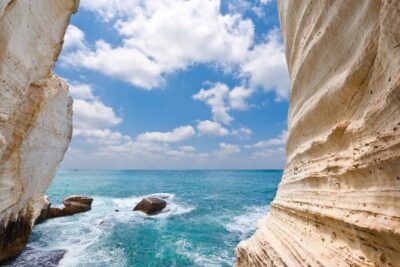
Caesarea, Acre & Rosh Hanikra Day Trip from Jerusalem
Read our review →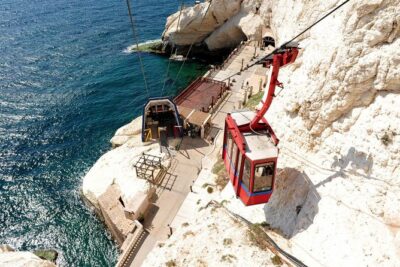
Unforgettable Tour to Caesarea, Haifa, Acre and Rosh HaNikra from Tel Aviv
Read our review →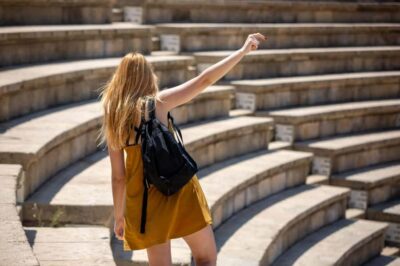

Browse the lists this tour appears in