
Reviewed · JERUSALEM TOURS
Jerusalem: Dual Narrative Tour
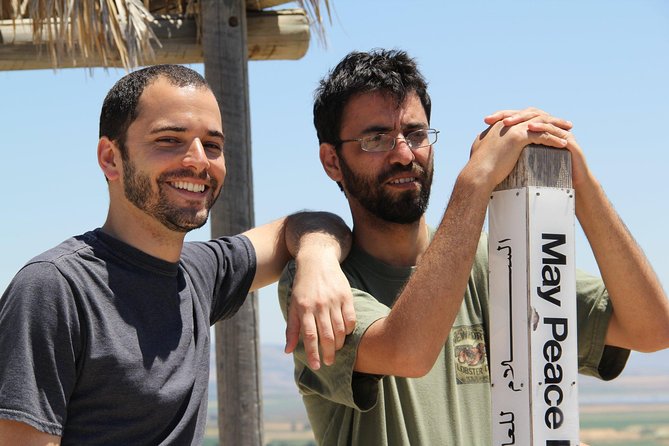
Jerusalem: Dual Narrative Tour is interesting because it forces you to hold two truths in your head at once, with one Jewish guide and one Palestinian guide leading side by side through the Old City. You get the usual highlights, but you also get the reasoning behind them, like why the Temple Mount is so tense and how each community reads the same stones differently. I especially like the dual narrative format and the way the guides stay respectful while still being direct.
I also like that the route makes you notice the city as a place of layers, from the Roman Cardo under your feet to signs in the Armenian Quarter that point to identity and trauma. One consideration, though: it is a long, walking-heavy half day in hot conditions, and there are limited chances to slow down for food or linger at the bigger sites.
Key highlights you will feel fast
- Two guides, one shared route, so you hear Jewish and Palestinian explanations close together, not in separate tours
- Temple Mount context that actually matters, including why the platform is a flashpoint
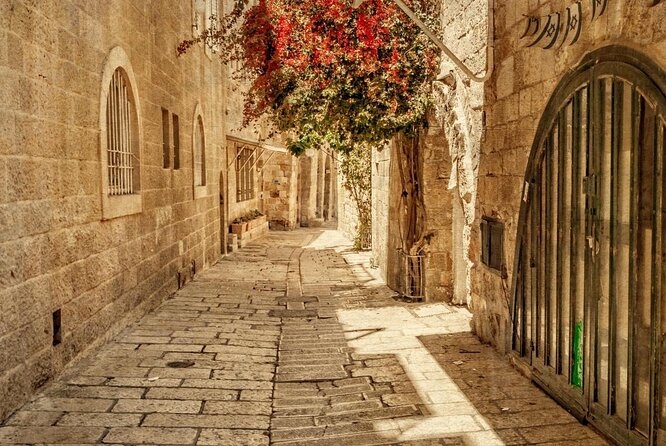
- Jerusalem’s physical layers, from excavations in the Jewish Quarter to rooftop views toward East Jerusalem
- Faiths in one tight space, with stops tied to Jewish, Christian, and Muslim traditions
- A crowd-and-time reality check, so you can decide what to see deeply on your own
Why This Dual-Guide Old City Walk Changes How You See Jerusalem
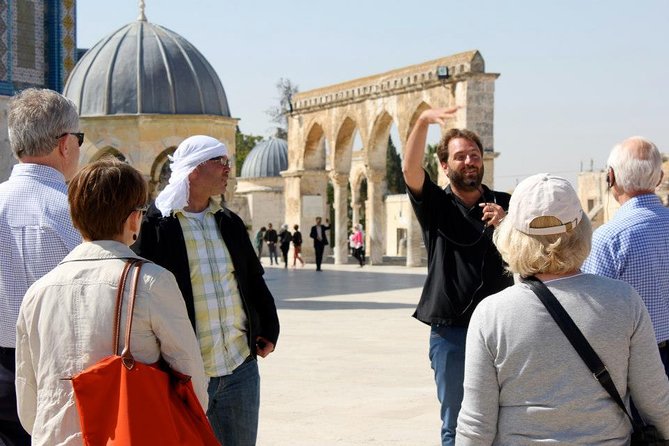
This tour works because it is not trying to smooth away conflict. Instead, it teaches you how narratives are built, why certain places carry heavy political meaning, and how religion, archaeology, and history all get tangled together in the same streets.
I like that the guides model debate without turning it into a shouting match. In recent groups, you might meet guide pairs such as Betty and Ameer, Morgi and Amir, Nour and Alex, or Beni and Yousef, and the consistent theme is the same: they stay in conversation with each other as much as they speak to you. That matters, because Jerusalem is a city where tone can be everything.
A few more Jerusalem days worth comparing
- From Jerusalem: Masada & Dead Sea Full Day Tour with Pick Up
★ 4.5 · 815 reviews - Masada and the Dead Sea Day Trip from Jerusalem
★ 4.5 · 757 reviews - From Jerusalem: Nazareth and Sea of Galilee Tour
★ 4.5 · 588 reviews
Meeting at Jaffa Gate and Getting Your Bearings Fast
You start at Jaffa Gate in the Old City, looking for a representative holding a Jerusalem: Dual Narrative Tour sign just outside the gate area. The tour begins at 9:30 am, and the early start is practical. You beat some of the heat and you get more comfortable with the Old City’s layout before the walking ramps up.
The group stays small, with a maximum of 20 travelers, so you can ask questions and not feel like you are lost in a crowd. Still, this is a walking tour through narrow lanes, so you should come with moderate physical fitness and plan for plenty of stairs and uneven ground, especially near major religious sites.
Jaffa Gate to Armenian Quarter: Claims, Memories, and Markers on Walls
The first stop is Jaffa Gate, and it is a smart opener. It is geography in real form, the kind you only understand after you stand at a boundary and look inward. You also get a prompt about what signs at the entrance tell you about ruling powers and their claims over space. That theme keeps returning throughout the walk.
Next comes the Armenian Quarter. Here, the key moment is noticing signage that commemorates the Armenian genocide. It is not just a history footnote. It helps you understand how a community maintains identity inside a city that has repeatedly shifted control and meaning.
Two practical notes help you enjoy this section:
- Wear clothing that fits the dress code. You cannot enter places of worship with exposed shoulders or uncovered knees.
- Bring water and a hat, since the Old City can cook even when you think you planned well.
Jewish Quarter and the Roman Cardo: The Story Beneath Your Feet
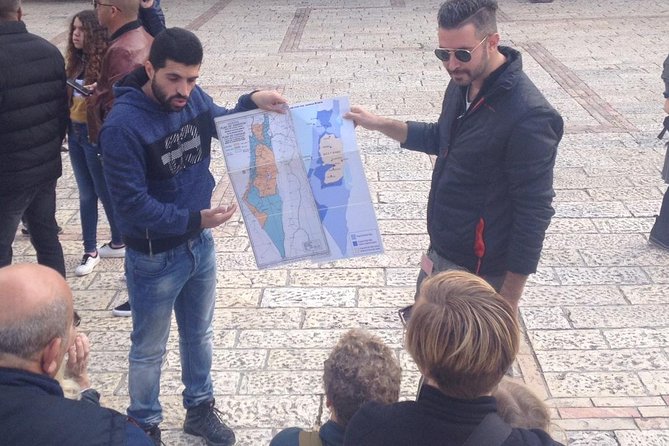
In the Jewish Quarter, you stop at the Roman Cardo, then you get a grounded lesson in how today’s Israeli narrative connects Jewish life to Jerusalem across earlier historical epochs. What really sticks is the tour’s focus on evidence and layers: you hear what lies beneath excavations and what layers were removed to reveal the current configuration.
This is one of those parts where it helps to be patient and look carefully. The Roman Cardo is a physical reminder that Jerusalem has been rebuilt many times over. When the guides talk about what was taken away to expose what you see now, you start to understand why archaeology is never neutral in this city. It always becomes part of a living argument about legitimacy.
A different kind of day from Jerusalem:
- Nazareth and the Sea of Galilee Day Trip from Jerusalem
★ 4.5 · 446 reviews - From Jerusalem: Masada&Dead Sea Tour INCLUDING ENTRANCE FEES
★ 4.3 · 392 reviews - Jerusalem: Guided Walking Tour of the Old City
★ 4.7 · 386 reviews - Full Day City Tour of Jerusalem
★ 4.1 · 367 reviews
St Mark’s Syriac Church Rooftop and the View Toward East Jerusalem
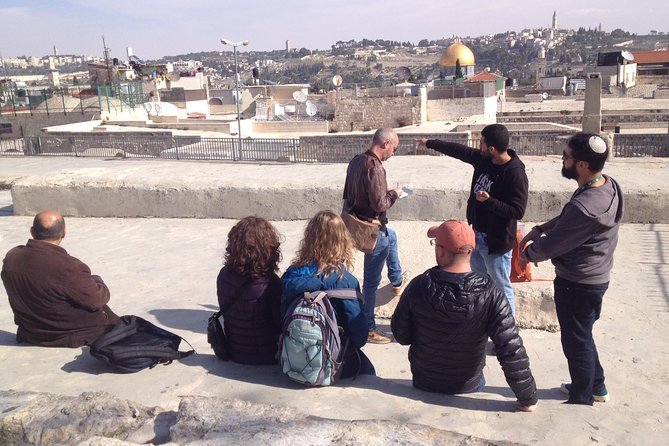
At St Mark’s Syriac Church, you move to a rooftop viewpoint. From up there you look toward East Jerusalem and you can “read” the city’s borders and major landmarks in a way that street level does not make obvious.
Even if you are not a political-history person, this stop helps you make sense of where the city’s fault lines show up geographically. It is also a nice break from crowds below, even though you are still moving.
Church of the Holy Sepulchre: Christian Significance and Competing Narratives
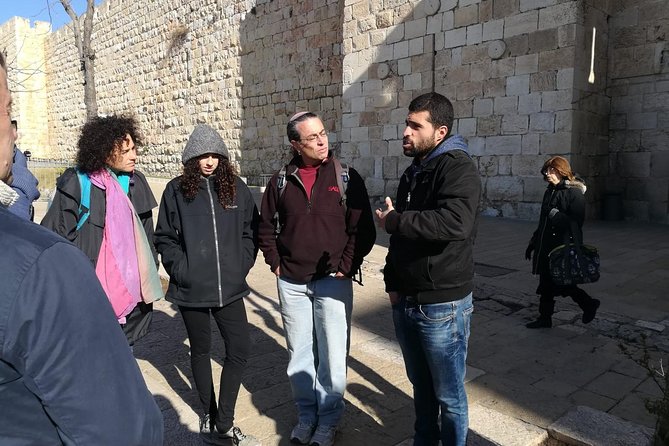
The Church of the Holy Sepulchre is the heavyweight stop for many visitors, and here you get it framed in Christian tradition first. Then you hear how the site also lives inside Israeli and Palestinian narratives.
Inside the church, you visit major sites within the complex. The catch is time and crowd management. This tour gives you a meaningful orientation and guided stops, but it does not turn into a long, quiet, stand-in-one-place kind of visit.
If you want to spend extra time at one specific moment within the church, you will likely want to come back on your own later or plan a separate visit day for it. The tour gives context, not a slow pilgrimage.
Muslim Quarter and the Streets of Many Communities
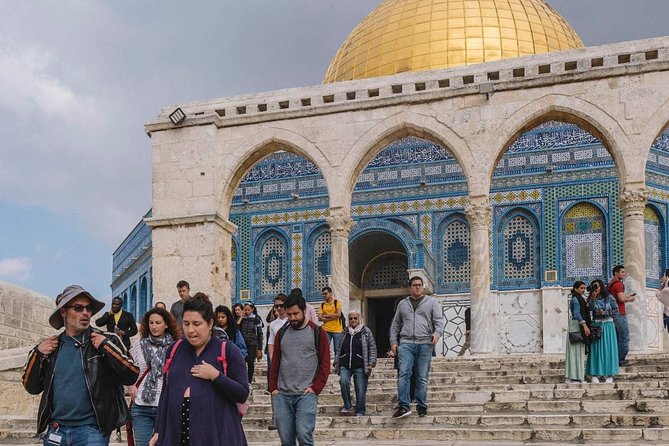
Next is the Muslim Quarter, and the focus here is community and continuity. You learn about various communities inside the Old City, how they link to the Muslim world, and how current tensions play out in the spaces people use every day.
This is also where the “dual narrative” idea becomes practical. You are not just hearing history. You are walking through a neighborhood where religion, daily life, and politics overlap in very visible ways.
Via Dolorosa Near the 5th Station and Austrian Hospice: A Thoughtful Ending to the Walk-Through
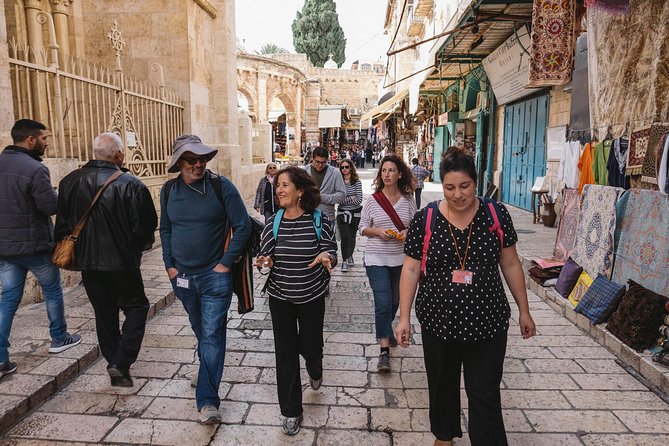
The tour then heads to the Via Dolorosa area, concluding near the 5th Station of the Cross and the Austrian Hospice. This is where the day starts to shift from site viewing into reflection.
You get final guide reflections and time for Q&A, which is a big plus here. Jerusalem answers are rarely simple, and having two guides means you can ask a question and get two honest frameworks without feeling like you have to pick one camp right away.
Western Wall and Al Buraq Square: Second Temple Meaning Meets Islamic Storytelling
At the Western Wall, you enter through the Wadi Road area into Western Wall and Al Buraq square. The tour ties the Wall to the Second Temple and the millennia-old tradition of Jewish pilgrimage to stand beside what remains.
Then comes the dual-narrative pivot: you hear about Al Buraq, including the Islamic story of Muhammad’s flight to Jerusalem. The guides also discuss how the open complex looked before and after Israel captured the area more than 50 years ago.
This is a high-sensitivity stop, so it is worth going in with realistic expectations:
- You will learn the symbolism behind what people do at the site.
- You will also hear how that symbolism is read very differently depending on the narrative.
If you already know the basics of Jewish prayer at the Wall and general knowledge of the Temple Mount in Islam, this stop is still valuable because it connects the story to the physical space and to modern political change.
Al Masjid Al Aqsa and the Dome of the Rock: Why the Temple Mount Platform Is a Flashpoint
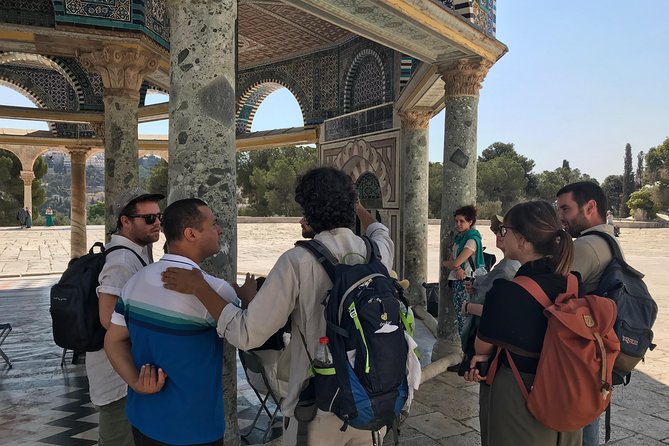
The final major stop is Al Masjid Al Aqsa, within the Temple Mount or Noble Sanctuary complex. You ascend to the area where the Dome of the Rock shrine and Al Aqsa mosque are visible.
This is where the tour earns its name. The guides explain the historic importance of the platform for three religions, then they focus on the immediate question: why this space is such a flashpoint between Israelis and Palestinians.
Standing there, you start to understand that Jerusalem is not only about faith. It is also about sovereignty, archaeology, and who gets to frame what the stones mean. The tours’ strength is that it does not treat that tension like gossip. It treats it like a system, with reasons and consequences.
Because this is a place of worship, remember the dress code again. No shorts or sleeveless tops, and both men and women must cover knees and shoulders. It can sound strict, but it also helps you respect the site and move through faster.
Price and Timing: Is $65 Worth It for 4.5 Hours?
At $65 per person for about 4 hours 30 minutes, this sits in the “value” zone for Jerusalem guided time, especially because you get two professional guides rather than one. The price is not just paying for famous stops. You are paying for the structure: two interpretations moving together, plus a tour escort/host.
Here is the practical value calculation I make:
- If you want only a checklist of holy sites, you could do it cheaper on your own.
- If you want to understand why arguments persist, why signs and architecture matter, and how Jewish, Christian, and Muslim traditions connect to modern conflict, then this format saves you time. It turns your questions into answers in one morning.
One caution from real-world experience with this type of tour: it can feel long and fast. The tour covers a lot of ground with limited breaks. Some people find it hard to hear during busy moments. If you are sensitive to crowds or heat, come prepared, take slow breaths, and keep your water going early.
Also, bring a realistic mindset about time at major sites. If you dream of quiet, detailed viewing at the Church of the Holy Sepulchre or spending extra time on Via Dolorosa, you will probably want to schedule that separately. This tour gives you the “why,” not the “linger all day.”
What to Pack and How to Stay Comfortable in the Old City
You should pack for comfort and respect, not convenience gadgets. The tour notes:
- Bring a hat and plenty of water
- Do not bring large electronics
- Service animals are allowed
Dressing for worship is non-negotiable. Cover shoulders and knees for both men and women. If you do not have proper clothing, you may be forced to change plans or get turned away at the wrong moment. That is not a small issue when your schedule is only a few days in Jerusalem.
Finally, plan for walking. This tour is a good fit for people with moderate fitness. You will be moving through old stone streets, and some stops involve stairs.
Who Should Book This Dual Narrative Tour (and Who Might Not)
You should book if:
- You want to see the Old City highlights like the Western Wall and Al Aqsa, but with real context behind symbolism
- You like structured conversation and Q&A
- You appreciate inter-faith teaching that stays respectful even when the topic is political
You might skip it or pair it with another plan if:
- You get worn out in heat quickly and you need long breaks for food
- You mainly want slow, detailed time at the biggest sites, like inside the Church of the Holy Sepulchre, because this tour moves briskly to cover ground
Should You Book the Jerusalem Dual Narrative Tour?
For many first-time visitors, this is a smart way to start Jerusalem. It gives you bearings fast, then explains why every major landmark pulls multiple communities into the same argument. The dual guide format is the real value, not the fact that you visit famous places.
I would book it if you have even a mild interest in history plus current tensions, and you are okay with walking through crowds. If you prefer quiet, slow sightseeing with minimal discussion, you may prefer a different style of tour.
FAQ
What is the duration of the Jerusalem: Dual Narrative Tour?
It runs for about 4 hours 30 minutes.
Where is the tour starting point?
The tour starts at Jaffa Gate in the Old City, Jerusalem.
Where does the tour end?
The tour ends near the Austrian Hospice, Via Dolorosa St 37, Jerusalem.
How much does it cost?
The price is $65.00 per person.
What sites does the tour include?
The tour includes stops around the Old City such as Jaffa Gate, the Armenian Quarter, the Jewish Quarter (including the Roman Cardo), St Mark’s Syriac Church, the Church of the Holy Sepulchre, the Muslim Quarter, Via Dolorosa near the 5th Station of the Cross, the Western Wall, and Al Masjid Al Aqsa on the Temple Mount complex.
Is food included?
No. Food and drinks are not included unless specified.
What is included in the tour price?
You get 2 professional guides and a tour escort or host.
What should I wear to enter places of worship?
A dress code is required, with no shorts or sleeveless tops. Knees and shoulders must be covered for both men and women.
What should I bring or avoid bringing?
Bring a hat to block sun and plenty of water. Avoid bringing large electronics.
Is there a cancellation option?
Yes, there is free cancellation. You can cancel up to 24 hours in advance for a full refund. If you cancel less than 24 hours before the start time, the amount paid is not refunded.
Recently reviewed around Jerusalem
- Walking tour of the Old City of Jerusalem★ 4.3 · 4 reviews
- Tour of Jerusalem & Dead sea private tour★ 5.0 · 4 reviews
- West Bank Tour from Jerusalem★ 4.5 · 184 reviews
- jerusalem classic tour★ 5.0 · 3 reviews
- Private Tour: Old City of Jerusalem Christianity Tour★ 5.0 · 5 reviews
- Magical Walking Tour in Old City of Jerusalem★ 5.0 · 27 reviews
- Private Walking Tour in Jerusalem’s Old City★ 5.0 · 3 reviews
- West Bank Tour from Jerusalem and Tel-Aviv – Bethlehem & Jericho★ 5.0 · 6 reviews
Jerusalem Tours, compared.
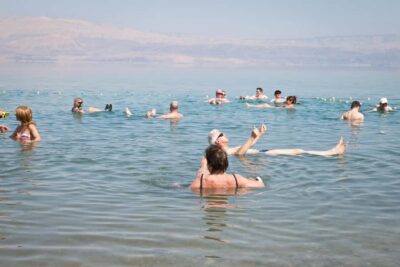
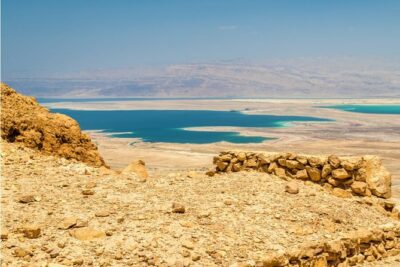
Masada and the Dead Sea Day Trip from Jerusalem
Read our review →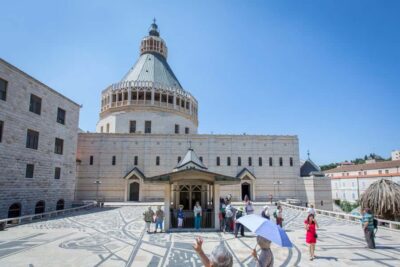
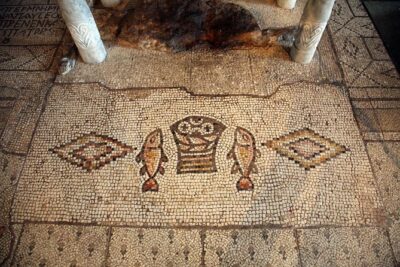
Nazareth and the Sea of Galilee Day Trip from Jerusalem
Read our review →

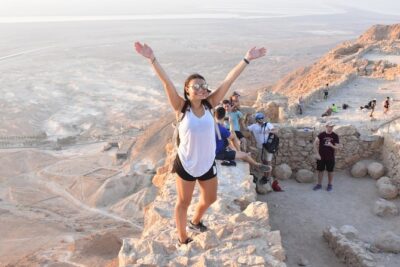
Masada, Ein Gedi and The Dead Sea from Jerusalem
Read our review →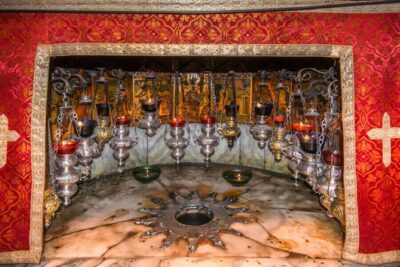
Jerusalem and Bethlehem Day Tour from Jerusalem
Read our review →Browse the lists this tour appears in