

Reviewed · WALKING TOURS
Jerusalem Jewish Orthodox Neighborhood Walking Tour
Jerusalem’s Haredi neighborhoods are the opposite of a photo-op. This tour is interesting because it lets you read daily life in real time, with stops inside community spaces, food breaks, and a view of how tradition shapes the street.
I especially like the local, faith-informed guidance, the kind that explains what you are seeing instead of glossing over it. I also like the hands-on moments, like tasting rugelach and challah and spending time where religious objects live, not just looking from the curb.
One possible drawback: some of the most personal stops depend on access and timing, so plan to stay flexible. If a specific home visit or interior access is limited that day, you still should get plenty of neighborhood context, but the exact mix may shift.
Key things to know before you go
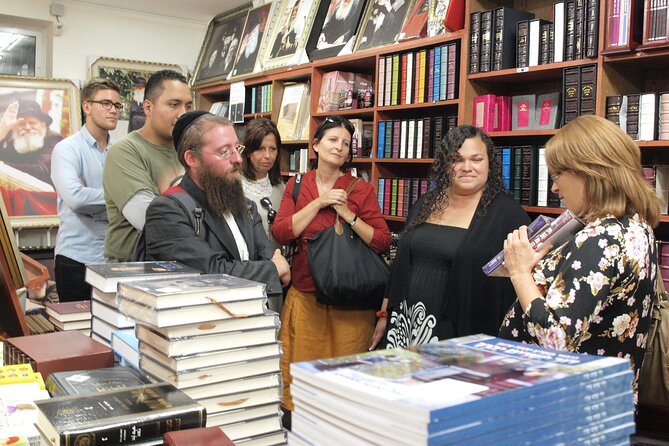
- A small-group walk (up to 20 people) that keeps the pace human.
- A guide from the local Ultra-Orthodox community, so you get answers straight from someone living it.
- Working community stops, not just historic buildings.
- Pastry and bread sampling focused on rugelach and challah at a local bakery.
- Sacred-artifact viewing at a neighborhood library, a rare kind of access.
- Me’a She’arim street experience that helps you understand visible signs, symbols, and daily rhythms.
Walking Jerusalem’s Haredi Neighborhood, From Davidka Square to Me’a She’arim
If you want Jerusalem that feels lived-in, this tour is built for that. You start with a public square that most visitors pass through without thinking, then you shift into one of the city’s most religious, community-centered areas. The contrast helps your brain switch gears fast, from tourist Jerusalem to neighborhood Jerusalem.
The tour is guided, and it’s set up around learning the logic of everyday practice. You are not just being shown sights. You are being coached on how to notice what matters to the people who live there.
One important thing to know right away is dress code. Modest clothing is required for both men and women. That is not just a “good idea”, it is part of being able to walk through and be welcomed.
More Walking Tours in Jerusalem
- Jerusalem: Guided Walking Tour of the Old City
★ 4.7 · 386 reviews - All Inclusive Walking Tour Old City Jerusalem
★ 5.0 · 83 reviews - Jerusalem Walking Tour: In the Footsteps of Jesus
★ 4.5 · 67 reviews
Davidka Square: The starting point with real Jerusalem context
You begin at Abraham Jerusalem Ha-Nevi’im St 67, and your first stop is Davidka Square. The square is named after the Davidka, a homemade mortar used by Jewish forces during the 1948 Arab-Israeli War. That detail matters because it ties the space to modern Jerusalem history, not just modern wayfinding.
Right around Davidka Square you also get a snapshot of how Jerusalem connects itself: you will notice landmarks linked to major market life, pedestrian shopping, and public transit access. Today it functions as a busy gathering and transportation hub.
Why I like starting here: it gives you an easy baseline. Even if the Haredi neighborhood later feels intense, you have a reference point for scale and direction.
Me’a She’arim street time: what you learn from the symbols
Next comes Me’a She’arim, the neighborhood that defines the tour. This is where you walk with a guide from the local Ultra-Orthodox community, and you learn how to interpret what you are seeing. The guide points out significant religious symbols, customs, and sites, with a focus on how daily life is structured by belief.
This is also the part where the tone of the group matters. Ask respectful questions. Keep your voice steady. Let the guide set the pace. A walk like this works best when you treat it as a conversation, not a sightseeing checklist.
In one example of how the guidance can land, the guide Motti has been praised for explaining Haredi life clearly and answering questions quickly. That kind of back-and-forth is exactly what helps you understand the “why” behind visible practices.
Synagogue, community center, and a soup kitchen: faith in action
A big value of this experience is that it includes a working synagogue and other community spaces. Rather than seeing a synagogue as a museum object, you see it as part of an active rhythm. That changes how you interpret the building, the people moving through it, and even the mood of the area.
The tour also includes a look at a community center and a soup kitchen. That pairing is key. It connects religious life to real-world support, which is often what outsiders miss. You get to see that community institutions are not separate from daily concerns like meals, services, and help.
A practical note: interior access can depend on rules in the moment. Sometimes you may see and understand more from outside views if inside doors are closed for the day. Keep your expectations flexible and focus on the explanations you are being given.
A different kind of day from Jerusalem:
- From Jerusalem: Masada & Dead Sea Full Day Tour with Pick Up
★ 4.5 · 815 reviews - Masada and the Dead Sea Day Trip from Jerusalem
★ 4.5 · 757 reviews - From Jerusalem: Nazareth and Sea of Galilee Tour
★ 4.5 · 588 reviews - Nazareth and the Sea of Galilee Day Trip from Jerusalem
★ 4.5 · 446 reviews
Pastry stop in the neighborhood bakery: rugelach and challah
One of the best, most human parts is the stop inside a distinctive bakery. The focus is Jewish pastries and bread, including rugelach and challah. This is not a random food detour. It is a way to connect religious culture to something tangible you can taste.
Since the tour’s “food and drinks” are listed as not included, treat this as a sampling opportunity that may involve extra cost depending on what your guide arranges that day. Even so, the payoff is real: you get the flavor of tradition in the middle of a walk, not at the end when you are tired and hungry.
Tip for you: come a little hungry, but not starving. You will want to taste and pay attention to what makes the pastries distinctive, and you will probably be walking before and after the stop.
An important Hasidic tomb: tradition you can feel in the details
The plan also includes an important Hasidic tomb. For many people, this is the emotional anchor of the tour. Places like this carry meaning beyond architecture. The rules of respect, the way people approach the space, and the explanation from your guide all shape how you experience it.
If you prefer light, casual sightseeing, this stop might feel weightier than expected. That is not bad, it is just a different kind of travel. You are learning that faith is not only beliefs, it is geography and memory.
The neighborhood library: ancient artifacts and respectful viewing
Another standout is visiting a neighborhood library that houses ancient religious artifacts. This is one of those stops that turns “religious history” from a topic into an encounter. You get to see that community scholarship and preservation are part of daily infrastructure, not something locked away.
Just like with the synagogue, access here can depend on rules and timing. Still, the key value is the guidance. Your guide helps you understand what you are looking at, which is the difference between “seeing objects” and actually grasping why they matter.
For your own comfort, keep your camera use in check. If you are unsure about photos, wait for your guide to cue you. The fastest way to ruin a respectful stop is to treat it like a photo studio.
Meeting a Haredi family at home: the most personal moment
A highlight in the tour concept is being welcomed into the home of a local family. That is where the learning becomes real, because you get to see everyday space and daily life from the inside.
Now the careful truth: home access is the most sensitive part of any small community visit. Even with a strong plan, something can change on the day due to household schedules, privacy needs, or practical timing. So I suggest you treat this as the “best-case” moment and not the only reason to book.
If the home visit is included, it is likely the strongest cultural exchange on the walk. If it is not, you should still come away with plenty of context from the public and community stops, especially the synagogue, community institutions, bakery, tomb, and library.
Duration and timing: plan for an evening walk with a flexible route
The duration is listed as about 2 hours 30 minutes, and the tour description also talks about a 4-hour walking experience. That mismatch can happen when a company offers different versions, or when day-of timing stretches based on access to specific stops.
Either way, the experience starts at 4:30 pm. For an evening start, you will likely feel the pace shift as light changes and as community activity patterns come into view. Wear shoes you can walk in for the whole block of time. Also, bring a small layer. Jerusalem can feel cooler later, especially when you stop and listen.
Group size is capped at 20 travelers, which generally helps keep questions manageable and makes it easier for your guide to steer the conversation.
Price, and what $45 is really buying
At $45 per person, this sits in the “pay for access and guidance” category. You are not paying for a theme park experience. You are paying for a guided walk with a local community member and for the kind of permission that normally takes planning, trust, and coordination.
You also get multiple high-value elements packed into one outing:
- A structured walk through Me’a She’arim
- A working synagogue and community institutions
- A bakery stop for rugelach and challah
- A stop tied to Hasidic tradition
- Ancient artifacts at a neighborhood library
- A chance for an insider home welcome, if timing allows
The main cost you should watch for is food. The tour lists food and drinks as not included, even though pastry tasting is part of the program. So bring some extra cash or card for the sampling portion, just to avoid a surprise when you get there.
Who this tour is best for, and who should think twice
This is best for you if:
- You like people-to-people learning, not only sightseeing
- You want to understand current Israeli society from inside a community
- You enjoy respectful cultural questions and steady walking
- You are curious about food traditions like rugelach and challah beyond eating them at a restaurant
You might think twice if:
- You need everything to be strictly inside buildings, with no pauses for rules
- You want a light, casual walk with no emotional or religious weight
- You only care about major landmarks and prefer wide-open tourist viewpoints
Should you book this Jerusalem Jewish Orthodox Neighborhood Walking Tour?
I think it is a strong choice when your priority is understanding. The best moments here are the ones that come from guidance and context: seeing community institutions, tasting traditional pastries, and spending time where religious artifacts are part of the neighborhood fabric. The fact that a local community member leads it is not a small detail. It is the whole point.
Book it if you can follow the modest dress expectation, walk comfortably for a few hours, and stay flexible about access to the most personal stop. If you want zero uncertainty, choose a more museum-style tour. If you want to understand how belief shapes real streets, this one deserves your time.
FAQ
Where does the tour start?
The tour starts at Abraham Jerusalem, Ha-Nevi’im St 67, Jerusalem, 9470211, Israel.
What time does the tour begin?
The start time is 4:30 pm.
How long is the experience?
The duration is listed as about 2 hours 30 minutes. The tour description also refers to a longer 4-hour walking format.
Is food included in the price?
No. Food and drinks are not included, even though the tour includes sampling pastries such as rugelach and challah.
What is the tour’s main focus?
It focuses on daily life in a Haredi (Ultra-Orthodox) neighborhood in Jerusalem, with visits to community sites and learning about traditions from a local guide.
What key places are visited?
The tour includes a working synagogue, community spaces such as a community center and soup kitchen, a bakery for pastry tasting, an important Hasidic tomb, and a neighborhood library with ancient religious artifacts.
Is there a home visit?
A home visit is part of the tour concept, where you are welcomed into the home of a local family.
What should I wear?
A modest dress code is required for both men and women.
How big is the group?
The maximum group size is 20 travelers.
Is cancellation possible if the weather is bad?
Yes. The tour requires good weather, and if it is canceled due to poor weather you will be offered a different date or a full refund. You can cancel up to 24 hours in advance for a full refund.
Recently reviewed around Jerusalem
- Walking tour of the Old City of Jerusalem★ 4.3 · 4 reviews
- jerusalem classic tour★ 5.0 · 3 reviews
- Private Tour: Old City of Jerusalem Christianity Tour★ 5.0 · 5 reviews
- Magical Walking Tour in Old City of Jerusalem★ 5.0 · 27 reviews
- Tour of Jerusalem & Dead sea private tour★ 5.0 · 4 reviews
- West Bank Tour from Jerusalem★ 4.5 · 184 reviews
- Private Day Tour of Jerusalem★ 5.0 · 6 reviews
- Private Tour : Jerusalem Old city day trip from Jerusalem★ 5.0 · 20 reviews
Walking Tours, compared.

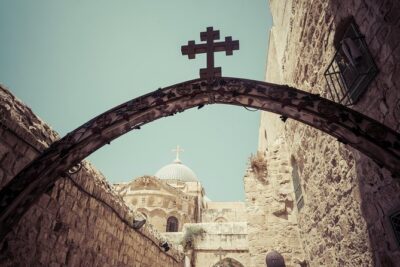
Jerusalem Walking Tour: In the Footsteps of Jesus
Read our review →


Browse the lists this tour appears in