
Reviewed · WALKING TOURS
Jerusalem Walking Tour
This Jerusalem Walking Tour is a smart way to see a lot of the Old City without turning it into a marathon. I especially like that you hit major highlights like the Western Wall and Church of the Holy Sepulchre, then you finish with a real-life walk through the Arab Market where the sights, sounds, and smells come at you fast.
Two other things I like: it stays light on entry fees because most stops are marked free, and it gives you an optional upgrade if you want the Western Wall Tunnels. One caution: quality can depend on the guide, and one past booking called out English that was hard to follow, so if that matters to you, plan accordingly.
Key points to know before you go
- It is built for a short visit, about 2 to 3 hours, with quick stops so you get orientation fast.
- Most sights are free to enter, with the Western Wall Tunnels as the main paid add-on.
- You are guided through the Old City quarters, including the Jewish Quarter and key streets and walls.
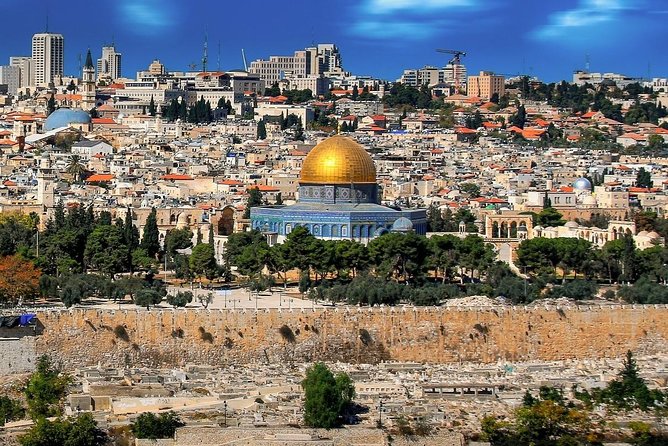
- Temple Mount is included as a viewing stop, not a long detour.
- The tour ends in the Arab Market, useful if you want to snack and keep wandering after.
A short walk that maps the Old City quickly
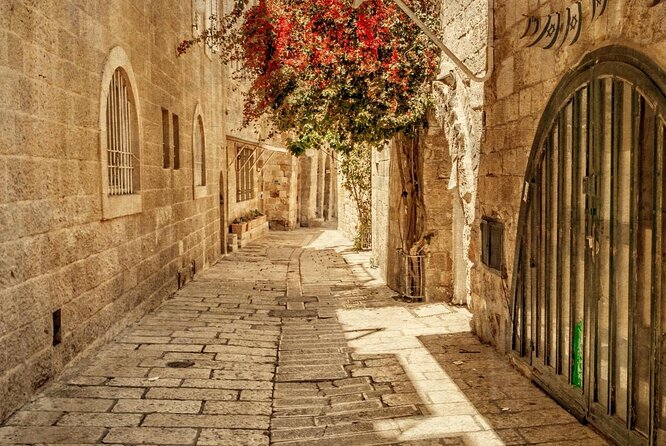
Jerusalem can feel like a puzzle box. This tour helps you put the pieces together in a manageable time window. You start near Mamilla, then work your way into the walled Old City area, moving from Roman-era street traces to biblical and sacred sites, all with a pace that is meant to be doable for most people.
You get the benefits of a guide, but you also get the real city: narrow lanes, crowded intersections, and the way different traditions share the same streets. The tour is also private, so it is just your group, not a public cattle-call. That matters when you have questions or you want the guide to slow down at a specific stop.
The format is built around quick, focused visits. Many stops are around ten minutes, with a couple that run longer. That makes the tour feel efficient, but it also means you should not expect deep time at every single site. If you love hanging around one place for ages, you may want to treat this as your orientation walk, then return on your own later.
More Walking Tours in Jerusalem
- Jerusalem: Guided Walking Tour of the Old City
★ 4.7 · 386 reviews - All Inclusive Walking Tour Old City Jerusalem
★ 5.0 · 83 reviews - Jerusalem Walking Tour: In the Footsteps of Jesus
★ 4.5 · 67 reviews
From the Cardo to the Broad Wall, you start with the ancient backbone
The tour opens at the Cardo, the main street of Jerusalem in ancient Roman times. Even if you only have a short window, starting here gives you an instant sense of why Jerusalem mattered to empires. You are not just hopping between modern landmarks, you are seeing the street logic that shaped how people moved.
Next up is the Broad Wall, an ancient defensive wall built around Jerusalem. This is one of those stops that feels simple on paper, but it helps you understand the city’s constant theme: protection, borders, and layers. It also gives you a breather from the most crowded prayer sites, because you are looking at structures and layout rather than lineups.
Then you move into the Jewish Quarter, one of the traditional quarters of the Old City. This is where the tour starts to feel more lived-in, because you are walking through a part of the city that is both historic and active. You get a sense of how the quarters function as neighborhoods, not just museum zones.
Western Wall and the big moment you can’t fake
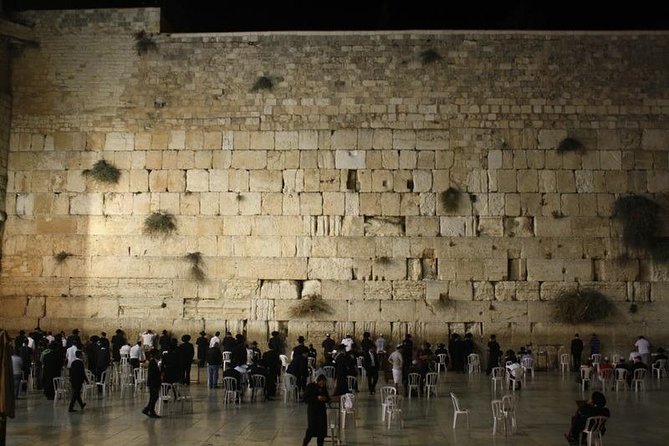
Few sights need an introduction, and the Western Wall is one of them. The tour brings you there as the center of the Jewish world and a major pilgrimage destination. You will feel the atmosphere right away. It is a place where people come to pray, to mark life moments, and to connect to a long chain of tradition.
The stop time is short, which is good and bad. Good, because it keeps your tour moving and prevents the whole day from turning into one slow line. Bad, because you might want more time if you are emotionally invested in the moment.
Right after the Western Wall, you can also add the Western Wall Tunnels. This is the main paid option on the tour. If you want it, the tour notes that you can add it by booking ahead, typically at least a week in advance. The supplement is 25 NIS per person, and it is not included in the base price. If you choose this add-on, think of it as your chance to see below ground what you are otherwise seeing above ground.
Temple Mount viewing and the Southern Wall excavations
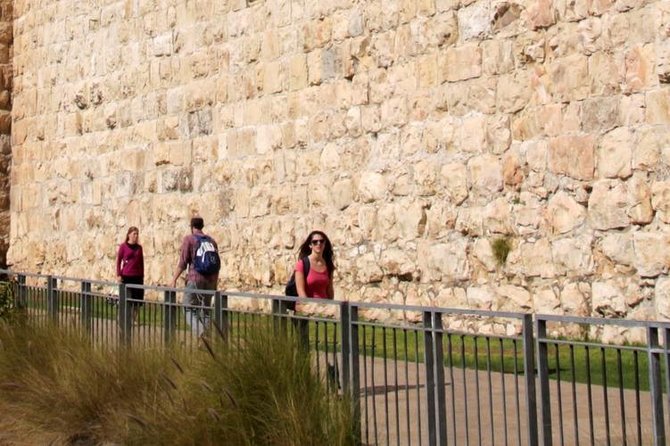
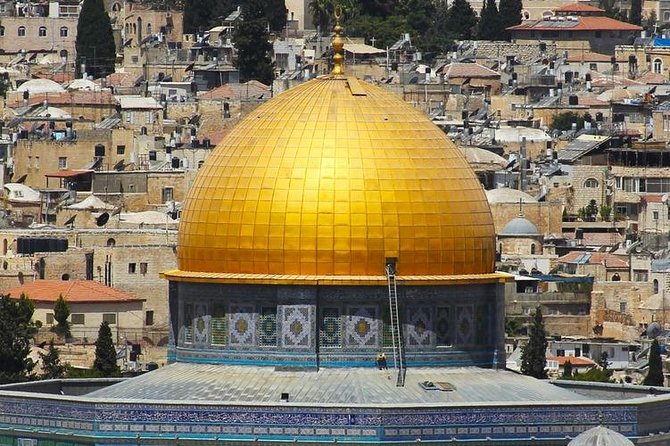
You get a chance to view the Temple Mount during the tour. The wording here matters: it is a viewing stop, not a long guided visit into every corner of the complex. Still, it is a useful inclusion because Temple Mount is the geographic and spiritual focal point for much of what comes before and after in Jerusalem.
You also visit the Southern Wall area, built during King Herod, where excavations today are a major tourist sight. This combination works well because it connects the big name (Temple Mount) to the physical evidence you can see nearby. Instead of hearing about the past in the abstract, you are standing in a place tied to the archaeological record.
If your top priority is just seeing everything you can visually, this section is a strong use of time. If your goal is to spend hours inside a single complex, this tour may feel too brief. But for an efficient Old City overview, it hits the right notes.
A different kind of day from Jerusalem:
- From Jerusalem: Masada & Dead Sea Full Day Tour with Pick Up
★ 4.5 · 815 reviews - Masada and the Dead Sea Day Trip from Jerusalem
★ 4.5 · 757 reviews - From Jerusalem: Nazareth and Sea of Galilee Tour
★ 4.5 · 588 reviews - Nazareth and the Sea of Galilee Day Trip from Jerusalem
★ 4.5 · 446 reviews
Upper Room at the Cenacle, then King David’s Tomb
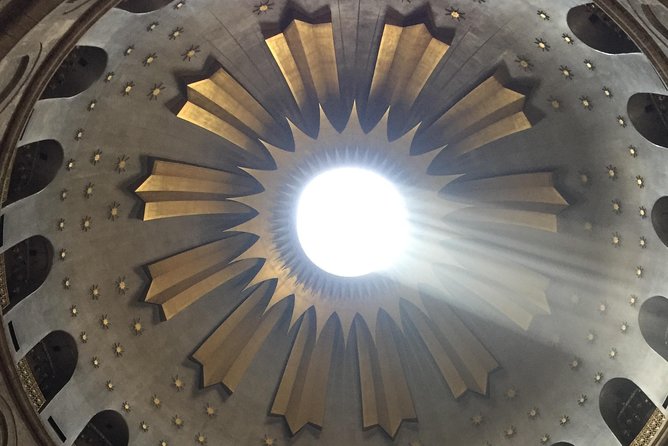
From the Temple Mount area you head to the Cenacle, also known as the Upper Room. The tour frames it as the first Christian church in Jerusalem and ties it to the traditional location of the Last Supper. Even if you are not tracing doctrine, the location helps you understand how Jerusalem sits at the crossroads of multiple faith stories.
Right next to it is King David’s Tomb, traditionally considered the burial place of David. Pairing these two stops back to back is smart because they sit close together and you do not waste time crossing town. You also get an easy comparison of how different traditions point to sacred sites in the same tight geography.
This section tends to be memorable for groups that want both Christian and Jewish connections without changing tours mid-trip. One review also highlighted that add-on flexibility can exist for those who want to adjust the route with extra stops in the broader area.
Pools of Bethesda to the Way of the Cross, a narrative walk
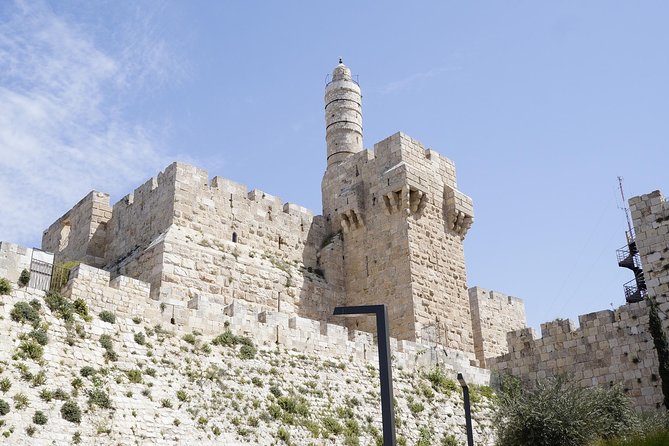
Next comes the Pools of Bethesda, tied to the New Testament account of healing. This stop is a good example of what a guided walk can do for you. A site like this might be easy to pass without a framework, but with context you start noticing the why, not just the what.
Then the tour moves into the Way of the Cross along Via Dolorosa. This route is traditionally believed to be the path Jesus took on the way to crucifixion. Even if you are visiting from a historical angle, the street experience matters. Via Dolorosa is not quiet, and that is part of the point. You are seeing how tradition turns lanes into a moving story.
Because the tour keeps stops brief, the goal is not to cover every devotional detail. It is to give you the backbone of the route so you can recognize what you are seeing and understand why people walk it.
Church of the Holy Sepulchre, the place that gathers everyone
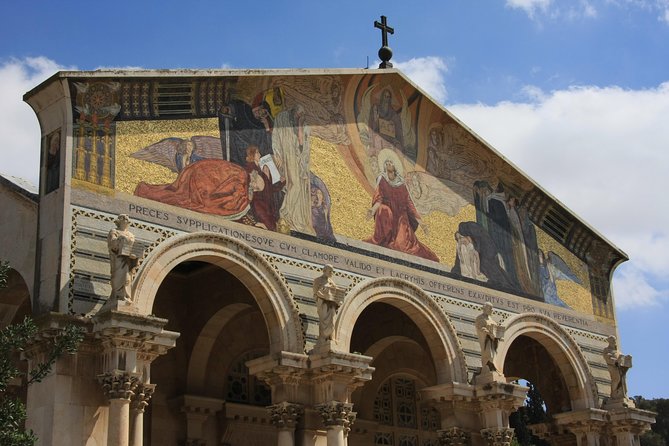
The Church of the Holy Sepulchre is the holiest site of Christianity in the tour’s framing, built on the site where Jesus was crucified (Calvary). This stop is one of the most important on the route, and it also tends to be the most intense in terms of crowds and atmosphere.
Again, the stop is shorter than what some people might want. But that is exactly why it is included here: you get the key encounter without losing the entire tour to one location. If you want to linger, you can always come back later, but this gives you the first contact and the orientation.
It also helps that the walking sequence funnels you into this moment from sites that are tied to earlier sections of the Christian story. By the time you reach the church, you are not starting from scratch.
One of the strongest signals from past bookings is that the guide can make this kind of stop click. In particular, the guide Harley is praised for being excellent at explaining archaeology, history, and religion in a way that keeps people engaged, including families.
Finishing in the Old City Arab market, where the tour actually ends
The last part is the exit via the Old City Arab Market. This is not just an afterthought. It is a practical finish because you are dropped into the area where you can keep exploring immediately.
Use this time for two things:
- Eat something simple and local, then keep walking.
- Buy small souvenirs if you want them, since you are already in the place where people sell what you came to see.
If you still have energy, you can also use the market to test your new mental map. Streets and landmarks you visited earlier may suddenly feel easier to navigate. Even people who do not love shopping often enjoy the sensory overload, because it makes the Old City feel real, not staged.
Price, tickets, and whether it is good value
The price is 89.99 USD per person for a 2 to 3 hour guided walk. On paper, that is not cheap, but it can be good value because you are getting guided access to a cluster of major sites in one session.
Most stops are listed as free admission tickets. The one big exception is the Western Wall Tunnels add-on, which is 25 NIS per person if you arrange it ahead. So your total cost stays predictable unless you choose to upgrade.
You also get a mobile ticket, which makes logistics easier on the ground. And since it is a private tour, you are not splitting a guide’s time among strangers at every turn.
I would call this a good deal if your priority is an efficient Old City survey plus a guided explanation that helps the sites make sense. If you already know the basics or you plan to spend your days in deep religious study, you might prefer a longer single-site plan. But as a first Old City outing, it is a strong candidate.
Who this tour fits best, and who might want a different plan
This tour suits you if you want a gentle, generally extensive overview. It is especially good for first-time visitors who need orientation across Jewish, Christian, and ancient sites in a tight geography.
It also tends to work well for families and mixed-age groups. One past booking specifically praised how even children stayed entertained, which is a good sign that the guide can translate big concepts into something you can actually follow.
It may not be the best fit if you are very time-bound and hate variation in tour length. While the tour is described as 2 to 3 hours, one review suggested the experience ran longer than expected. It is rare for tours to be identical day to day, so build in a buffer on your schedule.
Finally, language clarity matters. One complaint in the feedback mentioned English that was hard to follow. If you rely on clear, easy-to-catch explanations, make sure the guide meets your needs, or consider requesting details when you confirm.
Should you book this Jerusalem walking tour?
Book it if you want an efficient route that hits the most famous Old City stops, plus a market finish that helps your afternoon keep going. The base price can feel fair because so many of the listed admissions are free, and the optional Western Wall Tunnels lets you tailor the depth if you care about underground archaeology.
Skip it or rethink it if you want lots of time inside one site or you strongly dislike the idea of short stops. Also think twice if language precision is a dealbreaker, since guide delivery can vary.
My practical take: treat this as your Old City orientation walk. Do it early in your trip, so the rest of your sightseeing feels less like wandering and more like exploring with a map in your head.
FAQ
How long is the Jerusalem Walking Tour?
The tour runs about 2 to 3 hours.
Where do we meet, and where does the tour end?
You meet at Alrov Mamilla Avenue 8 in Jerusalem, and the tour ends back at the meeting point.
What is included in the tour price?
The tour includes visitation of all the sights en route.
Are the Western Wall Tunnels included?
No. Entry to the Western Wall Tunnels is not included. You can add it for a supplement of 25 NIS per person if you arrange it in advance.
Is Temple Mount included in the tour?
Yes, during the tour you get to view the Temple Mount.
Do I get a mobile ticket?
Yes, the tour includes a mobile ticket.
What is the cancellation policy?
You can cancel for free up to 24 hours in advance for a full refund. If you cancel less than 24 hours before the start time, the amount paid will not be refunded. The tour also depends on good weather, and if canceled due to poor weather you are offered a different date or a full refund.
Is this tour private, and are service animals allowed?
Yes, it is a private tour, meaning only your group participates. Service animals are allowed.
When will I receive confirmation after booking?
Confirmation is received within 48 hours of booking, subject to availability.
Recently reviewed around Jerusalem
- Walking tour of the Old City of Jerusalem★ 4.3 · 4 reviews
- West Bank Tour from Jerusalem★ 4.5 · 184 reviews
- jerusalem classic tour★ 5.0 · 3 reviews
- Private Tour: Old City of Jerusalem Christianity Tour★ 5.0 · 5 reviews
- Magical Walking Tour in Old City of Jerusalem★ 5.0 · 27 reviews
- Tour of Jerusalem & Dead sea private tour★ 5.0 · 4 reviews
- full day tour Jerusalem price per van up to 6 people★ 5.0 · 8 reviews
- Private Tour Jerusalem Old City★ 5.0 · 118 reviews
Walking Tours, compared.

Jerusalem Walking Tour: In the Footsteps of Jesus
Read our review →


Browse the lists this tour appears in