
Reviewed · HISTORICAL TOURS
Jerusalem Yad Vashem Holocaust History Museum Tour
The Yad Vashem Holocaust History Museum tour in Jerusalem is interesting because it turns massive historical tragedy into a clear, step-by-step story you can follow while you’re inside. I especially liked the official Yad Vashem guide who keeps the chronology moving, and the way key artifacts like the Auschwitz Album make the history feel specific, not abstract. The visit is powerful and sometimes very hard to take, so the biggest consideration is that the exhibits are emotionally intense and graphic in parts.
You’ll move through the museum at a human pace, but with structure. Plan for a guided experience built around major chapters of the Holocaust, plus time after the tour to keep looking if you still have the energy.
Quick hits before you go
- Official Yad Vashem guidance keeps the story organized across multiple galleries
- Nine gallery chapters trace a chronology from Nazi propaganda to persecution and murder
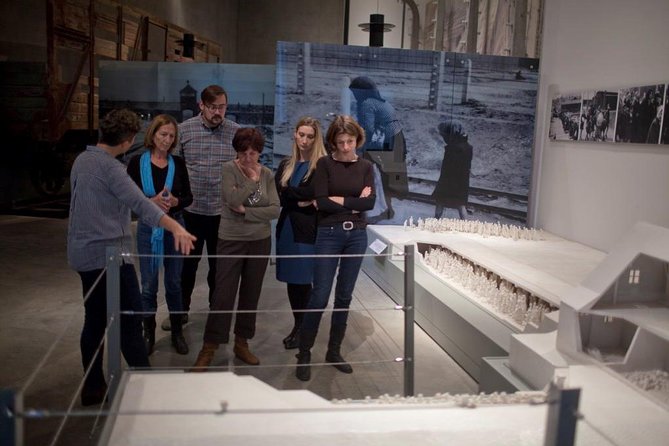
- Auschwitz Album and a copy of Schindler’s List connect documentation and cultural memory
- Hall of Names gives you a memorial space to reflect, not just read labels
- Headsets included, so you can actually hear the guide without crowding
- The Moshe Safdie museum architecture frames the experience from the moment you enter
Inside the triangular museum at Yad Vashem
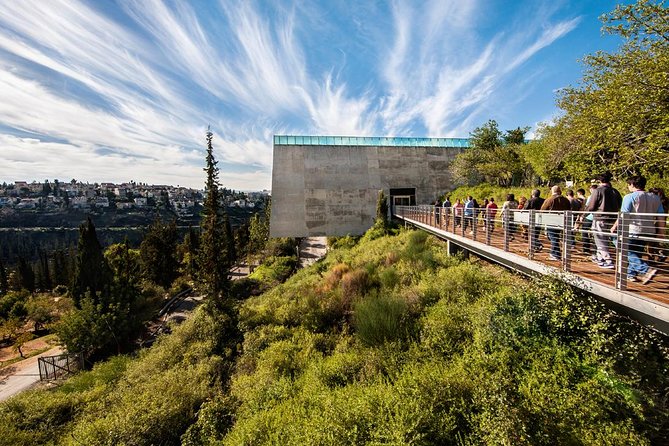
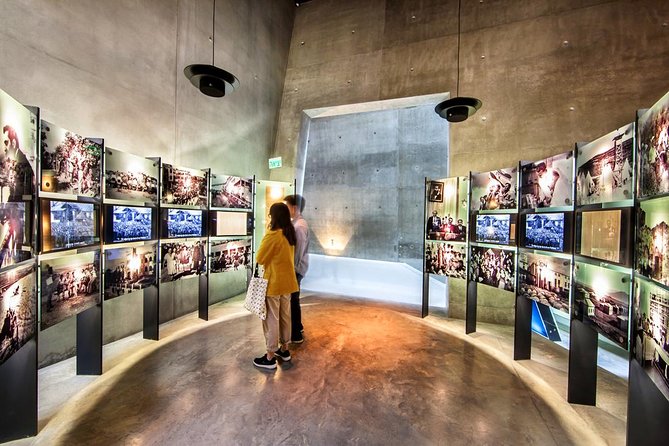
The first thing you notice is the building itself. Yad Vashem, the World Holocaust Remembrance Center, was designed by architect Moshe Safdie, and it has a sharp, unforgettable shape. The prism-like, triangular structure seems to cut through the mountain from one side to the other, with dramatic cantilevered sections reaching into open air. That shift from outside calm to inside gravity hits fast, and it helps the whole experience feel intentional, not just a collection of rooms.
When you enter with the group, the visit feels like a guided route through history. You do not wander randomly. The guide’s job is to help you connect the dots, and you can feel that in the flow: one “chapter” leads into the next, without losing the thread.
One small practical thing I appreciated, especially when the rooms get busy, is the presence of headsets. You can listen clearly, and it makes the tour more accessible for hearing and comfort. It also means you spend your attention on the exhibits, not on trying to catch every word from the front.
More history tours in Jerusalem:
- Jerusalem Heritage Private Tour
★ 5.0 · 3 reviews - Kabbalah Heritage Walk
★ 5.0 · 23 reviews - Jerusalem Christian Heritage Private Tour
★ 5.0 · 9 reviews
Nine gallery chapters that keep the story readable
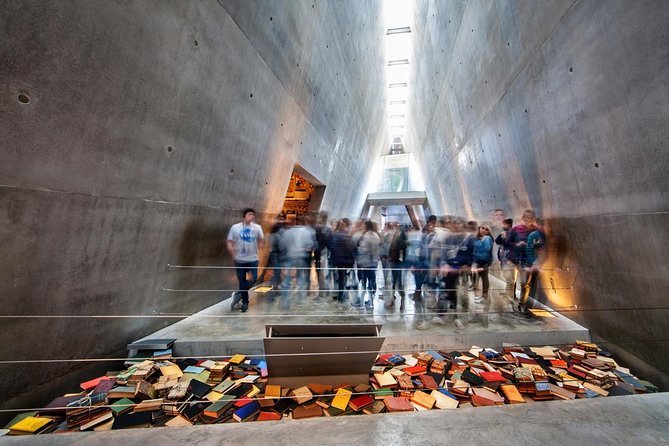
A major part of the value here is how the museum is organized into nine different galleries, each presenting a distinct “chapter” in Holocaust history. The guide doesn’t just point at items. They explain what each section is trying to show, so you understand why this piece of propaganda mattered, why this policy mattered, and how the system escalated.
One of the guides’ strongest contributions is the early context in the museum. You encounter authentic posters and material tied to Nazi Germany in the 1930s, including antisemitic propaganda and even disturbing examples like antisemitic board games. Seeing that kind of everyday, normalized cruelty in period objects is one reason the museum hits so hard. It shows you how hatred was packaged for ordinary life before it turned into state violence.
Then, the tour moves into spaces that focus on the victims and the mechanisms of persecution. The galleries are designed so you can follow the chronology, even when your emotions are pulling you in different directions. That structure matters. Holocaust history can feel like a wall of information if you’re reading alone. A guided route helps you stay oriented.
Leszno Street cobblestones: when history becomes physical
A standout moment is walking on cobblestones of a reconstructed street from the Warsaw Ghetto, labeled as Leszno Street in the museum experience. This is one of those parts where the museum stops being purely informational and becomes physical. Your feet on the ground make the scene more immediate, and it can be uncomfortable in a quiet way.
The practical takeaway is that this tour is not “sit and watch.” You’re walking through different settings and moving through memorial and exhibit zones. Wear shoes you can stand in. If you’re the type who needs frequent breaks to reset, you’ll want to plan for that before you arrive, because this museum doesn’t give you the option to treat it like a normal attraction.
I also like that the guide’s explanations help you understand what you’re seeing as you move through. Reconstruction can be emotional, but it becomes more respectful and meaningful when you know the purpose of the space.
Auschwitz Album and Schindler’s List: why these exhibits matter
Two items you should know you’ll see are a copy of Schindler’s List and the Auschwitz Album. Both are mentioned as highlights, and they’re not there as random famous names. They represent different ways people grapple with what happened.
The Auschwitz Album is tied to documentation. It makes the horror feel recorded and real, not just described. The fact that it’s presented in a museum context, with other historical material around it, helps you process it in order, rather than letting it overwhelm you as a single shocking image.
Schindler’s List, on the other hand, is part of how later generations understood and remembered the Holocaust through film and storytelling. Seeing it here, inside a museum designed for remembrance and education, helps you connect cultural memory with historical records. It’s a reminder that the story has been told many ways, but the museum keeps pulling you back to evidence, testimony, and named victims.
More museums in Jerusalem:
- Israel Museum Must See High-Lights
★ 5.0 · 17 reviews
Survivor testimonies and propaganda context, side by side
Another key part of the experience is that the museum doesn’t only show objects. You’ll also watch survivor testimonies. That changes the emotional texture of the visit. Objects can feel silent, even when they’re heavy. Testimony adds a human voice and a time-specific perspective, which is often what helps the story “land” for people.
What I found most effective is how the museum pairs evidence with context. You start with Nazi propaganda and antisemitic material that helped create an environment of acceptance and dehumanization. Then, the galleries progress toward persecution and mass murder. By the time you reach survivor testimony and memorial areas, you understand the system, not just the outcome.
This is one reason the tour feels worth doing with a guide, even though you could read labels on your own. A guide helps you notice patterns, like how ideology turns into policy and then into action. That shift from belief to bureaucracy to violence is a big part of what you’re meant to understand here.
Hall of Names: the memorial moment that stays with you
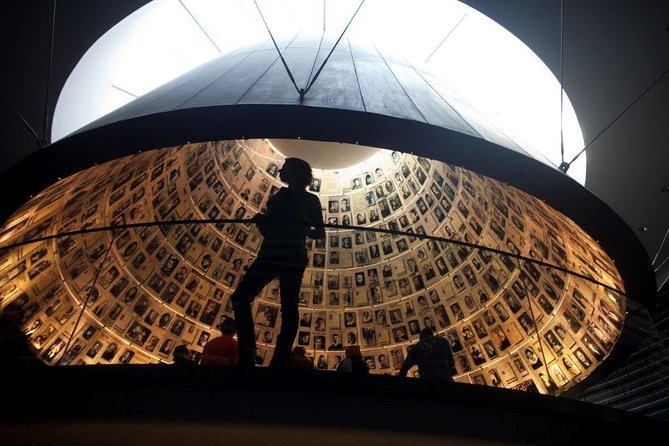
Near the center of the emotional arc is the Hall of Names, a memorial with names of victims. This is not the kind of memorial that asks you to speed through. Even if your schedule is tight, you’ll want to pause here. The experience is designed for remembrance, and the way the space supports reflection is a major reason people consider Yad Vashem a must-see.
From a practical angle, I suggest you take this part slowly. If you’ve been absorbing difficult information for a while, your brain may try to rush ahead. The Hall of Names is one place where resisting that urge is worth it.
If you’re the sort of person who needs to step away and reset, this is the time to do it. You can also plan to return later to other parts of the museum after the guided portion, because the tour includes an opportunity to continue exploring on your own.
How long it really takes, and how to pace yourself
The guided tour is listed at about 2 hours, and that’s a realistic target for the main route with the guide. Still, the museum is large and dense, and you may feel pulled to stop and read more than your schedule allows.
One of the most honest tips I can give is to treat the tour duration as the minimum you’ll learn from. If you want time for exhibits like the Auschwitz Album area, additional screens, and the memorial spaces, you should expect to spend more time on site. The museum itself is the attraction, not just the guided part.
You also have a practical listening tool here. Since headsets are included, you can keep your attention on the guide without craning your neck or drifting. That helps you move efficiently, so you can spend your added time on what matters most to you.
Price and value: what you get for $12.00
At $12.00 per person, this tour is a good value if you want the structure of an official guide. The big reason is what’s included: a professional Yad Vashem guide, headsets, and also gratuities. That last part matters more than you might think, because it removes an extra decision and keeps your experience straightforward.
Also, the tour includes a genuine museum route with a lot of “high-density” content: multiple galleries, major memorial moments, testimony, and named highlights like the Auschwitz Album and Schindler’s List. If you compare that to paying for just entrance and then trying to piece together chronology on your own, the guided approach saves you time and emotional strain.
My balanced take: this is not the kind of experience you do to “check off a ticket.” It’s worth the money because it helps you understand and remember, not because it’s a bargain attraction. Still, for what you receive in content and guided direction, it’s priced in a way that feels fair.
Who this tour suits best, and who should think twice
This tour is a strong fit if you want Holocaust history presented in sequence, with expert interpretation, and you appreciate context like Nazi-era propaganda and antisemitic material that shows how persecution was built up over time. It’s also a good option if you prefer a structured visit through multiple galleries instead of reading everything alone.
It may be less suitable if you know you struggle with graphic or emotionally overwhelming material. Several people described the museum as deeply moving, and that matches the overall design and content type. If you’re going with kids, it’s wise to check the age rules in advance, because the subject matter is heavy and the museum itself is not gentle.
If you have limited mobility or a reduced tolerance for walking on cobblestones or standing in exhibit areas, you might want to consider pacing carefully. The tour info says most travelers can participate, and service animals are allowed, but the experience still involves movement and time in memorial spaces.
Pairing Yad Vashem with the rest of Jerusalem
After Yad Vashem, you may want a change of emotional pace. Even if you plan to keep sightseeing, consider giving yourself a buffer. The museum includes a chance to keep exploring post-tour, but it also makes sense to think about what comes next.
A good strategy is to plan a calmer plan for later in the day, something with open air and lighter context, rather than rushing straight into another emotionally demanding visit. You’ll get the most out of this place if you let it do its work, then give yourself time to reset.
Also, because the museum is in Jerusalem and you’re likely navigating public transit, build in travel time. The tour starts at 10:30 am, so being early helps you settle in before the guide begins.
Should you book this Jerusalem Yad Vashem guided tour?
Yes, you should book it if you want the Holocaust story presented clearly in order, with the benefit of an official Yad Vashem guide and headsets that make listening easy. The price is modest for what you get, and the included experience touches multiple high-impact elements like survivor testimonies, the Hall of Names, and major referenced exhibits including the Auschwitz Album and a copy of Schindler’s List.
Skip the guided tour only if you already feel confident building the chronology on your own, and you’re comfortable doing it without expert interpretation. Otherwise, this is one of those experiences where structure helps you understand, and it also helps you remember what you learn.
FAQ
What does the tour include?
It includes an official Yad Vashem guide, headsets so you can hear clearly, and admission to the Holocaust History Museum. Gratuities and taxes, fees, and handling charges are included as well.
How long is the tour?
The tour duration is about 2 hours.
Is the tour shared or private?
It is a shared tour with an official Yad Vashem guide.
What time does the tour start?
The start time is 10:30 am.
What will I see inside the museum?
You’ll explore galleries that cover aspects of Holocaust history, see exhibits including the Auschwitz Album and a copy of Schindler’s List, watch survivor testimonies, and visit the Hall of Names.
Is an admission ticket included?
Yes, the admission ticket is included.
What about food and drinks?
Food and drinks are not included.
Is parking included?
No. A parking fee is payable on site.
Is a mobile ticket used?
Yes, the tour uses a mobile ticket.
Is there free cancellation?
Yes, free cancellation is offered up to 24 hours in advance for a full refund.
Recently reviewed around Jerusalem
- Walking tour of the Old City of Jerusalem★ 4.3 · 4 reviews
- Private Tour: Old City of Jerusalem Christianity Tour★ 5.0 · 5 reviews
- Magical Walking Tour in Old City of Jerusalem★ 5.0 · 27 reviews
- Tour of Jerusalem & Dead sea private tour★ 5.0 · 4 reviews
- West Bank Tour from Jerusalem★ 4.5 · 184 reviews
- jerusalem classic tour★ 5.0 · 3 reviews
- Day Trip from Jerusalem to Sea of Galilee and Nazareth★ 5.0 · 11 reviews
- Tour of Masada-Dead Sea and Qumran from Jerusalem★ 3.5 · 11 reviews
Historical Tours, compared.


Full-Day Private Luxury and Cultural Tour in Tel Aviv
Read our review →

Food & History Tour of Jaffa Old City & Flea Market
Read our review →
Browse the lists this tour appears in