
Reviewed · WALKING TOURS
Private Full-Day Walking Tour of Jerusalem
This is an interesting day because it turns Jerusalem’s Old City into one connected walking route, not a list of separate landmarks. I love how the tour links major holy sites like the Western Wall and Temple Mount to the city’s layered history, including Ottoman-era walls and the changing fabric of the quarters. I also love the structure and guidance style of Shlomo Cohen, who helps you understand what you’re seeing and what it meant, without bogging the day down in endless details.
One drawback to plan for: this is a real walking day on rugged stone, and the Middle East sun can be unforgiving. Come ready with good shoes, a hat, and water, and you’ll enjoy it a lot more.
Key points to know before you go
- Private, up to 9 people: it’s your group only, so the pace can match your questions and interests
- All the big Old City highlights: Jaffa Gate, Western Wall, Temple Mount, Via Dolorosa first 9 stations, Holy Sepulchre, Jewish Quarter, Hurva Synagogue
- A full route across all four quarters: you get the sense of Jerusalem as a working patchwork, not a museum circuit
- Shlomo Cohen’s storytelling focus: you’ll hear clear context that ties together events and religious traditions
- Hurva Synagogue costs extra: entry fee applies, and the adult price can vary based on how it’s arranged
- Pickup on request: helpful if you’re not starting right at Jaffa Gate
A private full-day route through Jerusalem’s Old City that makes sense fast
Jerusalem’s Old City can feel like sensory overload. Narrow lanes, big crowds, and sacred places stacked close together. This tour helps you make order out of it. You follow one logical line from Jaffa Gate inward, then move through the core sites that most first-time visitors want, while also reaching deeper corners like the Jewish Quarter and the viewpoint around the Hurva Synagogue.
What I like most is that the walk is not only about where to go. It’s about why those places sit where they do, and why the same streets and walls keep showing up in different eras of Jewish, Christian, and Muslim life. That kind of framing matters. Without it, you might see stone and symbols. With it, you start seeing transitions, conflicts, repairs, revivals, and daily religious routines layered over centuries.
More Full-Day Tours in Jerusalem
- From Jerusalem: Masada & Dead Sea Full Day Tour with Pick Up
★ 4.5 · 815 reviews - Full Day City Tour of Jerusalem
★ 4.1 · 367 reviews - Old and New Jerusalem Full-Day Tour
★ 4.0 · 273 reviews
Price and group size: how $390 per group can still feel like good value
This tour runs at $390 per group, with a cap of up to 9 people. Private tours often cost more per person, so the real question is how you’ll use the flexibility.
Here’s the value angle: because it’s private and you cover a tight loop of major sites in about 7 hours, you avoid the time-wasting problem of trying to self-navigate through confusing crossings, entrances, and changing lanes. You also get the benefit of a guide who can answer questions on the spot. That matters around the Temple Mount area and in the Old City quarters where the story is tied to different traditions.
If you’re traveling as a couple, you’ll likely pay more than a group tour ticket. But you also get a more personal flow: fewer bottlenecks, more chances to pause, and a plan that keeps the day moving without turning into a sprint.
If you’re traveling with a small group of friends or family, the pricing model gets easier to justify. Splitting the group cost among several people can turn it into a practical choice, especially if you want a guide rather than a rental of your own energy.
Meeting at Jaffa Gate, starting and ending in the Old City loop
The meeting point is Jaffa Gate, Old City, Jerusalem, and the tour ends back at the same place. That’s a simple setup, and it reduces stress on departure. You’re not trying to finish in a totally different neighborhood with transit puzzles.
Pickup is available on request, which can help if you’re staying outside the Old City walls. If you’re already close, you may prefer to start at the gate itself. Either way, you’ll want to plan your day around a walking-heavy schedule, not a grab-and-go sightseeing afternoon.
Also plan for variable walking conditions. The Old City is rugged. Even if you’re a confident walker, you’ll still feel the uneven stone and stair climbs. Bring shoes that grip.
What a 7-hour pace really means on hot stone
This is listed as about 7 hours, and the stops are grouped tightly. The goal is to cover the highlights across the four Old City quarters while still allowing time at each site.
Here’s what that feels like in practice:
- You’ll spend about an hour at several major stops (Jaffa Gate, Western Wall, Temple Mount, Via Dolorosa stretch, Holy Sepulchre, Jewish Quarter).
- You’ll spend shorter blocks at Hurva Synagogue and Zion Gate.
- You’ll have a lunch break nearby after part of the Via Dolorosa route, but lunch itself is not included.
The sun factor is real. The tour guidance stresses the Middle East sun is unforgiving, so bring a hat and water. You can buy water on the way, but you’ll enjoy the day more if you start with enough right away.
More Walking Tours in Jerusalem
- Jerusalem: Guided Walking Tour of the Old City
★ 4.7 · 386 reviews - All Inclusive Walking Tour Old City Jerusalem
★ 5.0 · 83 reviews - Jerusalem Walking Tour: In the Footsteps of Jesus
★ 4.5 · 67 reviews - Boutique Walking Tour of Jerusalem
★ 5.0 · 64 reviews
Stop 1: Jaffa Gate, where ramparts, breaches, and everyday life meet
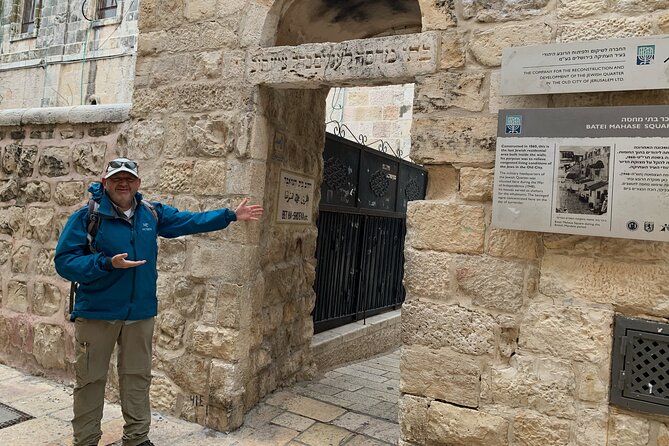
You start at Jaffa Gate. This is more than an entrance photo spot. The tour frames it as a place where military design and city life overlap. You’ll hear about the construction of the ramparts in the 16th century, then about the breach in the wall about a century ago. The gate also ties into what’s happening around it today, including the presence of Jaffa Gate Hostels.
Why this stop works at the start: Jaffa Gate sets your mental map. Once you understand the walls as something built and rebuilt, the rest of the Old City makes more sense. You stop seeing the streets as random. They start looking planned, defended, and contested over time.
Stop 2: Western Wall, the Kotel and the site of the Second Temple’s legacy
From Jaffa Gate, you walk down to the Western Wall, close to where the Second Temple stood before it was destroyed by the Romans. The tour keeps the focus on the Kotel as the holiest place for Judaism, but you’ll also absorb how the same location can carry layers of meaning across eras.
Even if you’ve seen photos, the Western Wall has a different feel in person. It’s active, not just historical. Your guide’s job is to help you understand what you’re looking at and why it draws people from so many places.
This stop is typically about one hour, which gives you enough time to look around without feeling like you’re being pulled forward every 30 seconds.
Stop 3: Temple Mount, Dome of the Rock and Al-Aqsa in one sacred compound
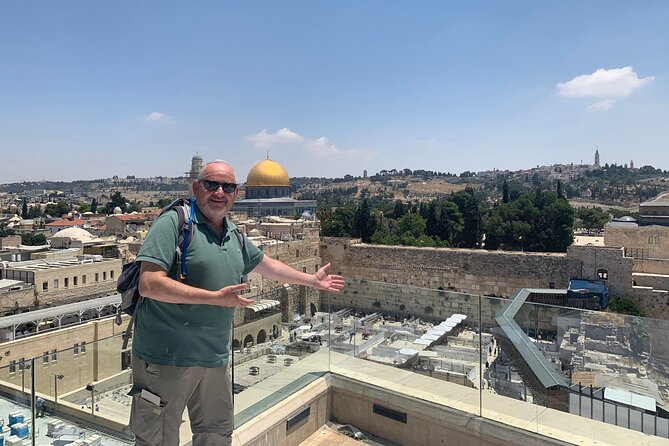
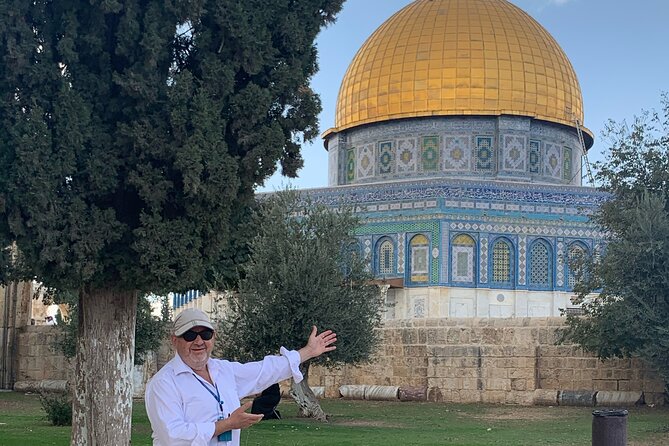
Next is Temple Mount, including the Al-Aqsa mosque and the Dome of the Rock. The tour explains why this place is sacred to Jews and why it ranks as the third most sacred place in Islam.
This is often the emotional center of the day, so the value of a guide becomes obvious. Jerusalem’s holy sites come with competing narratives, deep devotion, and careful language. A good guide helps you see connections without turning the day into an argument.
The Temple Mount stop is listed as about one hour and the tour notes admission is free for this segment. The experience is as much about observation and context as it is about movement.
Stop 4: Via Dolorosa, condemnation to crucifixion and the first 9 stations
After the Temple Mount area, you follow the Way of the Cross, Via Dolorosa. The tour walks the path associated with Jesus, from condemnation through the steps leading to crucifixion, including the first 9 stations.
This section is powerful, but it can also feel crowded and slow on certain days. The upside of a guided plan is that you keep your bearings. You learn what the stations mean and how they fit into the larger story of Christian tradition.
You also get a lunch break nearby after this section. Lunch isn’t included, so think of it as time to grab food at a location that works for you, rather than time for the guide to solve your meal plan.
Stop 5: Church of the Holy Sepulchre, crucifixion tradition and the Edicule
Then you reach the Church of the Holy Sepulchre, traditionally associated with where Jesus was crucified. This stop includes the last 5 stations of the Via Dolorosa route, plus highlights like the Edicule and the Stone of Onction.
The key value here is structure. Without guidance, it’s easy to lose the thread inside a complex site where multiple chapels and points of interest coexist. With a guide, you understand what’s connected to what.
This stop is also about one hour. That’s long enough to see the major elements and short enough to keep the day from dragging.
Stop 6: Jewish Quarter, from Ramban to destruction and 20th-century revival
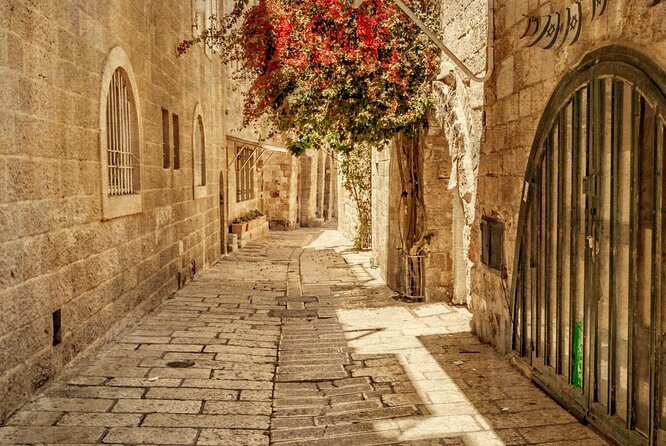
Now the tour shifts into deep Old City atmosphere: the Jewish Quarter. This is where you get that feeling of time travel. The tour timeline moves from the arrival of Ramban about 900 years ago, then covers destruction, and then the Jewish Quarter’s revival during the 20th century.
That sweep across centuries is what makes the Old City more than a set of religious stops. You start to understand how communities were not only built, but reshaped by politics, conflict, and shifting control. And you understand why the streets look the way they do today.
You’ll spend about one hour here, which is a good balance between walking the lanes and pausing to absorb what you’re seeing.
Stop 7: Hurva Synagogue and the viewpoint, with an extra entry fee to plan for
The Hurva Synagogue is a major highlight in the Jewish Quarter. The tour describes it as beautiful not only for its story, but also for the viewpoint and the archaeological remains.
The tricky part is cost. You’ll pay an entry fee that depends on the arrangement. The tour notes 14 NIS for adults when accompanied by a guide, but it also lists Hurva entry as 20 NIS for adults and 10 NIS for children. Since both numbers appear in the tour details you were given, the smart move is to confirm the adult amount at booking so there are no surprises.
Time on site is listed at about 40 minutes. That’s enough to see the key features without turning the synagogue stop into the longest part of the day.
Stop 8: Zion Gate, 1948 memory, then back along the ramparts
To close the day, you head out through Zion Gate. The tour connects this gate to a memorial for fights that took place there during the War of Independence in 1948. Then you follow the ramparts back toward Jaffa Gate, where the tour ends.
This final stretch is a nice way to tie the day together. You started at the gate and walls, and you end with the walls again, now with a better understanding of why these defensive features matter so much to Jerusalem’s identity.
The time at the final gate is short, around 20 minutes, so it doesn’t drag, and it helps keep the day in a manageable walking window.
Shlomo Cohen’s guiding style: how organization turns chaos into clarity
This tour is private, but the guide makes it feel unusually coherent for a place that is often chaotic. Shlomo Cohen is described as organized and accommodating, and that shows in the flow.
A few practical ways his approach helps you:
- Clear instruction before the tour so you know what to expect when you arrive
- The ability to pack a lot of ground while still keeping historical context clear
- A calm, easy-going style that makes it simpler to ask questions
- Flexibility if your group wants to spend extra time on a specific topic
Several people also highlight that he takes good care with photo moments, which is useful around sites like the Hurva area where viewpoints can be fleeting once the crowd shifts.
And beyond the itinerary, Shlomo Cohen is noted for helping with travel questions in Israel. That kind of extra guidance does not change the core sightseeing value, but it can make the rest of your trip smoother.
Lunch and timing: what to plan so the middle of the day does not snag
Lunch is not included. You’ll get a lunch break after the Via Dolorosa first 9 stations, so your plan needs to be simple and flexible.
My advice:
- Decide whether you prefer a quick bite or a sit-down meal, because the day is structured around getting you to several fixed stops.
- Bring a small water strategy. Even if you can buy water along the way, you’ll feel better if you can consistently stay hydrated.
- Wear something sun-friendly. A hat matters more than you think when you’re moving between open ramps and shaded lanes.
Who this tour fits best, and who might want a different format
This tour is a strong match if you:
- Want a single day that covers major Christian, Jewish, and Muslim sites in the Old City
- Like walking tours that come with context, not just coordinates
- Prefer a private group experience where questions are welcome
It’s also a solid option for families and groups who want one guide to manage the complexity. The tour details mention it’s suitable for people with moderate physical fitness, which likely means you can handle uneven pavement, stairs, and a long day on your feet.
You might want a different pace if you:
- Know you’ll struggle with extended walking in heat
- Want long, slow stays in museums or chapels where a guided loop might feel too timed
Should you book this Jerusalem Old City walking tour?
Book it if you want a well-paced full-day walk that gives you clarity fast: why each stop matters, how the different quarters connect, and how Jerusalem’s stonework links to shifting communities.
Skip it or choose a lighter option if your body is sensitive to long walking days, or if you know you’ll get frustrated by the Old City’s rugged footing and sun.
If you do book, do two things that pay off immediately: pack good shoes and be ready to treat lunch as your own plan. Then lean into the biggest strength of the day, the guide who helps you turn sacred places into understandable history and lived tradition.
FAQ
How long is the Jerusalem Old City private walking tour?
It runs about 7 hours.
How many people are in the group?
It is a private tour, limited to your group, with up to 9 people.
Where does the tour start and end?
It starts at Jaffa Gate, Old City, Jerusalem and ends back at the same meeting point.
Is hotel pickup available?
Pickup is offered on request.
Are tickets or admissions included?
All fees and taxes are included, and the stops listed in the itinerary show admission as free. The Hurva Synagogue entry is not included.
Is lunch included?
No, lunch is not included.
How much does Hurva Synagogue entry cost?
The information provided lists adult entry as 20 NIS and children as 10 NIS, and it also notes a 14 NIS adult fee when accompanied by a guide. Confirm the exact amount when you book.
What should I wear or bring?
The Old City is rugged, so wear good shoes. Bring a hat and water, and you can buy water on the way.
What fitness level do I need?
The tour is described as suitable for travelers with moderate physical fitness.
Can I get a refund if my plans change?
Yes. You can cancel for a full refund if you cancel at least 24 hours in advance. If you cancel less than 24 hours before, the amount paid will not be refunded.
Are service animals allowed?
Service animals are allowed.
Recently reviewed around Jerusalem
- Walking tour of the Old City of Jerusalem★ 4.3 · 4 reviews
- Magical Walking Tour in Old City of Jerusalem★ 5.0 · 27 reviews
- Tour of Jerusalem & Dead sea private tour★ 5.0 · 4 reviews
- West Bank Tour from Jerusalem★ 4.5 · 184 reviews
- jerusalem classic tour★ 5.0 · 3 reviews
- Private Tour: Old City of Jerusalem Christianity Tour★ 5.0 · 5 reviews
- Full Day Private Christian Tour in Jerusalem with Tour Guide★ 5.0 · 28 reviews
- Private Walking Tour in Jerusalem’s Old City★ 5.0 · 3 reviews
Walking Tours, compared.


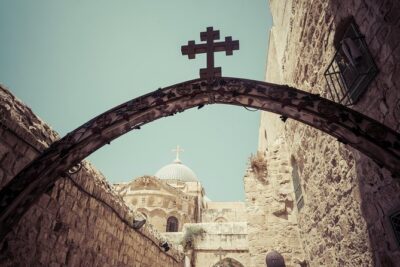
Jerusalem Walking Tour: In the Footsteps of Jesus
Read our review →


Browse the lists this tour appears in